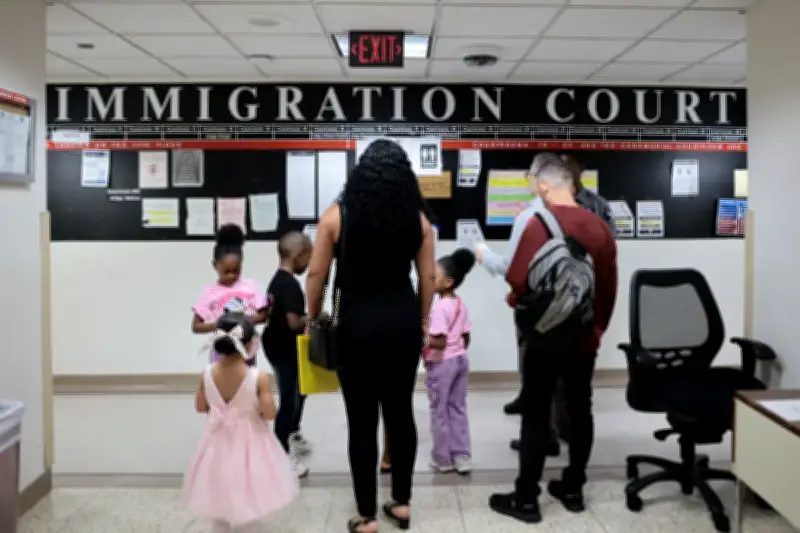
US immigration judges are deporting people in mass hearings, sometimes without notice, as the second Trump administration's deportation push intensifies. In June, judges issued 53,808 removal orders in absentia, a majority of all case completions that month, according to researchers at bklg.org.
Mega master calendar hearings
Federal officials have introduced what they label "mega master" calendar hearings, where a single judge schedules 100-200 cases or 150 people per session, often with short notice and disproportionately targeting those without lawyers. These hearings, which began as a test in San Francisco in March, have spread nationwide by May.
Notice of hearings, if given at all, is often sent in English and with little lead time. The median notice period for non-detained immigrants fell to 42 days in June. Many people miss these hearings due to lack of notice or fear of arrest at courthouses, leading to in absentia removal orders.
Surge in in absentia orders
Data from bklg.org shows a 183.6% increase in in absentia removal orders in June compared to the same month in 2024. In one New York case, Judge Christopher Cusmano issued seven in absentia orders in May with a median lead time of 169 days, but in June, with a median of 24 days, he issued over 75% of 95 cases as in absentia. Similarly, Judge Jayme Salinardi in Kansas City issued 56 in absentia orders from a docket with a median lead time of 15 days, versus nine from another with 196 days.
Katie Fleming, director of public education and engagement at the Acacia Center for Justice, said, "There's people that are walking around, going about their business, without realizing that they have a removal order on their record."
Erosion of due process
Critics say the immigration courts have been incorporated into a broader enforcement strategy, undermining independence and due process. Paul Schmidt, a retired immigration judge, said, "They abandon the real mission of the agency, which is to provide fair hearings and due process to as many people as possible, and instead sort of run it as an adjunct of DHS enforcement."
An unnamed EOIR spokesperson said, "The Executive Office for Immigration Review prioritizes the timely completion of all cases and makes scheduling adjustments as needed to ensure cases do not languish. Unnecessary delay hurts both aliens with meritorious claims and the American public who wish to see aliens with non-meritorious claims removed as quickly as possible."
The changes have made it harder for immigrants to find lawyers, as timelines shrink from months to days. Free legal clinics are overwhelmed, and private attorneys require thousands of dollars in fees. More than 100 immigration judges have been fired, resigned, or retired since Trump's second inauguration, replaced by those recruited with rhetoric like "Apply today to become a deportation judge." In June, fewer than 2% of completed cases ended with an immigrant winning relief.