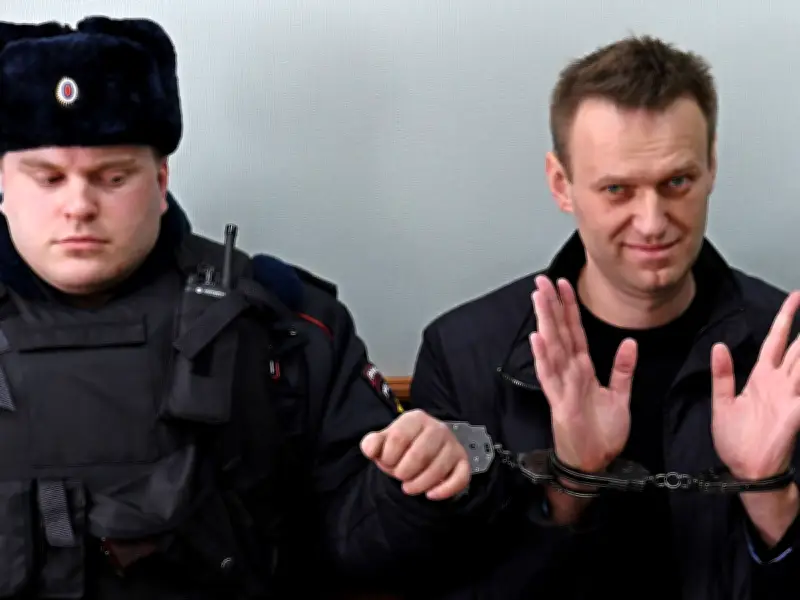
The United Kingdom has imposed major sanctions on nine Russian individuals and organizations accused of developing chemical weapons used to poison opposition leader Alexei Navalny and former spy Sergei Skripal. The Foreign Office announced asset freezes and travel bans targeting seven people and two research institutes behind the toxin epibatidine and the Novichok nerve agent.
Salisbury Attack and Navalny Poisoning
The 2018 Novichok attack in Salisbury left Sergei Skripal, now 75, and his daughter Yulia, 41, seriously ill. Local woman Dawn Sturgess, 44, died after Russian special forces planted the substance at their home. Alexei Navalny was killed aged 47 in a Siberian penal colony two years ago with epibatidine, a toxin found in poison dart frogs in South America. He had previously been poisoned with a Novichok-related substance and was hospitalized after falling ill on a flight. After recovering in Europe, he returned to Russia, where he was arrested and sentenced to 19 years in prison.
Both crimes are believed to have been personally ordered by Russian President Vladimir Putin. A European Arrest Warrant has been issued for Alexander Petrov and Ruslan Boshirov, suspected members of Russian military intelligence behind the Salisbury attack.
Sanctions Details
The sanctions apply to two research institutes: the Russian state scientific research institute SC Signal and GNIII VM, the State Scientific Research and Testing Institute for Military Medicine. Sanctioned individuals include Vladimir Kondratyev, who co-authored a paper on epibatidine testing; Andrei Antokhin and Viktor Taranchenko, who researched Novichok nerve agents; Artur Zhirov, Director of SC Signal; Sergeir Chepur, Head of GNIII VM; Aleksandr Mahlay, Chief Scientist at SC Signal; Ivan Kravstov, Head of the 4th Scientific Research Department at SC Signal; and Viktor Taranchenko, Head of the 1st Scientific Research Centre at SC Signal.
Official Statements
Foreign Secretary Yvette Cooper said: "Russia's repeated use of chemical weapons is a sickening violation of international law and a direct threat to global security. From the use of Novichok nerve agents in Salisbury to Epibatidine in Siberia, poisoning Dawn Sturgess and Alexei Navalny, Russia continues to use barbaric tools to inflict death and suffering on innocent civilians, including in Ukraine. We will continue to call out Russia’s violations of the Chemical Weapons Convention, hold those responsible to account, and work with allies to deter further use of these dangerous weapons."
The Foreign Office added: "At the NATO Summit in Ankara, Turkey this week, the UK will join NATO allies in strengthening collective security to tackle the long-term threat posed by an increasingly reckless and dangerous Russia. This is the latest step in the UK’s efforts to expose and deter Russia’s illegal chemical weapons activity. Only the Russian state had the means, motive and opportunity to deploy this lethal toxin to target Navalny, and the UK holds it responsible for his death."
Broader Context
The UK has now sanctioned over 3,400 individuals and organizations in response to Russia’s aggression in Ukraine. The latest measures come amid growing tension between Russia and NATO, with pressure on the UK to stand up to Kremlin aggression. The sanctions are intended to deter further use of chemical weapons and hold those responsible accountable.