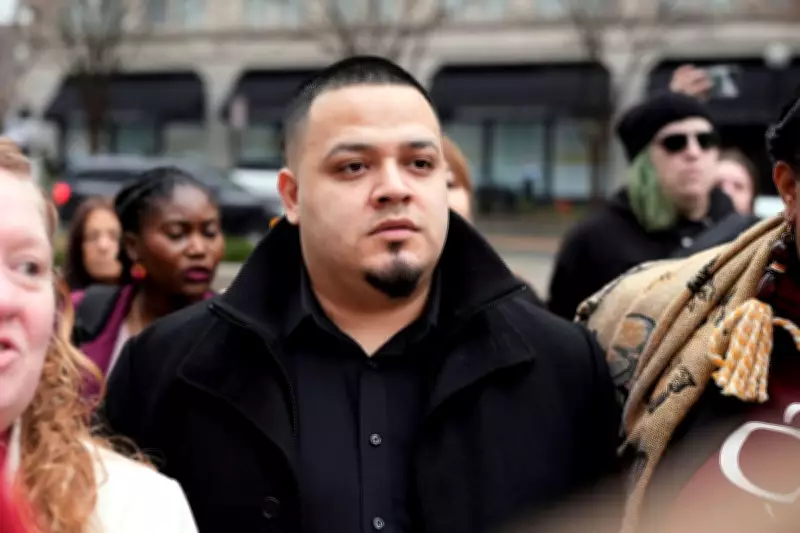
Trump Administration Blocks Self-Deportation, Targets Salvadoran Immigrant for Liberia
Donald Trump's administration is actively preventing Kilmar Abrego Garcia, a Salvadoran immigrant at the heart of the president's mass deportation campaign, from voluntarily deporting himself to Costa Rica. Instead, Immigration and Customs Enforcement (ICE) is finalising plans to send him to Liberia, an African nation he has never visited, while the Justice Department separately prosecutes him in a criminal case.
A Prolonged Legal and Diplomatic Battle
The government has spent months attempting to criminally prosecute Abrego Garcia after being compelled to bring him back to the United States last year, following a wrongful deportation to a brutal Salvadoran prison. Concurrently, officials have tried to deport him to at least five different countries, including four in Africa, before his criminal trial has even commenced. This week, the administration declared it has "analysed and eliminated all other options" and "settled on a final country of removal: Liberia."
Federal Judge Paula Xinis is currently blocking ICE from deporting or detaining Abrego Garcia, noting earlier this year that the government has made "one empty threat after another to remove him to countries in Africa with no real chance of success." Despite this, Department of Justice attorneys argue that sending him to Costa Rica would be "prejudicial to the United States," while Liberia represents a "facially legitimate and bona fide reason" for removal.

Contradictions and Legal Challenges
In a striking contradiction, ICE is rebuffing Abrego Garcia's attempts to self-deport to Costa Rica, even though the administration recently inked a deal with the country to receive up to twenty-five deportees. "If Costa Rica is good enough for those twenty-five random people, why's it not good for Kilmar Abrego Garcia?" his attorney, Simon Sandoval-Moshenberg, questioned. The thirty-year-old father, who has an American wife and child and has lived in Maryland for years after fleeing gang violence in El Salvador, is "holding up" while out of federal custody but faces uncertainty as the government prolongs his stay.
Abrego Garcia's legal team asserts he is willing to deport himself to Costa Rica, which has agreed to accept him. However, ICE's then-acting director Todd Lyons contended in a memo last month that such a move would be detrimental to U.S. interests. Government lawyers maintain that the U.S. has expended significant political capital and engaged in "high-stakes" and "extensive negotiations" to send him to Liberia instead, describing it as "a thriving democracy and one of the United States's closest partners on the African continent."
Background of Wrongful Deportation and Prosecution
An immigration judge blocked the government from deporting Abrego Garcia to El Salvador in 2019, but he was deported to a Salvadoran prison in March 2025, where he endured torture and severe abuse. Government officials later admitted this was due to an "error," and federal courts, including a unanimous Supreme Court, ordered his return. Upon his abrupt return to the U.S. in June 2025, he faced allegations of illegally moving other immigrants across the country, to which he has pleaded not guilty.
He is now asking the judge in his criminal case to dismiss the charges on grounds of "vindictive and selective prosecution," arguing the administration unlawfully punished him for fighting back. Tennessee District Judge Waverly Crenshaw previously found "some evidence" of vindictive prosecution, citing an admission from then-Deputy Attorney General Todd Blanche that the case was brought to get him back to the U.S.

Third-Country Removals as a Deportation Strategy
While fighting his criminal case, ICE has attempted to deport Abrego Garcia to several African countries, including Eswatini, Ghana, and Uganda, before focusing on Liberia. These "third-country removals"—deporting immigrants to countries where they have no connections if their home countries won't accept them—have become a key tool in the Trump administration's mass deportation strategy. Judge Brian Murphy, overseeing a separate legal battle, criticised Homeland Security for a policy "whereby it may take people and drop them off in parts unknown," stating, "It is not fine, nor is it legal."
Government attorneys claim ICE has received "credible diplomatic assurances" that Abrego Garcia "will not be tortured in Liberia," but they also accuse him of seeking "better treatment" in Costa Rica. Judge Xinis is set to hear further arguments from both sides on April 28, as this complex saga continues to unfold amidst broader immigration debates.