
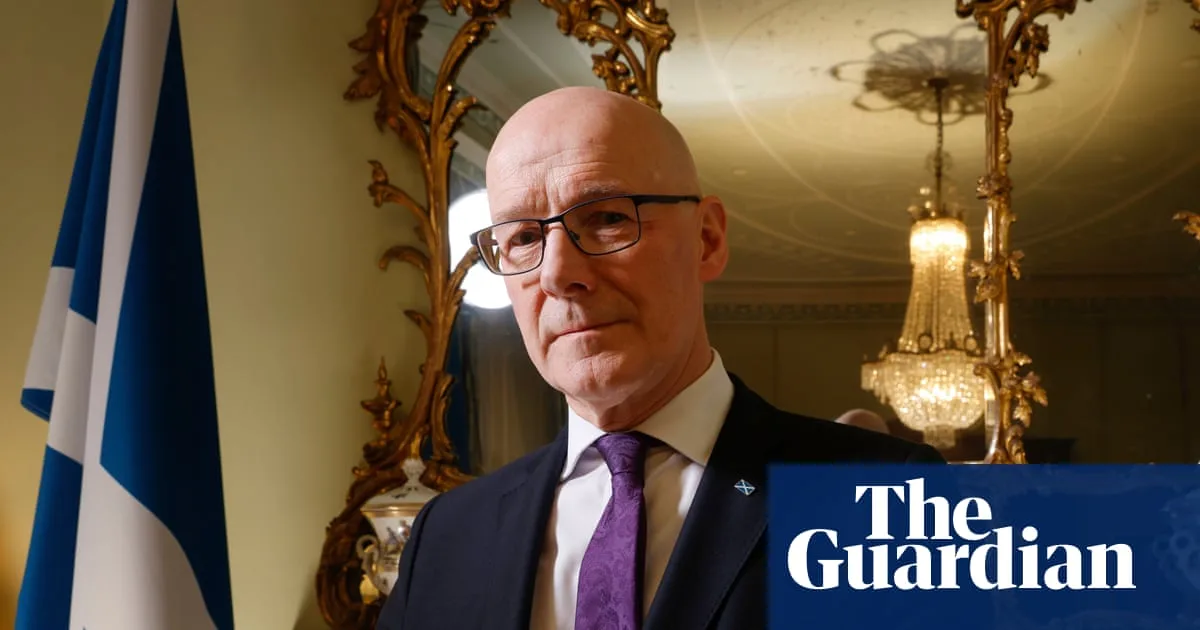
First Minister John Swinney has mounted a robust defence of immigration, insisting it is essential to bolster Scotland's working-age population. His comments come as support for Reform UK grows ahead of next May's Holyrood elections, with Nigel Farage's party securing 26% of the vote in its first Holyrood byelection test.
Speaking at the end of a year marked by a significant shift in Scottish public sentiment, Swinney acknowledged concern over the rise of Reform. 'I believe with every fibre of my body in the importance of inclusion within our society,' he said. 'During my lifetime Scotland has become a much more diverse country. I'm very proud of that.'
Swinney argued that far-right views, such as those expressed at protests outside asylum hotels in East Kilbride, Falkirk, Perth, Aberdeen and Inverness, represent 'a very, very small minority in Scotland'. He suggested there was 'quite a lot of travelling support' for Reform, and accused Nigel Farage of spreading 'poison' by blaming asylum seekers for wider concerns.
However, Swinney made a distinction between far-right views and 'legitimate points' about pressure on local services or community safety. He said he was prepared to listen and engage in rational argument about the economic benefits of migration, particularly given public anger over living standards. 'We have a problem with the size of our working-age population, which I think needs to be addressed by migration,' he said.
The first minister also noted that pressure on public services is not solely due to migration, pointing to austerity since 2010. 'We've taken decisions to break out the mould of austerity, like asking higher earners to pay more taxations so we can begin to invest in public services,' he said. Swinney denied complacency, citing government programmes promoting community integration, and argued that the Brexit referendum, in which most Scots voted to remain, showed 'very different attitudes prevailed in Scotland'.




