
A 23-year-old woman with an open asylum case in the US has said she agreed to be deported back to her native country in South America after months of “humiliating” treatment in immigration detention. The woman, identified only as Ana María, had been living in the US with her boyfriend, working and building a life, before her arrest by US Immigration and Customs Enforcement (ICE).
In an exclusive interview, Ana María described being moved between at least six detention centres in three months, despite having no criminal record in the US or her home country, and packed in with other women suffering similar indignities. She said she was shackled at the wrists and ankles during every transfer, with chains tightened so painfully they left marks. “They would grab you by the arm to force you to walk faster, and I would plead with them, ‘Miss, it hurts! Please! I can’t walk,’” she said. “They treated us worse than criminals, like dogs – well, a dog lives better than that in the US.”
Ana María said she and her boyfriend had decided to move to Canada after Donald Trump returned to the White House, fearing the anti-immigration crackdown on people with papers and ongoing court cases, not just the undocumented. They had watched TikToks of people being arrested, sent to detention and deported, and feared it could happen to them any day. In January, they took a bus to the US-Canada border and turned themselves in to Canadian police to seek asylum. But Canadian authorities accused her boyfriend of being a gangster trying to traffic her, seemingly because of his tattoos, arrested him and sent her back “straight to ICE”.
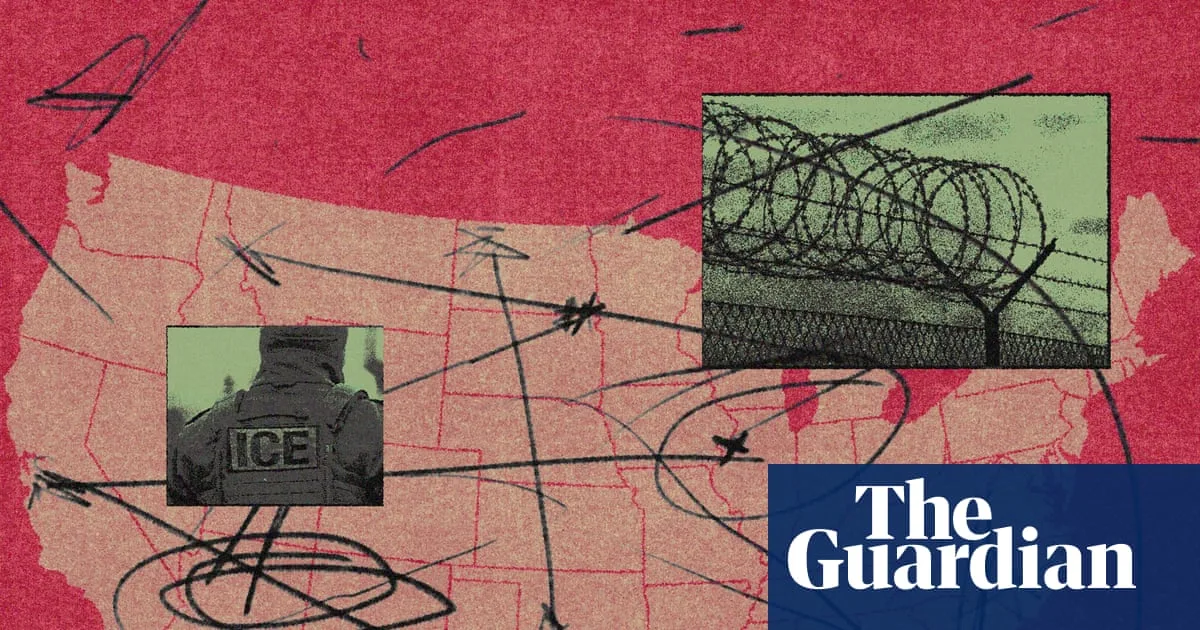
She spent one day in one detention centre before being moved just over 50 miles to another for almost two weeks. Her first ICE flight took her from the northern state where she was arrested to Louisiana, where she said she did not know where she was and was given no information. She described conditions including lights on for 24 hours, stale or rotten food, and guards yelling at night, leaving detainees little sleep. She was later moved to several places in Arizona and then Texas, each time in chains.
In desperation, she requested to be returned home, even though it meant going back to danger and thousands of miles away from the life she had been building. The Guardian has agreed to use a pseudonym and not reveal her place of origin or other details because she fears retaliation from authorities or criminal gangs.




