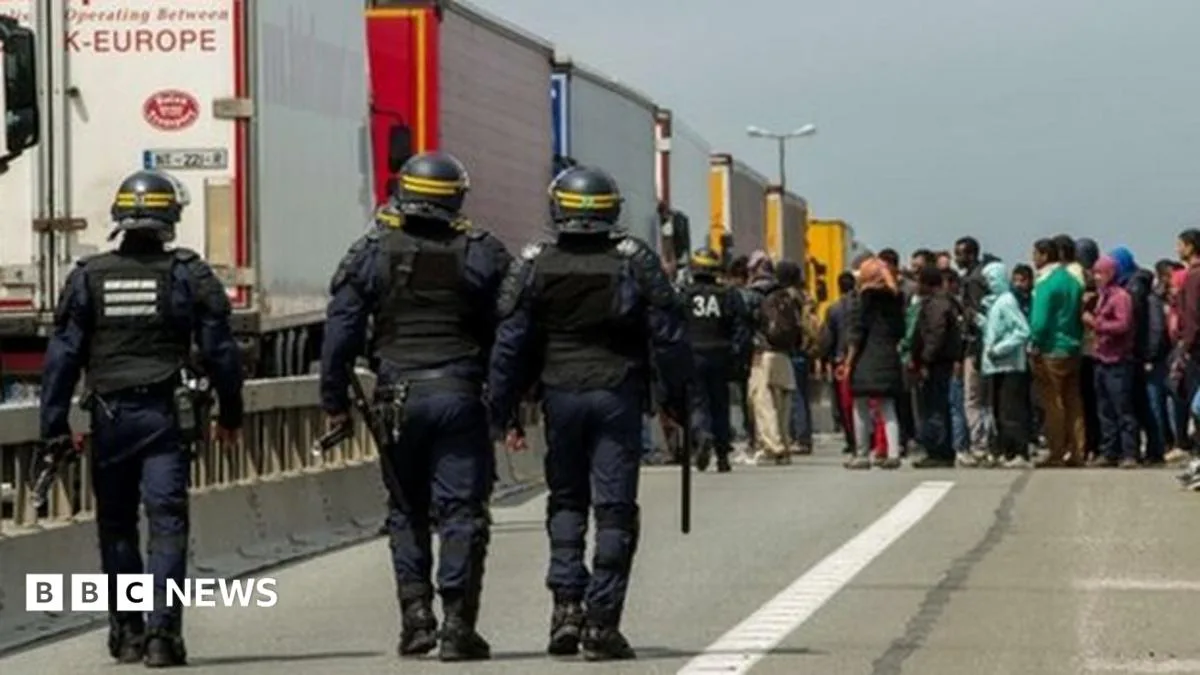
Thousands of migrants determined to reach the UK live in camps near the port of Calais. In 2015, UK Prime Minister David Cameron described the sight of hundreds trying to board lorries approaching the port as 'unacceptable', stating that Britain and France were working together to tackle the issue.
The port is protected by 16ft fences topped with razor wire and CCTV, with gates and exterior guarded by heavily armed French riot police. Inside, a comprehensive network of surveillance cameras and security guards with dogs patrol the area. Lorries are checked using X-ray scanners, heartbeat monitors, and carbon dioxide detectors to detect stowaways.
In August 2015, the UK and France agreed on new measures including a control and command centre and the deployment of 500 extra British and French police. The UK pledged £7m over two years towards these measures, in addition to previous commitments of £12m over three years and £3m for detection technology and dog searches.
In January 2016, scores of migrants managed to storm a P&O ferry in the port after breaking away from a demonstration. Following the incident, French Interior Minister Bernard Cazeneuve said extra forces, including riot police, gendarmes, and border units, had been mobilised for several months.
French police have been criticised for taking migrants off lorries and releasing them a few miles away, but many are arrested – reportedly more than 18,000 in the first half of 2015. The police say there are too many to deal with and focus on safety by getting people off the road.
UK Prime Minister David Cameron warned against pointing fingers, saying the migration problem must be tackled 'at source' by stopping trafficking across the Mediterranean and making Britain a 'less easy place' for illegal migrants to work. Labour MP Keith Hanson called for a joint agreement on whether migrants should be accepted as asylum seekers, detained, or deported from France.