ICE Hiring Spree Led to Influx of Recruits with Questionable Qualifications, Investigation Shows
Rapid recruitment and expansion by US Immigration and Customs Enforcement (ICE) has resulted in an influx of employees with dubious qualifications, according to a recent investigation. The track records of some new recruits, hired amid the Trump administration's mass deportation agenda, stand out for all the wrong reasons.
Questionable Backgrounds and Hiring Practices
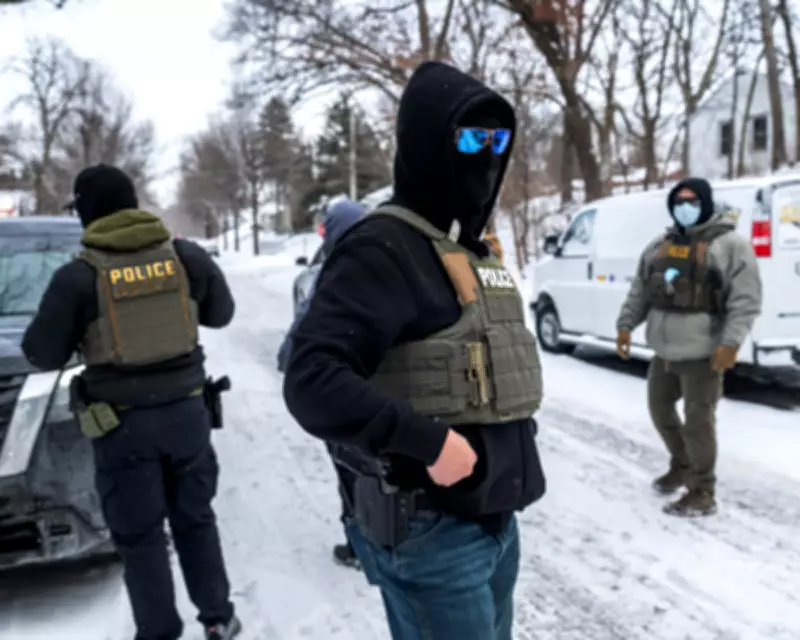
These recruits include individuals with characteristics such as two bankruptcies and six law enforcement jobs in three years, an allegation of lying in a police report to justify a felony charge against an innocent woman—leading to a $75,000 settlement and criticism of integrity—and a job candidate who failed to graduate from a police academy and lasted only three weeks as a police officer. All were hired recently by ICE during an unprecedented hiring spree, which aimed to add 12,000 new officers and special agents to double its force, funded by a $75 billion windfall from Congress to enact Donald Trump's immigration agenda.
President Trump prioritized swift action, prompting ICE to engage in rapid-fire recruitment. This haste has led to new employees with questionable qualifications, whose backgrounds and training are under scrutiny after numerous high-profile incidents involving excessive force by ICE agents. Claire Trickler-McNulty, a former ICE official across multiple administrations, warned, "If vetting is not done well and it's done too quickly, you have higher risk of increased liability to the agency because of bad actions, abuse of power and the lack of ability to properly carry out the mission because people don't know what they are doing."

Vetting Challenges and Systemic Issues
ICE has stated that the majority of new hires are police and military veterans. However, evidence suggests that applicants with questionable histories were either not fully vetted or were hired despite their past, as found in an investigation by the Associated Press. Todd Lyons, ICE's acting director until the end of May, expressed pride in the hiring campaign during a congressional hearing, noting it drew over 220,000 applications. He said, "This expansion of a well-trained and well-vetted workforce will help further ICE's ability to execute the president's and secretary's bold agenda."
Unlike many local law enforcement agencies, ICE shields employee identities to protect them from harassment, making a full accounting of new hires impossible. The AP focused on over 40 officers who publicly announced their new ICE jobs on LinkedIn, using public records to check backgrounds. All but one were male. While most had conventional qualifications, several had histories of unpaid debts leading to legal action, two had filed for bankruptcy, and three others faced lawsuits alleging misconduct in prior law enforcement jobs.
Marshall Jones, a police recruiting expert, noted that without more data, it's hard to assess ICE's employee pool fully. He suggested ICE likely hired "less than ideal candidates" who meet minimum requirements but would be overlooked in normal hiring cycles. "If you're hiring hundreds or thousands of people, even with the best of background processes, there are going to be outliers," he said. "The question is, are these normal outliers from human beings doing things, or is there a systemic challenge in properly vetting folks if there are issues?"
Specific Cases Highlighting Red Flags
The Department of Homeland Security (DHS), ICE's parent agency, did not address specific hiring decisions but acknowledged some applicants received "tentative selection letters" and offers to work temporarily before full background checks. DHS stated, "ICE is committed to ensuring its law enforcement personnel are held to the highest standards and rigorously vets them throughout the hiring process. Vetting is an ongoing process, not a one-time occurrence." This process includes reviewing criminal histories, credit scores, and conducting background investigations, but the hiring deluge has strained the agency, which offered signing bonuses up to $50,000 and advertised that college degrees were not required.

An internal memo, first reported by Reuters, instructed ICE supervisors to refer "derogatory information about a newly hired employee's conduct" to an internal affairs unit. Among the new hires is Carmine Gurliacci, 46, who resigned as a police officer in Georgia to join ICE in Atlanta. He filed for bankruptcy in 2022, listing no income and tens of thousands in unpaid debts, and had previously filed in 2013. Trickler-McNulty noted serious financial problems are "a pretty big red flag" due to risks of bribery or extortion. Gurliacci moved through six Georgia law enforcement agencies in three years, resigning each time, and did not respond to requests for comment.
Another hire, Andrew Penland, 29, joined ICE after resigning as a sheriff's deputy in Kansas, where he faced a lawsuit alleging false arrest of a woman, settled for $75,000. Penland deactivated his LinkedIn account and alerted ICE to inquiries but did not respond. A third hire, Antonio Barrett, initially failed to graduate from a Colorado law enforcement academy, completed special training, worked three weeks as a police officer, and faced a dismissed lawsuit for excessive force as a corrections officer. Barrett did not respond to messages.
Training Concerns and Future Implications
ICE has denied removing training requirements, stating new recruits receive 56 days of training and 28 days of on-the-job training, with most having completed law enforcement academies. However, former ICE academy instructor Ryan Schwank testified that agency leaders cut training on use of force, firearms safety, and protester rights. He highlighted that new recruits include some as young as 18 without college degrees and whose primary language is not English, saying, "We're not giving them the training to know when they're being asked to do something that they're not supposed to do, something illegal or wrong."
This investigation raises significant concerns about the integrity and effectiveness of ICE's hiring practices, potentially impacting public safety and agency operations. As ICE continues its expansion, the need for thorough vetting and adequate training remains critical to avoid further incidents and maintain trust in law enforcement.