Ian Huntley Dies After Savage Prison Assault Leaves Him Unrecognisable
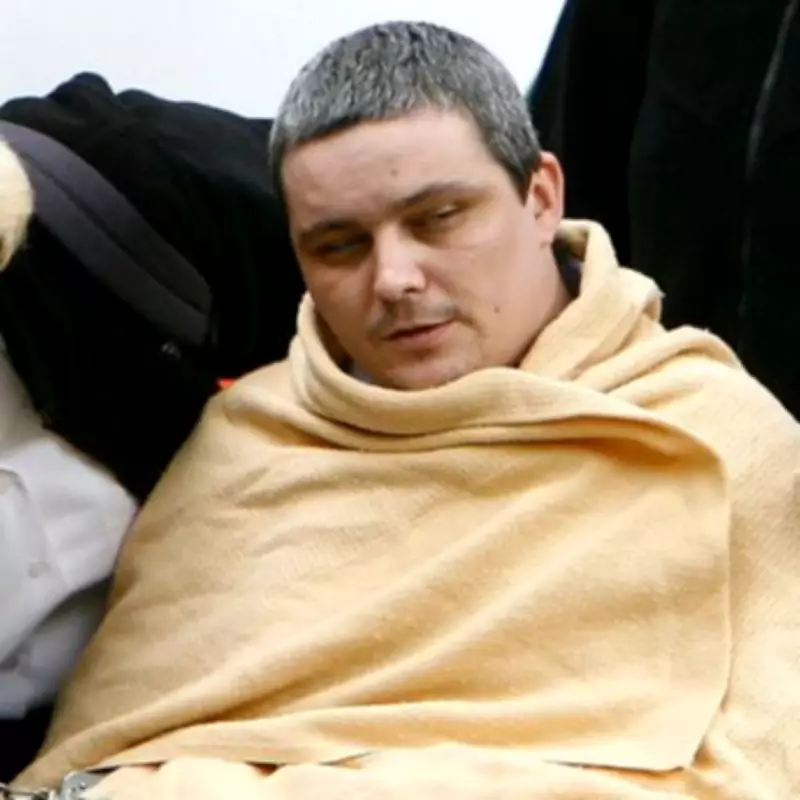
The notorious Soham murderer Ian Huntley has died eight days after a vicious prison attack left him blind and severely brain damaged. Huntley, aged 52, was rushed to hospital last Thursday following an alleged assault by a fellow inmate at HMP Frankland, a maximum security facility often referred to as 'Monster Mansion'.
Gruesome Attack Details and Medical Aftermath
Prison officers initially believed Huntley was dead when they discovered him lying in a pool of blood on the ground. The attack reportedly occurred as Huntley was working in waste management on Wing A, an area reserved for inmates requiring protection from the general population. According to sources, the assailant struck Huntley up to fifteen times with a metal pole while he was bending down to tie string on a recycling crate.
The injuries sustained were catastrophic, including multiple skull fractures, extensive brain damage, and a broken jaw. Huntley spent his final days in a medically induced coma, dependent on a ventilator to breathe. Medical professionals withdrew life support on Friday night after consultations with his mother, Lynda Richards, and brain tests confirmed he was in a persistent vegetative state.

His mother reportedly visited him secretly on his deathbed and could not recognise her son due to the severity of his injuries.
Investigation and Suspect Identification
Triple killer Anthony Russell, aged 43, has been widely identified as the prime suspect in the assault. Reports suggest the attack followed a dispute in a prison workshop. Witnesses claim other inmates cheered as Russell was led away in handcuffs, shouting declarations about having killed Huntley.
Nusrit Mehab, a former Metropolitan Police superintendent and senior criminology lecturer, explains that Huntley's death automatically triggers multiple investigations. "A death in custody is treated as a crime scene," she states. "The police, prison and probation ombudsmen, and coroner will all conduct independent inquiries. A postmortem is mandatory to determine the exact cause of death, followed by an inquest."
Authorities will review CCTV footage from the area where the attack occurred, as it happened during daytime work activities rather than under cover of darkness.
Complex Family Dynamics and Next of Kin Issues
Huntley was largely estranged from his family during his 23-year imprisonment. His mother Lynda Richards, 71, was reportedly by his bedside when he died, despite having previously expressed difficulty recognising him after the assault.
His daughter Samantha Bryan, a 27-year-old beautician who only discovered her biological relationship to Huntley during a school project at age 14, has publicly stated that "there's a special place in hell waiting for him." Her mother Katie fled Huntley's abuse after becoming pregnant at 16.
Regarding funeral arrangements, Mehab explains: "His body will be released to the next of kin or an appointed representative. If he designated someone else in a will, they become the legal claimant. If no one comes forward, the responsibility falls to the public health authority."
Bleak Funeral Prospects and Security Concerns
Despite being one of Britain's most reviled murderers, Huntley remains entitled to funeral arrangements. However, any ceremony would face significant security challenges due to his notoriety.
Mehab warns: "If his family holds a funeral, it will likely be a private burial in an undisclosed location with minimal attendance, or possibly just a cremation. Everything would be conducted very low key."
Should no one claim the body, the prison service and local authority would arrange what Mehab describes as "a low cost funeral or cremation on the taxpayer." This would typically involve an anonymous, unpublicised disposal to avoid attracting public attention. Ashes might be scattered by authorities or stored as unclaimed remains.

Prison History and Previous Attacks
Huntley had been serving a life sentence with a minimum term of 40 years for the murders of 10-year-olds Holly Wells and Jessica Chapman in August 2002. The former school caretaker had dumped their bodies in a ditch after they left a family barbecue to buy sweets in Soham, Cambridgeshire.
During his imprisonment, Huntley faced multiple violent attacks. In 2005, he was scalded with boiling water at HMP Wakefield. In 2010, at HMP Frankland, robber Damien Fowkes slashed his neck, creating a wound requiring 21 stitches. Huntley had become increasingly paranoid about his safety, refusing prison food out of fear of poisoning and instead purchasing fast food and confectionery, which caused significant weight gain.
His girlfriend Maxine Carr, convicted of conspiring to pervert the course of justice, was released in 2004 with a new identity. The case also revealed systemic failures, as Huntley had been able to work with children despite previous rape and sexual assault allegations that Humberside Police had received.
Transport and Security for Medical Treatment
Following the recent attack, Huntley's condition was so critical that he required ground transport rather than air ambulance to reach the Royal Victoria Infirmary in Newcastle. A paramedic and doctor first stabilised him at the prison scene before a 30-minute, 19-mile journey with armed police escorts front and back. Two prison guards and an armed officer accompanied him inside the ambulance during the high-security operation.
The air ambulance later collected medical staff from the hospital after Huntley's arrival. Despite these extensive measures, he could not recover from his injuries.
As investigations continue into Huntley's death and the alleged attacker faces legal proceedings, the families of his victims may find some measure of closure, though the horror of his crimes continues to resonate through British criminal history.