

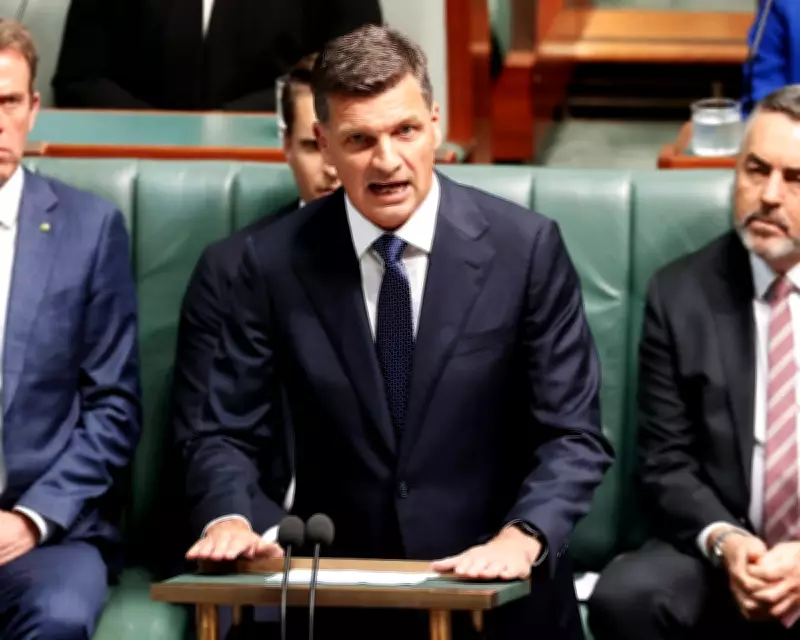
Angus Taylor's tough talk on migration puts politics over policy and risks feeding damaging stereotypes, according to migration expert Alan Gamlen. The opposition leader's approach, which links migration numbers to housing completions, fails to address the real issue: the growing number of temporary migrants living in Australia in a second-class status.
The Wrong Question
Australia's migration debate is obsessed with the wrong question: are too many people coming? Instead, the focus should be on how to manage the increasing temporary migrant population and link it to housing, infrastructure, jobs, and social cohesion.
While Taylor is right to say migration needs better planning, the expansion of temporary migration has created a population of people living and working in Australia, paying taxes, but not fully included in the community. The real issue is the scale and character of temporariness, not daily arrivals and departures.

Flawed Policy Proposals
The Coalition's plan to directly link migration numbers to housing completions is a political reaction, not a planning solution. Housing and migration are connected, but migration is not the main cause of the housing crisis. Migrants contribute to supply by working in construction and other sectors. A blunt cut to migration could restrict the labour force needed to build houses and infrastructure.
A better approach would be to stabilise the size and composition of the temporary population, as Canada has recently done. Australia should ask: how many temporary migrants are here, what rights do they have, and when should there be a pathway to permanence?
Stereotypes and False Assumptions
The Coalition's proposal to bar non-citizens from welfare and the NDIS plays into the false stereotype that migrants live off benefits. In reality, migrants contribute more in taxes than they consume in benefits, and temporary migrants generally lack access to welfare. Many temporary migrants pay taxes for services they cannot use.
Permanent residence is typically granted to those who have already spent years in Australia on temporary visas, working, studying, and building networks. Sending them home and replacing them with new arrivals would harm productivity and social cohesion.
Political Motivations
The Coalition's tough talk targets One Nation, not Labor. But as Penny Wong and Julian Hill have noted, one cannot out-Pauline Pauline. This rhetoric risks feeding stereotypes and alienating business groups reliant on migration.
Australia needs a serious migration debate that addresses the overgrown temporary system, which has led to exploitation, infrastructure stress, and social fragmentation. The task is to manage temporariness better: fewer people stuck in limbo, clearer pathways for contributors, stronger protections, and better planning.
That would be a serious migration policy. The rest is just politics.






