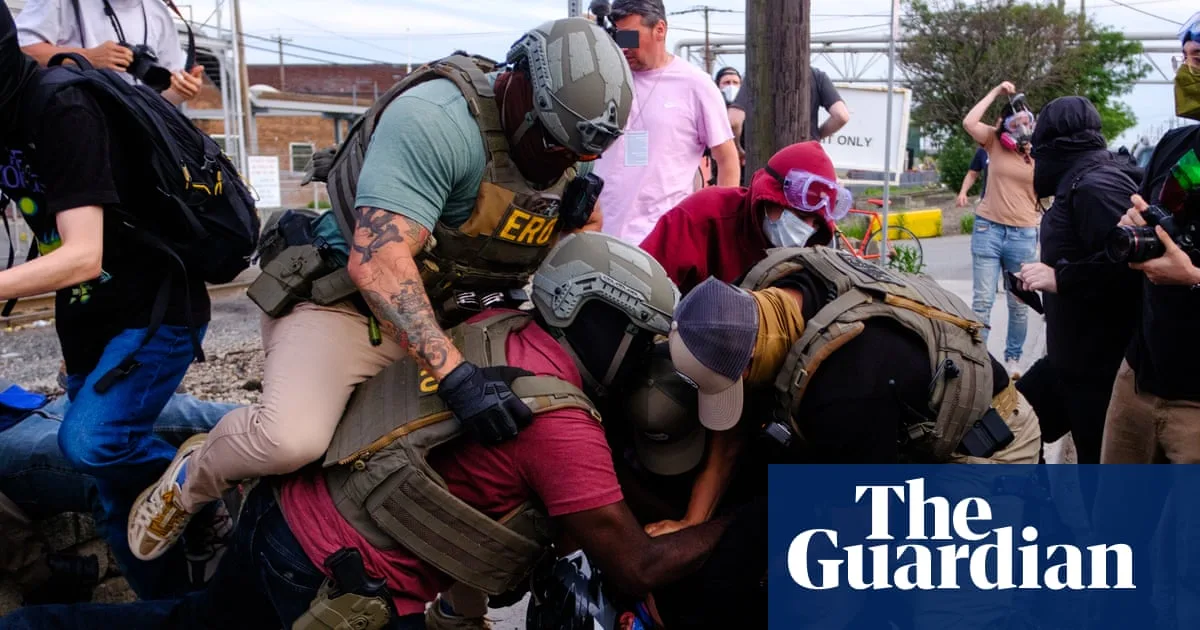
Violence erupted outside the Delaney Hall immigration detention centre in New Jersey on Tuesday night as federal officers sprayed chemicals and charged at demonstrators on the fifth day of a hunger and labour strike by detainees. A protester who threw an object at officers was tased and carried into the facility.
The facility, run by private prison company Geo Group, houses between 300 and 400 detainees participating in the strike, demanding improved food, ventilation, medical care and for their immigration cases to proceed. In a letter published by advocates, detainees said: 'We are not criminals. We are people who enter with a clean record.' Two recently released men confirmed the strike's existence, despite denials by the Trump administration.
One released detainee, Luis, who requested anonymity for fear of retaliation, said he was detained during a routine immigration check-in, a practice that has become more common under the second Trump administration. He had been held for three and a half months. 'If they freed us, we wouldn't generate profit for this business,' he said, referring to Geo Group.

Geo Group responded by stating it provides 'around-the-clock access to medical care, in-person and virtual legal and family visitation, general and legal library access' and other services, all monitored by ICE. Department of Homeland Security Secretary Markwayne Mullin denied the strike and any substandard conditions, insisting detainees receive three meals a day, dietician evaluations, clean water, clothing, bedding, showers, toiletries and comprehensive medical care.
On Monday, New Jersey Senator Andy Kim and Governor Mikie Sherrill attempted to enter the facility. Kim, who has previously visited and described conditions as 'inhumane', has been a vocal critic. The Trump administration accused Democratic politicians of 'spreading smears' about ICE.