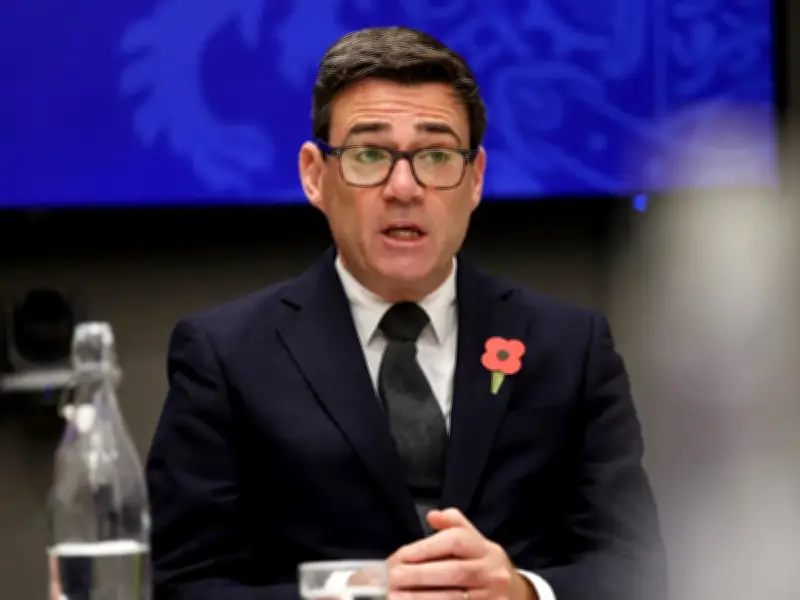
Prime Minister Andy Burnham has refused to say whether he believes migration levels are too high, as the Home Secretary prepares to announce major changes to the immigration system.
Asked whether legal migration was at an excessive or insufficient level, Mr Burnham said it was "difficult to say", arguing that numbers should reflect the needs of the economy. Speaking to ITV Tonight in an interview due to air on Tuesday, the Prime Minister said legal migration had "come right down".
Prime Minister's comments on migration
He said: "I think when you have planned migration, it's difficult to say is it too high or too low, because it's got to be, if you like, following gaps in the economy. Because if you just put a number on it, then we may have a shortage in a certain area."
Mr Burnham also insisted that the situation surrounding both legal and illegal immigration was "in a much better place than it was". The Government has said boat crossings are down significantly, with the lowest number of summer arrivals – a period when journeys often rise in part due to the warmer weather – since 2020 recorded this year.
Despite nearly 1,000 migrants crossing the Channel to the UK in two days last week after a three-week pause in arrivals, total number of arrivals for 2026 stood at 21,869 after Friday, according to Home Office figures - down on last year.
And Mr Burnham added: "Because boat crossings are down and net migration overall is down and down quite significantly. So there's a much better control of it."
The Prime Minister, who has previously called for discussions about the possibility of restoring freedom of movement with the European Union, also acknowledged the impact Brexit had on migration.
He said: "What I have argued is that migration and illegal immigration changed significantly with Brexit. And I think we've got to be honest about that."
New reforms and economic impact
On Monday (November 2), Ms Mahmood will set out reforms on the length of time people will have to be in the UK before becoming eligible for permanent settlement, measures which have caused deep splits at the top of the Labour Government.
Speculation has mounted that the most controversial proposals – including increasing the five-year wait for claiming indefinite leave to remain (ILR) by up to 10 years for foreign care workers – could be watered down in the wake of criticism from senior Labour figures.
Pressure to tighten up the rules has intensified as the so-called "Boris wave" of migrants who came during Boris Johnson's administration begin to reach the current five-year threshold to qualify for ILR.
Analysis published on Monday found skilled migrants settling in Britain are expected to contribute billions more to the public finances than they cost over their lifetimes.
The Institute for Public Policy Research (IPPR) said skilled migrants and their adult dependants due to settle in the UK under current rules are expected to make a net lifetime contribution of around £115 billion through the taxes they pay.
The think tank, which has been influential in Labour policy-making, said its findings offered a counterpoint to Government estimates that allowing overseas care workers and their adult dependants to settle in the UK would cost taxpayers £10 billion over their lifetimes.
It said its analysis, using the same methodology as the Home Office, suggests skilled workers and their adult dependants expected to gain ILR between 2026 and 2030 under existing five-year ILR rules would make a substantial contribution to the UK public finances.
The figures include health and care workers, as well as those on other skilled worker visas.
The IPPR said it welcomed reports that Ms Mahmood could scale back plans to lengthen the wait for settlement to 15 years for some lower-paid workers, exempting social care workers already in the UK.
It said the move would be a "significant compromise", given around 287,000 care workers and dependants are expected to settle between 2026 and 2030.
But it praised the step for protecting a group vulnerable to exploitation and supporting Mr Burnham's vision for a new national care service.
And the think tank called for ministers to find a compromise for other workers already in Britain, either by retaining their existing five-year route or introducing an interim status after five years providing a pathway to permanent residency and allowing them to change jobs without employer sponsorship.