
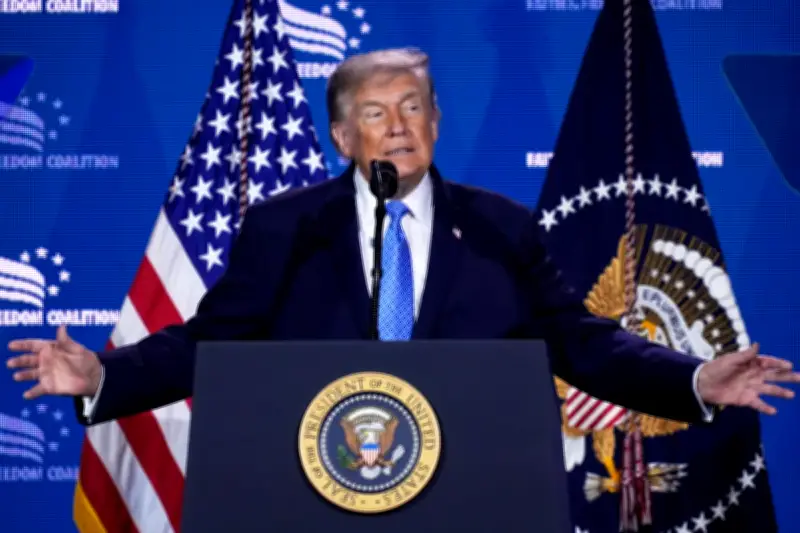
President Donald Trump has declared the ceasefire with Iran “over” after the agreement came under increasing strain with new US strikes overnight. Speaking ahead of Wednesday’s Nato summit in Turkey, Trump described dealing with the Iranians as “a waste of time” and called them “sick people”.
US Strikes on Iranian Targets
Trump’s comments came after US forces launched a wave of strikes on Iranian targets in response to Iran’s targeting of tankers in the Strait of Hormuz. The US Central Command (CENTCOM) said forces hit over 80 targets with precision munitions, including air defense systems, command and control networks, coastal radar sites, anti-ship missile capabilities, and more than 60 Islamic Revolutionary Guard Corps small boats in and near the strait.
Iran retaliated with strikes against Bahrain and Kuwait, where US military personnel are based. The Iranian Revolutionary Guard confirmed strikes on military sites in the neighbouring countries, accusing the US of openly violating the ceasefire.
Trump: 'It's Over'
Asked about the state of the initial ceasefire deal, known as the Islamabad memorandum of understanding, Trump told the media: “I think it’s over. I don’t want to deal with them any more. They’re scum. You know what scum is? They’re scum. They’re sick people. They’re led by sick people and they’re vicious, violent people. And if they had a nuclear weapon, they’d use it. As far as I’m concerned, it’s over. I’ll speak to our negotiators. They want to negotiate … But they have to come back to me. As far as I’m concerned, it’s just a waste of time dealing with them.”
Sitting alongside Trump, Nato secretary-general Mark Rutte told him: “I think what you did last night was absolutely necessary. It was a very strong response.” Earlier, Rutte told reporters: “When you have a ceasefire and Iran is basically violating the ceasefire… I think it is totally crucial that the US forcefully reacts.”
Oil Prices Jump
Oil prices jumped by more than 6%, as Trump’s comments raised concerns the wider conflict in the Middle East could restart. The renewed hostilities threaten to again disrupt shipping transiting the Gulf channel and cause difficulties in securing a permanent end to the conflict, launched by the US and Israel on February 28.
In a statement on X, CENTCOM said: “US Central Command forces completed a new round of offensive strikes against Iran, July 7, hitting over 80 targets with precision munitions as an immediate response to Iran’s latest attacks on commercial vessels transiting the Strait of Hormuz. US forces struck Iranian air defense systems, command and control networks, coastal radar sites, anti-ship missile capabilities, and more than 60 Islamic Revolutionary Guard Corps small boats in and near the strait to degrade Iran’s ability to continue attacking international commerce flowing through the international trade corridor.”
The statement added: “Iran recently attacked three commercial vessels transiting the strait, including Marshall Islands-flagged M/T Al Rekayyat, Saudi Arabia-flagged M/T Wedyan, and Liberian-flagged M/T Cyprus Prosperity.” The statement described the attacks as a “clear and dangerous violation of the ceasefire and undermines freedom of navigation”.
Iran's Response
Following the US strikes, Iran’s top negotiator Mohammad Bagher Ghalibaf accused the US of committing “major” violations of the ceasefire deal. In a post on X, he said the violations included “Persistent threats of further strikes”, “Reinstating oil sanctions” and “Attacks on southern Iran”. “The era of bullying and extortion is over. It leads nowhere. We don’t fold,” Ghalibaf said.
Three civilian vessels were hit in the strait on Tuesday – the most in a single day since late April, according to UN International Maritime Organisation figures. In response, maritime authorities have raised the threat level from “substantial” to “severe”.
Background on the Ceasefire
Ending Tehran’s stranglehold on the strait, which disrupted global oil and gas supplies and drove up fuel and food prices, had been a key demand in previous negotiations. However, the initial deal reached between the US and Iran only secures safe, toll-free passage of the waterway for 60 days, pending the outcome of a final agreement on Tehran’s disputed nuclear plans. The pact also leaves it to Iran and Oman, in conjunction with other Gulf states, to “define the future administration and maritime services in the Strait of Hormuz”. In the meantime, Iran has continued to try and exert leverage over the channel, including demanding ships seek permission to transit and raising the spectre of future charges.




