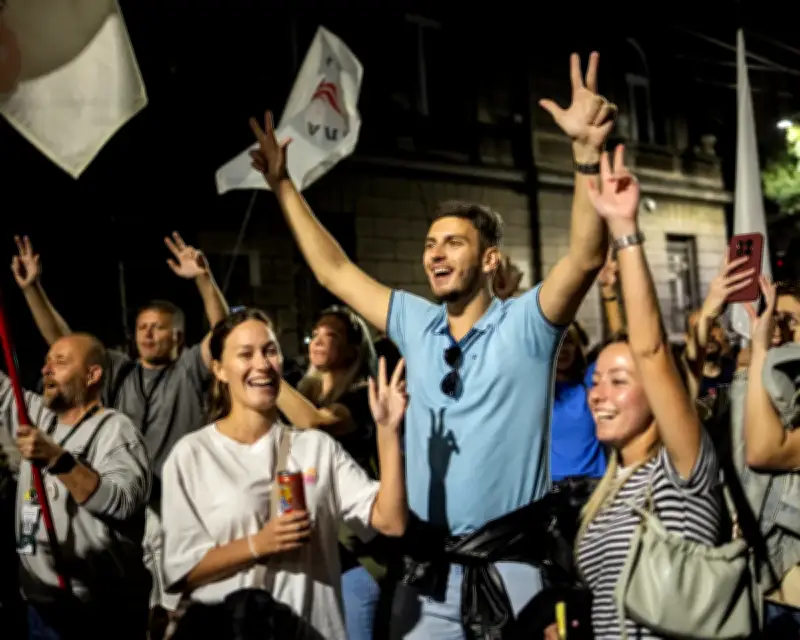
Serbia's student-led protest movement could defeat strongman Aleksandar Vučić in Sunday's parliamentary election, a result that would send shockwaves across Europe. The Student List (SL) opposition coalition has emerged as a serious challenger to Vučić's ruling Serbian Progressive party (SNS), with opinion polls showing a tight race.
Vučić recently resigned as president to fight the election, aiming to shift power from the presidency to the prime minister's office. He has been in almost total control of Serbia for 14 years, but now finds himself on the back foot for the first time since assuming power, much like Slobodan Milošević in 2000.
Student protests and the Novi Sad tragedy
The protest movement emerged spontaneously in November 2024 after the canopy over the main rail station in Novi Sad collapsed, killing 16 people. The tragedy occurred just months after a Chinese consortium had finished renovating the station in what critics claim was a corrupt deal. Despite attempts to coerce students to retreat, protests grew throughout 2025 and 2026.
In March 2025, during a 15-minute silence honouring the victims, protesters alleged police deployed a sonic weapon, the US-made LRAD 450XL, causing the crowd to disperse in panic. The government denied the claim, and the interior ministry later filed a criminal complaint against a military analyst over his assertion that a sonic weapon was probably used.
Vučić's counter-moves
Vučić has tightened his grip on the media by supporting a change in ownership of United Media, formerly the most important independent news group. Last weekend, 10 prominent journalists from its outlet TV station N1 resigned in protest against senior editorial appointments believed to favour Vučić and the SNS.
He has also ramped up nationalist rhetoric, allowing a state funeral for convicted war criminal Ratko Mladić, known as the "Butcher of Bosnia," to bolster support among nationalists. He has welcomed support from Milorad Dodik, the de facto leader of Republika Srpska in Bosnia, and has been cultivating ties with Moscow while supplying Ukraine with munitions.
Implications for Europe
If the Student List wins, it could open the possibility of swifter EU integration, welcomed in Brussels and London. Successive British governments view the Balkans as the soft underbelly of European defence where Russia can exert pressure. Student activists have been disappointed by apparent EU indifference to their struggle, but on Sunday they aim to prove the outside world wrong.