A World Transformed: From Political Theatre to Global Conflict
Just days ago, the national conversation centered on parliamentary by-elections and political arrests—the usual mixture of political arithmetic and theatre that now feels remarkably mild. Today, we awaken to a radically different reality where the Middle East has become the epicenter of a rapidly expanding conflict that threatens to engulf the entire globe.
The Middle East Cauldron Boils Over
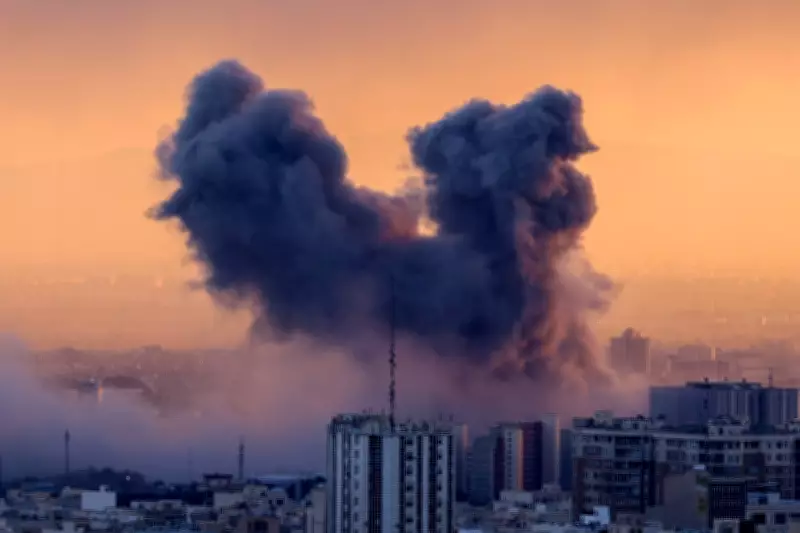
Explosions now rock Beirut as Tehran endures what officials describe as its 'worst night' of bombardment. Oil depots across Gulf states burn fiercely while warships face relentless attacks from drones and submarines. Missiles traverse international borders with alarming frequency, and Western citizens scramble to evacuate regions once marketed as idyllic holiday destinations.
Dubai, Cyprus, and Turkey—formerly framed as sunny Mediterranean paradises—now feature in security briefings discussing suicide drone attacks and NATO's Article 5 commitments. Within the United Kingdom, the terror threat level has been elevated following warnings about terror cells and lone wolves responding to Iranian clerics' fatwas issued to avenge the death of Supreme Leader Ayatollah Ali Khamenei.

Economic Chaos and Military Escalation
The global economy plunges into turmoil as vital shipping lanes for oil and gas transportation face severe disruption. Military analysts speak openly about how this regional conflict could easily transform into a great-power confrontation. Warnings accumulate with increasing urgency that a third world war might be imminent—or perhaps has already commenced.
What makes this situation particularly unsettling isn't merely the war with Iran, but the simultaneous heating up of multiple global crises, each possessing the capacity to drag others into the flames. At the center of this instability stand political leaders whose instincts appear to favor intensification rather than restraint.
Reckless Rhetoric and Unclear Objectives
American leadership has framed the crisis using language typically reserved for schoolyard scraps: "you're toast," "we're just getting started," "not a fair fight." The operation name "Epic Fury" has been widely mocked for sounding like a video game title rather than a serious military campaign.
Defense Secretary Pete Hegseth has declared "we will not follow 'rules of engagement' in this war," drawing heavy criticism for employing barroom brawl terminology to describe a global conflict endangering thousands of lives. Meanwhile, former President Donald Trump approaches the situation with characteristic impulsiveness and unpredictability, even diverting from discussing military losses during a Medal of Honor ceremony to focus on White House décor and renovation plans.
Accused of acting recklessly and unilaterally, Trump appears to have initiated a conflict without specific aims, goals, or clear definitions of success. Confusion reigns as eight different justifications for entering the conflict have emerged publicly.
Alliance Fragility and Historical Parallels
The situation worsens when considering Trump's history of injecting uncertainty into Western alliances through casual rhetoric about NATO, transactional treatment of partnerships, and sweeping strategic statements made without apparent regard for consequences. European nations feel profoundly vulnerable, particularly when witnessing the White House social media feed intercutting Hollywood action films with real footage of destroyed Iranian facilities.
Alongside Trump stands Benjamin Netanyahu, Israel's longest-serving prime minister, whose response to regional threats increasingly takes the form of aggressive pre-emptive military action. Secretary of State Marco Rubio publicly suggested the United States acted because Israel planned a strike that would provoke retaliation against American forces—a narrative immediately challenged by Netanyahu insisting Trump "does what he thinks is right for America."

The 1914 Analogy: A Fragile Global System
The historical parallel increasingly coming to mind is Europe during the summer of 1914. Before the First World War erupted, the international system appeared outwardly stable with great powers bound by alliances designed to preserve peace. Yet beneath this structure lay a fragile latticework of rivalries, nationalist ambitions, and military plans.
When the spark finally came—the assassination of Archduke Franz Ferdinand—the alliance system failed to prevent war and instead helped spread it. Within weeks, a regional crisis transformed into global catastrophe. While historians caution against overusing the 1914 analogy, it's difficult to ignore how the modern world increasingly resembles a system of interlocking tensions.
Simultaneous Global Flashpoints
Russia remains locked in brutal warfare against Ukraine while China exerts growing pressure on Taiwan. India and Pakistan persist as nuclear-armed rivals with a long history of confrontation. Each dispute possesses its own local dynamics, yet they appear increasingly connected by alliances, rivalries, and strategic calculations stretching across continents.
The most striking aspect of the present moment is how simultaneous these tensions appear. Russia's war in Ukraine shows little sign of resolution, with Western governments continuing to arm Kyiv while Moscow intensifies missile strikes against Ukrainian infrastructure. In Asia, tensions between China and Taiwan represent one of the planet's most dangerous flashpoints, with Beijing regarding Taiwan as part of China and the United States pledging to support the island's defence.
Technological Transformation and Security Vulnerabilities
Modern warfare has been revolutionized by technological advancements that make conflict less predictable and more chaotic. Drones costing mere hundreds of pounds have destroyed armored vehicles worth millions in Ukraine, while Iranian-designed "suicide drones" enable Tehran to strike back against American facilities across the Middle East.
Missile technology has spread dramatically, with countries like Russia, Iran, China, and North Korea possessing extensive arsenals capable of striking targets thousands of miles away. The uncomfortable truth about modern warfare is that defence often proves harder than attack. The United Kingdom relies on nuclear deterrence rather than comprehensive missile defence systems, with official policy acknowledging that capabilities for intercepting large-scale missile strikes remain sorely lacking.
Military Experts Sound the Alarm
General Sir Richard Shirreff, former deputy supreme allied commander of NATO in Europe, has repeatedly warned that Western societies risk underestimating how confrontation between Russia and the West could spiral into something much larger. His concern isn't that global war is inevitable, but that crises tend to escalate through miscalculation, accident, or political recklessness—and we remain unprepared for such escalation.
History offers uncomfortable lessons: in 1914, European leaders believed they could manage a regional crisis but plunged the world into humanity's deadliest war within weeks. In 1962, the Cuban Missile Crisis brought superpowers to the brink of nuclear war through misunderstandings and brinkmanship. Today's geopolitical landscape contains more actors, more advanced weaponry, and a faster information environment than either earlier crisis.
A Dangerous New Reality
The most unsettling element for many is simply how quickly the global atmosphere has shifted. The world suddenly feels dangerously combustible, with the uneasy sensation that "anything could happen" no longer confined to military briefings or diplomatic cables but entering the public imagination.
Whether present tensions will escalate into something far worse remains impossible to predict. Yet the parallels to historical moments preceding catastrophic conflict grow increasingly difficult to ignore. As multiple crises heat up simultaneously and leaders employ reckless rhetoric, the global system appears more fragile than at any point in recent memory—a reality that should give everyone pause for serious reflection.