White House Press Secretary Defends Trump's Controversial Iran Threats
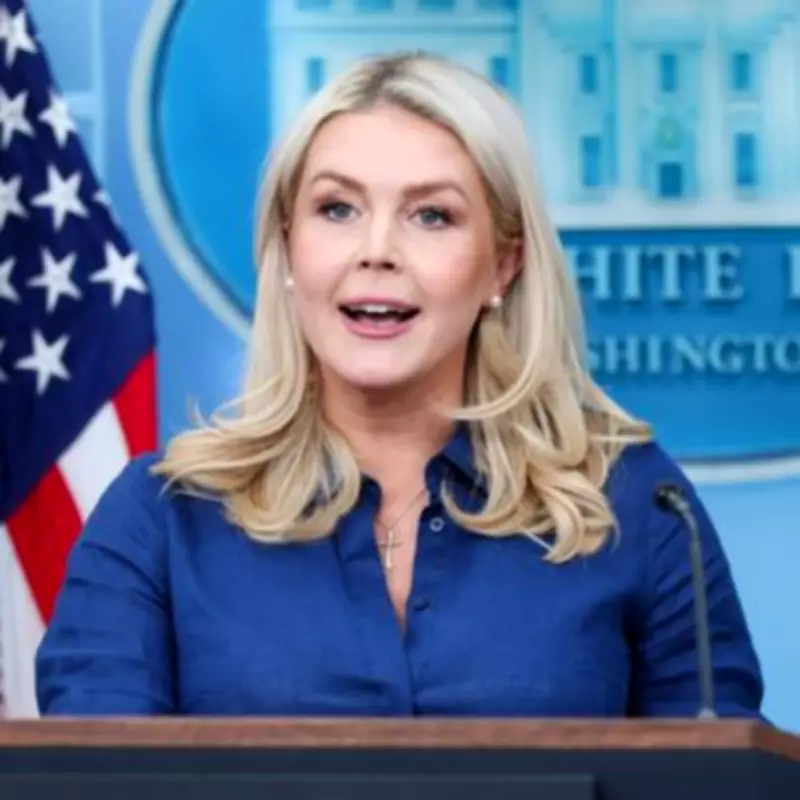
White House press secretary Karoline Leavitt has staunchly defended former President Donald Trump's widely criticized threats directed at Iran, as a newly brokered ceasefire agreement teeters on the brink of collapse. The aggressive rhetoric from Trump has drawn sharp condemnation from international bodies including the United Nations and Pope Leo XIV, creating a tense diplomatic atmosphere.
Leavitt's Defense of "Strong" Threats
During a Wednesday press briefing, Leavitt was questioned about Trump's statement to Iran warning that "civilization will die tonight" as he demanded compliance with ceasefire terms. "I think it was a very, very strong threat from the president of the United States that led the Iranian regime to cave to their knees and reopen the Strait of Hormuz," Leavitt asserted. "It was a very strong threat that led to results."
She emphasized that the threats were not empty, revealing that "The Pentagon had a target list that they were ready to hit go on at 8 p.m. last night if the Iranian regime had not agreed to reopen the strait, which they did." This justification came as Trump had set a Tuesday deadline for Iran to agree to "the COMPLETE, IMMEDIATE, and SAFE OPENING of the Strait of Hormuz" in exchange for a two-week suspension of U.S. attacks.

Trump's Escalating Rhetoric and Ceasefire Details
In the days leading up to the deadline, Trump escalated tensions with inflammatory social media posts. On Easter Sunday, he wrote on Truth Social: "Tuesday will be Power Plant Day, and Bridge Day, all wrapped up in one, in Iran. There will be nothing like it!!! Open the F----- Strait, you crazy b------s, or you'll be living in Hell - JUST WATCH! Praise be to Allah. President DONALD J. TRUMP."
Just before the deadline expired, Trump announced that Iran had presented "a workable basis on which to negotiate," with most contentious points reportedly agreed upon. The resulting deal includes a two-week halt in fighting and Iran's pledge to reopen shipping lanes through the strategically vital Strait of Hormuz, providing temporary relief to global energy markets.
International Condemnation and Domestic Criticism
Trump's aggressive negotiating tactics sparked fierce criticism across the political spectrum and from international leaders. UN Secretary General António Guterres expressed being "deeply troubled" by the statements, while Pope Leo XIV described the threats as "unacceptable."
Domestically, former MAGA ally Marjorie Taylor Greene raised the possibility of invoking the 25th Amendment to remove Trump from office, posting on social media: "Not a single bomb has dropped on America. We cannot kill an entire civilization. This is evil and madness."
Fragile Ceasefire and Regional Tensions
Despite the agreement, the ceasefire remains precarious as Israel continues to launch attacks in Lebanon—a violation of key deal terms. Following the ceasefire announcement, Bahrain, Israel, Kuwait, Saudi Arabia, and the United Arab Emirates issued alerts regarding incoming Iranian missiles, with attacks briefly subsiding before resuming.
The situation highlights the volatile nature of Middle East diplomacy and the controversial methods employed by the Trump administration in international negotiations, with the White House continuing to defend what it characterizes as effective, results-oriented threats.