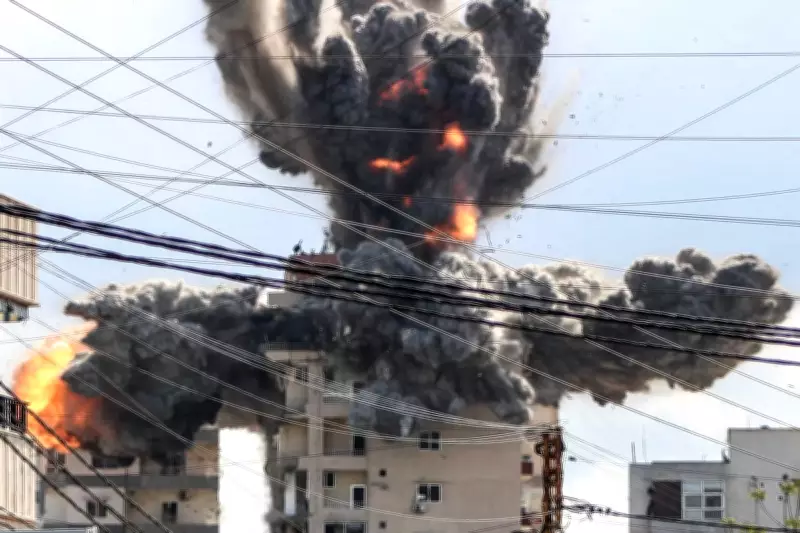
In a significant development in the ongoing Middle East conflict, the United States military has declared its intention to remain stationed in the region until a fragile ceasefire is fully complied with. This announcement comes amid escalating tensions, with former President Donald Trump issuing a stark warning of renewed attacks against Iran if the terms are not honoured.
Escalating Violence in Lebanon
Israeli strikes conducted on Wednesday have resulted in devastating casualties across Lebanon, with reports from Lebanon's Civil Defence indicating at least 254 deaths and over 1,100 individuals wounded. The attacks have sparked international outcry and raised serious questions about the reopening of the strategic Strait of Hormuz, a critical maritime passage.
Iran's Stern Warning
Iran's Revolutionary Guards have issued a forceful statement, warning that they will deliver a "regret-inducing response" if attacks on Lebanon persist. They emphasised that any assault on Hezbollah, the Lebanese militant group, "is an attack on Iran," underscoring the deep geopolitical stakes involved.

Political Reactions and Diplomatic Confusion
UK Foreign Secretary Yvette Cooper has voiced her deep concern, describing Israel's escalation as "deeply damaging" to regional stability. She has urgently called for Lebanon's inclusion in the conditional ceasefire, highlighting the humanitarian crisis unfolding. However, confusion abounds regarding the ceasefire's exact scope. Iran and Pakistan assert that it encompasses Lebanon, while Israel and the White House maintain that it does not, creating a diplomatic impasse that complicates peace efforts.
Trump's Firm Stance
Adding to the volatility, Donald Trump has reiterated his hardline position, cautioning that "the shooting starts" if Tehran fails to adhere to the ceasefire agreement. His remarks signal a potential for renewed military engagement, with US forces poised to act if compliance wavers. This stance reflects broader uncertainties in US foreign policy under his leadership.
The situation remains fluid, with international observers closely monitoring developments. The interplay between military posturing, diplomatic negotiations, and humanitarian concerns continues to shape the trajectory of this conflict, raising alarms about further escalation in an already volatile region.