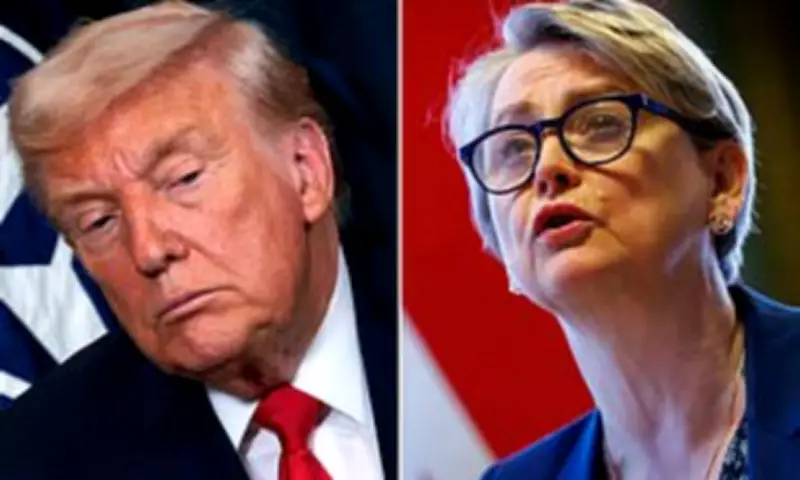
Britain has initiated a fresh diplomatic confrontation with Donald Trump's administration concerning Iran, as a senior government minister issued a stark warning against any imposition of tolls on vessels navigating the critical Strait of Hormuz. Yvette Cooper emphasised that it is absolutely essential Iran be prevented from taxing tankers entering and exiting the Gulf, directly countering the US president's suggestion that such a measure could form a 'beautiful' joint venture.
Strategic Waterway in Turmoil
Amid the White House's declaration of a dramatic and decisive victory in the Middle East, uncertainty persists over who truly controls this vital maritime corridor. The Strait of Hormuz is responsible for transporting approximately twenty percent of the world's oil and gas supplies, making it a global economic linchpin. Iranian authorities had previously indicated that oil tankers using the strait would be required to pay tolls of one dollar per barrel, potentially totalling up to £2.2 million per ship, with payments accepted in cryptocurrency or Chinese yuan.
Ceasefire Complications and Regional Instability
However, the Tehran regime abruptly closed the straits overnight, casting serious doubt on Trump's much-publicised ceasefire agreement. Iranian officials attributed this move to continued Israeli attacks on Lebanon, where the Iranian-backed terrorist proxy Hezbollah is based. State media further reported that the ceasefire would collapse if Israel persisted in its assaults, highlighting the fragile nature of the region's security.

In a scheduled speech at the Lady Mayor's Easter Banquet, Ms Cooper is poised to assert that rights of passage through international waterways must not be unilaterally withdrawn or auctioned off to individual bidders. She will firmly state that there is no place for tolls on such a crucial international maritime route, underscoring Britain's commitment to maintaining free navigation.
Trump's NATO Critique and Diplomatic Moves
Overnight, President Trump once again launched a vehement attack on NATO allies, criticising the defensive alliance for its reluctance to support a US-led assault on Iran. In a post on his Truth Social media platform, Trump declared that NATO was absent when needed and would not be available in future crises, just hours after a planned meeting with NATO Secretary General Mark Rutte.
Keir Starmer's Middle East Diplomacy
Meanwhile, Labour leader Keir Starmer continued his diplomatic tour of the Middle East, arriving in the United Arab Emirates this morning following a meeting with Saudi Leader Mohammed Bin Salman in Jeddah yesterday. This visit underscores the ongoing international efforts to navigate the complex geopolitical landscape of the region.
Trump had announced on Wednesday that Iran agreed to a two-week ceasefire, with the waterway reopening as a ten-point peace plan is negotiated by both sides. The exact terms remain unresolved, but ships are expected to notify intermediary companies linked to the Islamic Revolutionary Guard Corps (IRGC) about their cargo, destination, and ownership, with tolls of at least one dollar per barrel payable in Chinese yuan or cryptocurrency.
Joint Venture Proposal and Immediate Backlash
President Trump welcomed the toll idea in an interview with ABC, describing it as a potential joint venture that could secure the strait from various threats, calling it a 'beautiful thing.' Yet, Tehran's subsequent decision to halt tanker traffic in the Strait of Hormuz, warning that unauthorised ships would be 'targeted and destroyed,' has thrown this proposal into disarray.
Ms Cooper today issued a further warning, stressing that Lebanon must be included in any Iran ceasefire agreement to prevent destabilising the entire region. This highlights the interconnected nature of Middle Eastern conflicts and the delicate balance required in diplomatic negotiations.