Trump Issues Stark Warning to Iran with 'Stone Age' Threat
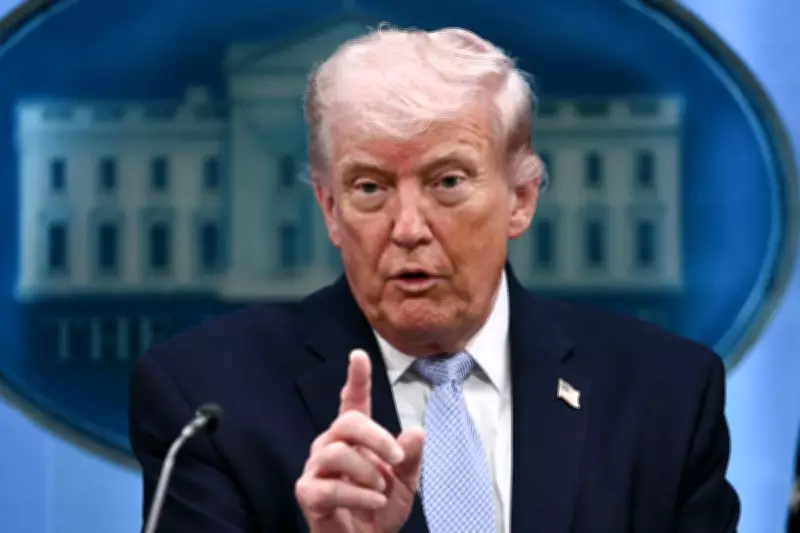
US President Donald Trump has delivered a chilling ultimatum to Iran, threatening to send the country "back to the stone ages" with a barrage of attacks on civilian targets if a deal on opening the Strait of Hormuz is not reached by Tuesday at 8pm Washington time (1am UK time). Speaking at a White House press conference on Monday, Trump confirmed this final deadline, escalating tensions in the ongoing conflict.
Details of the Ultimatum and Planned Attacks
Trump outlined a grim scenario, stating that the US plans to "decimate" every bridge in Iran by midnight Washington time on Wednesday, and target power plants to put them "out of business, burning, exploding, and never to be used again." When questioned about potential war crimes accusations, he dismissed concerns, saying, "No, not at all." He claimed Iranians are "willing to suffer... in order to have freedom," adding, "I hope I don't have to do it."
As the deadline approached, Trump appeared to widen his threat beyond civilian targets to the entire Islamic Republic, warning, "The entire country can be taken out in one night, and that night might be tomorrow night." US Defence Secretary Pete Hegseth reinforced this, stating, "Today will be the largest volume of strikes since day one. Tomorrow, even more than today."

International Reactions and Mediation Efforts
Trump also criticised NATO for not assisting the US in its war against Iran, expressing disappointment in the alliance and taking a shot at the UK. Meanwhile, Israel increased pressure by attacking Iran's South Pars natural gas field, a major domestic energy source, killing two paramilitary Revolutionary Guard commanders, including its intelligence chief. This strike, aimed at eliminating revenue for Iran, appeared separate from Trump's threats but added to the escalation.
Iran rejected a 45-day ceasefire proposal, conveyed through Pakistan as a mediator, and demanded a permanent end to the war with guarantees against future attacks. Mojtaba Ferdousi Pour, head of Iran's diplomatic mission in Cairo, stated, "We only accept an end of the war with guarantees that we won't be attacked again," citing distrust after previous US bombings during talks. Iran's foreign ministry spokesperson Esmail Baghaei emphasised that "negotiations are entirely incompatible with ultimatums, crimes and threats of war crimes."
Escalating Conflict and Regional Impact
The conflict has already caused significant devastation. In Iran, over 1,900 people have been killed since the war began, with explosions heard in Tehran and low-flying jets overhead. In Israel, Iranian missiles hit Haifa, killing four people from one family. Lebanon has seen over 1,400 deaths and more than one million displaced due to Israeli attacks targeting Hezbollah. Gulf states like Kuwait, the UAE, and Saudi Arabia activated air defences against Iranian missiles and drones, with casualties reported across the region.
Trump's rhetoric extended beyond the press conference; at an Easter event, he suggested taking Iran's oil and claimed Iranians "want to hear bombs because they want to be free." The Strait of Hormuz, through which a fifth of the world's oil is shipped, remains a flashpoint, with Iran refusing passage to US and Israeli vessels since the war started on 28 February, shaking the global economy.