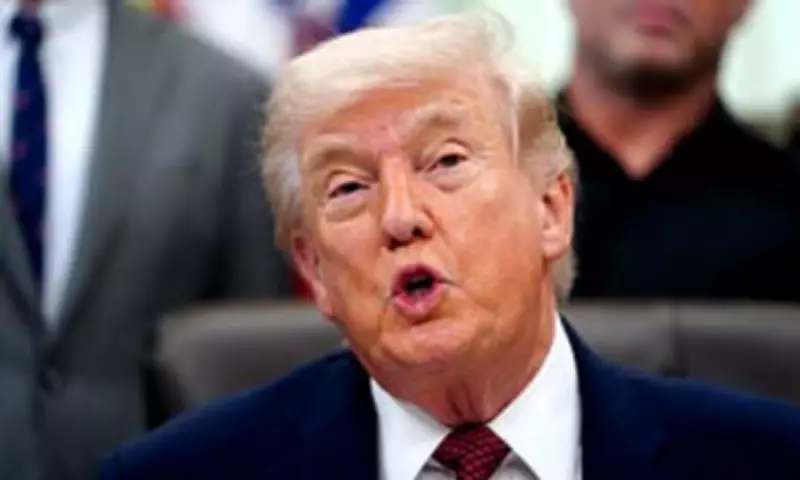
President Donald Trump has declared it is 'highly unlikely' that a temporary ceasefire with Iran will be extended, issuing a stark warning that 'lots of bombs start going off' if Tehran fails to agree to a deal. The current two-week ceasefire is set to expire on Wednesday evening Washington time, yet Iran has not committed to attending further talks scheduled for this week in Islamabad.
Trump's Unwavering Stance on Negotiations
In a phone interview with Bloomberg News, the US President emphasised his refusal to be rushed into a subpar agreement, stating, 'I’m not going to be rushed into making a bad deal. We’ve got all the time in the world.' He further elaborated in a PBS News interview, cautioning that immediate fighting would resume if no accord is reached, adding he 'would certainly expect' such an outcome.
Confusion and Clarity from the White House
Trump's position on extending the ceasefire has previously been ambiguous; last week, he provided three different answers to five reporters during a question-and-answer session. However, he has now clarified that the Strait of Hormuz will remain blockaded until the United States and Iran reach a comprehensive agreement on the ongoing conflict.

Vice President JD Vance is slated to depart later today to resume negotiations in Pakistan, commencing on Tuesday. Despite this, Iran's semi-official Tasnim news agency reports that the regime's stance on missing the talks 'has not changed to this moment,' directly contradicting Trump's assertion that the US negotiating team was en route to Islamabad.
Iran's Fundamental Obstacles to Peace
The Islamic Republic cites the US naval blockade and unspecified additional demands from Washington as critical barriers to peace. Tasnim highlighted that 'the naval blockade issue is a very fundamental obstacle in negotiations,' with Pakistani mediators confirming they have raised this matter with President Trump.
Iranian officials argue that as long as the US approaches negotiations with the same flawed calculations that led to its battlefield defeats, talks are merely 'a waste of time.' Tehran has expressed no intention to participate in what it terms 'American theatre' until significant obstacles are removed and a clear path to an acceptable agreement emerges.
Nuclear Weapons: The Non-Negotiable Demand
At the core of the discussions, Trump insists on one non-negotiable condition: Iran must abandon any pursuit of nuclear weapons. He succinctly stated, 'Get rid of their nuclear weapons. That’s all very simple. There will be no nuclear weapon.' Regarding potential face-to-face meetings with Iranian leadership, Trump remarked, 'I have no problem meeting them,' underscoring his willingness to engage directly if necessary.
Parallel Peace Efforts in the Region
Meanwhile, peace talks between Israel and Lebanon are set to resume on Thursday in Washington, according to an Israeli source. Lebanon's president has emphasised that these discussions should be viewed separately from any negotiations involving Iran, highlighting the complex geopolitical landscape in the Middle East.
As the ceasefire deadline looms, the international community watches closely, with the potential for escalated conflict hanging in the balance. Trump's firm stance and Iran's reluctance to engage suggest a challenging path ahead for diplomatic resolution.