
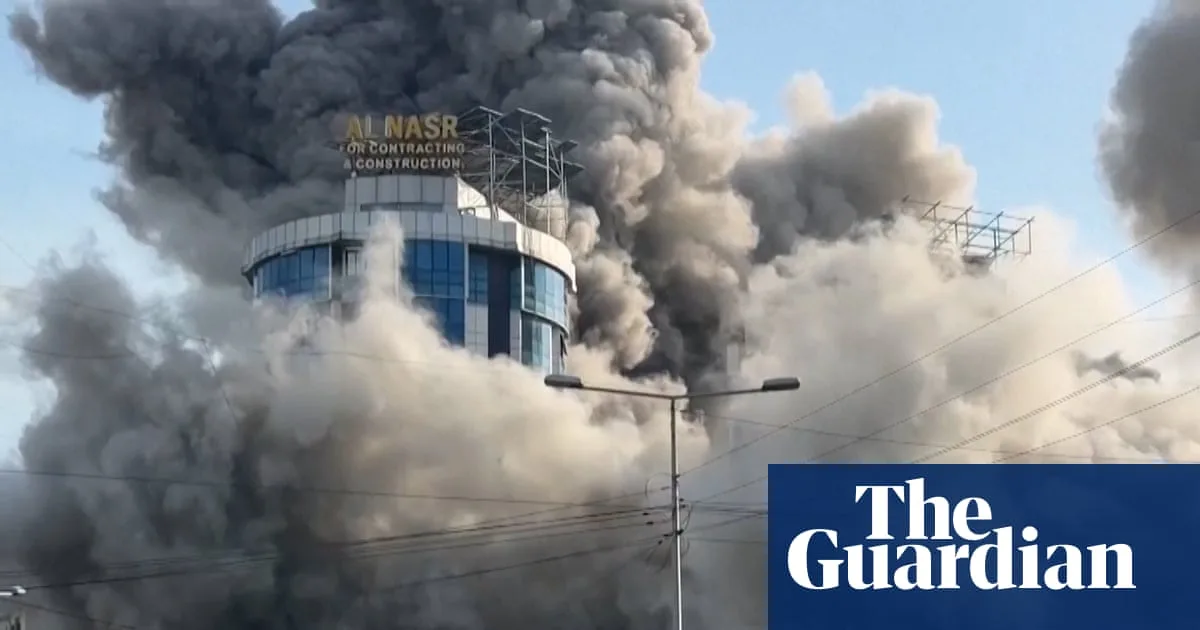
US President Donald Trump has called for Iran’s “unconditional surrender” to end the week-long offensive, as American and Israeli forces carried out some of the heaviest bombardments yet. In a post on Truth Social on Friday, Trump wrote: “There will be no deal with Iran except UNCONDITIONAL SURRENDER.” The statement came as US strategic bombers struck targets in Iran and Israeli air raids in Lebanon forced over one million people to flee their homes.
US Defence Secretary Pete Hegseth warned that American firepower was “about to surge dramatically”, while Israel Defense Forces Chief of Staff Eyal Zamir said Israel was moving to a new phase aimed at “further dismantle the regime and its military capabilities”. Zamir added: “We have additional surprises ahead which I do not intend to disclose.”
In retaliation, Iran launched missiles and drones at Kuwait, Qatar, Saudi Arabia, and Bahrain, targeting US bases and civilian infrastructure such as oil pipelines. Iran’s Revolutionary Guards also fired missiles towards Tel Aviv, as well as at a military airbase and radar site in Israel. The Guards promised new weapons would be deployed soon, without providing details. Internet coverage in Iran has been reduced to about 1%, according to NetBlocks, limiting information on the war’s impact on civilians.
In Lebanon, renewed fighting between Israel and Hezbollah prompted the largest displacement orders to date. The Israeli army urged residents of Dahiyeh, a Hezbollah stronghold in southern Beirut home to over 600,000 people, to evacuate immediately. By Friday, the area was largely deserted, with rubble and fires from Israeli strikes. Hashem Osseiran, a Red Cross spokesperson for the Middle East, described “scenes of panic and confusion”, with many fleeing on foot with few belongings.
Hezbollah continued to fire rockets into northern Israel, wounding five Israeli soldiers near the border. Meanwhile, the headquarters of Ghana’s UN peacekeeping battalion in Lebanon was hit by missile attacks, leaving two soldiers critically injured and one traumatised. The UN Interim Force in Lebanon (Unifil) said it would investigate the incident, which was condemned by Irish Taoiseach Micheál Martin as a “reckless attack” and by French President Emmanuel Macron as “unacceptable”.
The Lebanese health ministry reported 217 deaths since hostilities resumed between Israel and Hezbollah, with a further 798 people wounded.




