Trump Alleges US Supplied Guns to Iranian Protesters, Believes Kurds Intercepted Arms
In a series of startling revelations on Easter Sunday, President Donald Trump reportedly confirmed that the United States actively sought to arm Iranian protesters during recent demonstrations, but suspects that Kurdish groups may have diverted the weapons. This marks the first apparent confirmation of direct US involvement in efforts to destabilize Iran's government.
Revelations During Fox News Interview
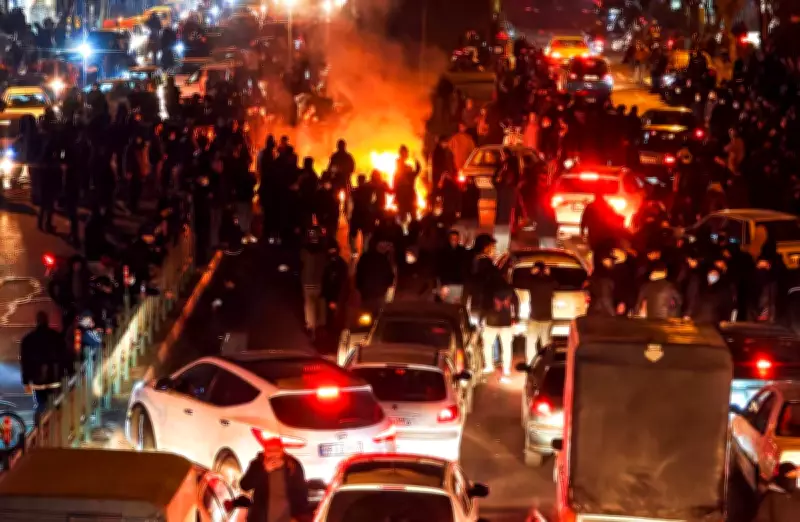
During a telephone interview with Fox News correspondent Trey Yingst, President Trump disclosed that the US had sent "a lot of guns" to support anti-government protests that rocked Iran for weeks earlier this year. The protests began shortly before the new year and were ultimately suppressed by Iranian authorities through violent means.
"We sent them a lot of guns. We sent them through the Kurds, and the president says he thinks the Kurds kept them," Yingst reported, paraphrasing Trump's comments. This admission comes despite ongoing diplomatic engagements between US negotiators and senior Iranian officials in Europe during the same period.

Background on Kurdish Involvement
Iranian Kurdish exiles have resided in a semi-autonomous region of Iraq near the Iranian border for decades, following the 1979 Islamic Revolution that overthrew the US-backed Shah. These Kurdish groups have historically fought against both Saddam Hussein's Iraqi government and the Iranian regime. Some Kurdish factions remain active within Iran's borders, creating complex regional dynamics.
In the same interview, Trump made additional explosive claims, alleging that Iranian authorities killed more than 40,000 civilians during their crackdown on the protests. These figures have not been independently verified.
Threats Over Strait of Hormuz
The president began his Easter Sunday with a series of provocative statements regarding the ongoing conflict with Iran, including explicit threats to target Iranian power plants if the Strait of Hormuz remains closed. "Open the F***in' Strait, you crazy b*****ds, or you'll be living in Hell," Trump warned, setting a Tuesday deadline for compliance.
During an interview with ABC's Rachel Scott, Trump emphasized that "very little" would be off the table if no agreement is reached, stating ominously, "If happens, it happens. And if it doesn't, we're blowing up the whole country." Such attacks on civilian infrastructure are generally considered war crimes unless the targets serve active military purposes.
Rescue Operation and Controversial Language
In a separate interview with Axios's Barak Ravid, Trump provided details about the successful rescue of an American service member whose F-15 aircraft was shot down over Iran on Friday. The crew member was recovered late Saturday evening following an extensive search operation.
Trump described the rescue operation in language that many critics have characterized as overtly racist, referring to Iranians as "savages" who were hunting the downed airman. "Thousands of these savages were hunting him down," Trump told Axios. "Even the population was looking for him. They offered people a bonus if they captured him."
Strategic Confusion and Public Perception
The successful rescue represents a rare positive development in what remains a confusing and protracted conflict. Despite repeated claims from Trump and his administration that Iranian military capabilities have been destroyed and victory is imminent, the Iranian government remains intact and continues to keep the Strait of Hormuz closed.
Oil prices continue to escalate as the vital shipping route remains blocked, with weeks passing without resolution. A recent CNN poll indicates significant public skepticism, with approximately two-thirds of Americans doubting that Trump has a coherent plan to end the conflict.
Trump continues to deny these perceptions, even as his stated objectives have shifted from securing Iran's enriched uranium supplies to reopening the strategic waterway. However, he maintained on Sunday that permanently ending Iran's nuclear weapons program remains a non-negotiable condition for any diplomatic resolution to the war he initiated.