Trump Threatens Iran with 'Shootin' Starts' as Fragile Ceasefire Hangs in Balance
Trump Threatens Iran as Ceasefire Hangs in Balance

Trump Issues Stark Warning to Iran Over Ceasefire Compliance

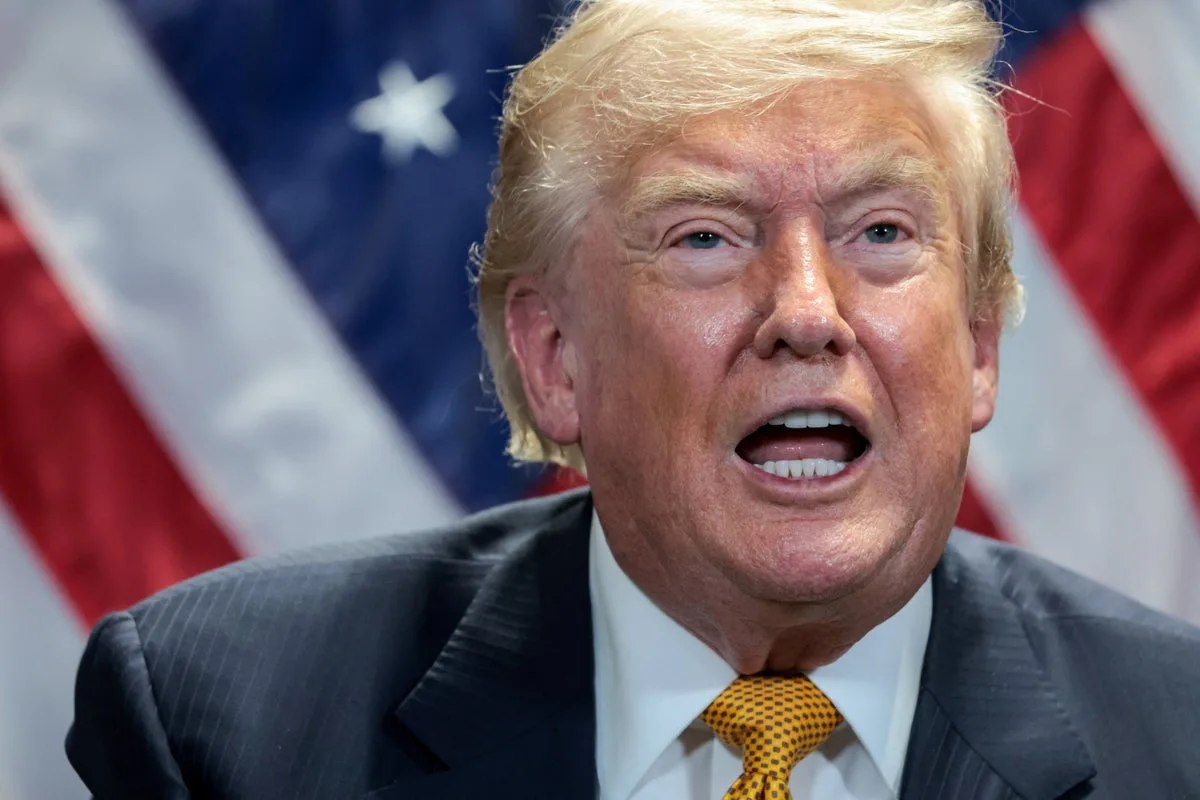
Former US President Donald Trump has declared that American forces will remain stationed in the Middle East until Iran fully adheres to what he terms the "real" two-week ceasefire agreement, casting significant doubt over the stability of the truce. In a provocative statement, Trump asserted that the United States stands ready to unleash destruction upon Iran should the terms not be met, explicitly warning that "the 'Shootin' Starts,' bigger, and better, and stronger than anyone has ever seen before."

Confusion Surrounds the 'Real Agreement' Details

The precise stipulations of the ceasefire remain shrouded in ambiguity, with Trump emphasising that the "real agreement" mandates "NO NUCLEAR WEAPONS" and guarantees that "the Strait of Hormuz WILL BE OPEN & SAFE." Discrepancies have emerged between American and Iranian interpretations of a proposed ten-point plan. Iranian state media has outlined a proposal calling for an end to hostilities across Iran, Iraq, Yemen, and Lebanon, coupled with the reopening of the vital Strait of Hormuz and a comprehensive lifting of US sanctions.

However, a subsequent version attributed to Iran's Supreme National Security Council initially included contentious provisions regarding uranium enrichment and Iranian control over the strait, though references to enrichment were later omitted from English translations, highlighting the fragile nature of the diplomatic understanding.

Wide Pickt banner — collaborative shopping lists app for Telegram, phone mockup with grocery list

Regional Violence Threatens to Undermine Truce

Despite the announced ceasefire, violence has persisted across the region, severely testing the agreement's durability. Israel conducted air strikes on southern Lebanon, resulting in a reported 182 fatalities—the highest single-day death toll in the ongoing conflict with Hezbollah. In retaliation, Hezbollah launched rocket attacks into northern Israel. Simultaneously, the United Arab Emirates and Kuwait faced missile and drone assaults, underscoring the volatile security landscape.

The International Committee of the Red Cross expressed outrage at the devastation in Lebanon, while British Foreign Secretary Yvette Cooper insisted that any sustainable ceasefire must explicitly include Lebanon, a point of contention as US Vice President JD Vance suggested Lebanon was never formally part of the deal.

Strategic and Economic Stakes Intensify

The closure of the Strait of Hormuz, a critical chokepoint for global oil shipments, remains a central issue. Conflicting reports from US and Iranian officials have sown confusion over its operational status, with maritime intelligence indicating no significant increase in vessel traffic. An oil tanker was reportedly forced to turn back after attempting passage, illustrating the ongoing risks. The World Bank, IMF, and UN's World Food Programme have warned that sustained disruptions could trigger sharp rises in oil, natural gas, and fertiliser prices, exacerbating global food insecurity and inflation.

Diplomatic Maneuvers and Broader Implications

Diplomatic efforts continue amidst the tension. Iran's ambassador to Pakistan announced a delegation's arrival in Islamabad for talks based on Tehran's proposed points. Meanwhile, UK Prime Minister Keir Starmer met with Saudi Crown Prince Mohammed bin Salman to discuss cementing the ceasefire. On the NATO front, Trump reiterated his dissatisfaction with the alliance, posting that "NATO WASN’T THERE WHEN WE NEEDED THEM," as his administration considers plans to withdraw US troops from allied nations deemed unhelpful in the conflict. The Soufan Center, a New York-based think tank, has warned that the ceasefire "hovers on the verge of collapse," with Israeli actions in Lebanon viewed as particularly escalatory.

Pickt after-article banner — collaborative shopping lists app with family illustration




