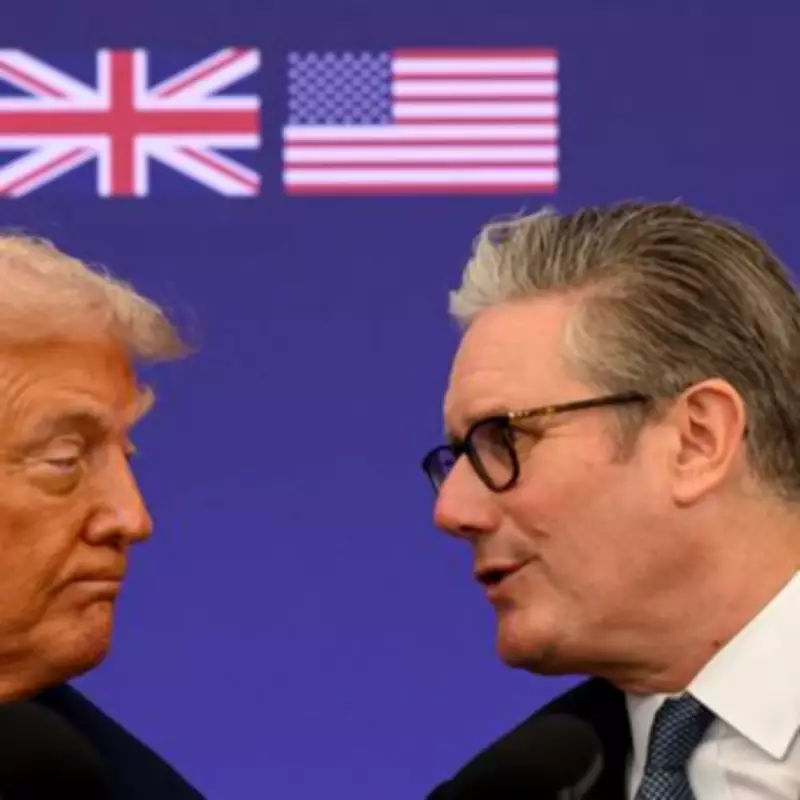
Trump-Starmer 'Special Relationship' Faces Significant Strain
The much-vaunted 'special relationship' between the United States and the United Kingdom is undergoing a serious trial separation, with Donald Trump expressing profound disappointment in Prime Minister Keir Starmer's recent decisions regarding military cooperation.
A Defining Moment in Transatlantic Relations
This week marked a pivotal moment in UK-US relations as Starmer firmly declined to support Trump's military actions against Iran, creating the most significant public rift between the two leaders since Starmer assumed office. The Prime Minister explicitly stated that the United Kingdom would not permit indiscriminate bombing raids to originate from British territories, including Gloucestershire airbases or the strategically important Diego Garcia facility.
Starmer pointedly referenced the lessons learned from the Iraq conflict, emphasizing that Britain would not participate in what he termed "regime change from the skies." This principled stance represents a clear departure from previous UK foreign policy approaches during Middle Eastern conflicts.

Limited Cooperation Amidst Broader Refusal
Despite this significant refusal, the UK government has indicated willingness to support what it considers "defensive" strikes against Iranian missile systems. As tensions continue, American B-2 Bombers remain stationed at RAF Fairford, prepared for potential military action with at least tacit British approval for defensive operations.
Trump's frustration became publicly evident when he lamented in the Oval Office, "This is not Winston Churchill we're dealing with," directly criticizing Starmer's leadership approach. The comparison to Britain's iconic wartime leader represents a particularly stinging rebuke directed at any occupant of 10 Downing Street.
Diplomatic Damage Control and Public Reassurance
In response to the growing tensions, Starmer conducted a press conference on Thursday aimed at reassuring both the British public and international observers. The Prime Minister stressed that the special relationship remained fundamentally intact, noting continued behind-the-scenes cooperation and cordial interactions between diplomatic and military personnel.
This reassurance came despite Starmer's admission that he had not spoken directly to Trump since the previous Saturday, highlighting the unusual nature of current communications between the traditionally close allies.
Criticism and Historical Context
Conservative critics have accused Starmer of indecisiveness in his response to the developing conflict. Some aspects of the UK's military preparations have faced scrutiny, including the delayed readiness of HMS Dragon for deployment to Cyprus and what some consider questionable promotional materials accompanying defense announcements.
However, Starmer's supporters argue that maintaining distance from what they characterize as Trump's "illegal warmongering" will benefit Britain's historical standing. They contend that when future historians examine this period, Starmer's cautious approach will be viewed more favorably than immediate, unconditional support for military actions of questionable legality.
The current strain in UK-US relations represents a significant test for both leaders and their respective foreign policy approaches. While the special relationship endures in name and through continued operational cooperation, this episode has revealed substantive differences in strategic thinking between the Atlantic allies that may have lasting implications for future diplomatic and military coordination.