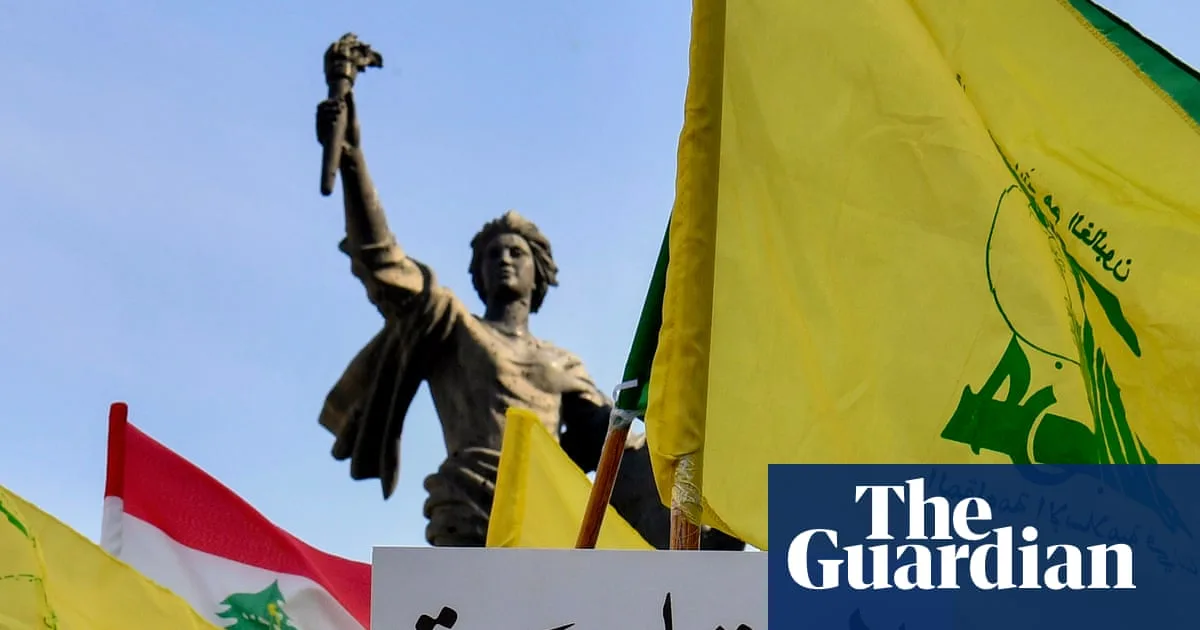
Hezbollah has rejected a US-brokered ceasefire plan agreed by the Lebanese and Israeli governments, throwing the future of a truce in Lebanon and regional peace negotiations into question. The group's leader, Naim Qassem, called the plan a 'roadmap to annihilate part of the Lebanese people' in a statement on Thursday.
He demanded a complete ceasefire and withdrawal of Israeli troops from Lebanon, and said that as long as Lebanese villages were being bombed, northern Israel would not be safe. 'As long as the occupation exists, the resistance will continue,' he said. 'We call upon the officials to put an end to this farce and humiliation called direct negotiations.'
The Israeli and Lebanese governments had agreed a ceasefire to end hostilities on Monday night. The deal called for a complete cessation of fire from Hezbollah, which is aligned with Iran, and the evacuation of all its fighters south of the Litani River. However, the Lebanese army is not a party to the conflict because the fighting has been between Hezbollah and Israel.
Hezbollah's rejection flies in the face of the Lebanese government's announcement that the ceasefire would come into effect in 24 hours, and raises questions about how the government can negotiate without Hezbollah at the table. Lebanese Prime Minister Nawaf Salam said those that delayed or rejected a ceasefire would bear responsibility for the consequences, adding that negotiations were the best option for Lebanon.
The group's response echoes demands from Tehran, which said hours after the ceasefire was announced that Israel should withdraw to its prewar positions. Iran's foreign ministry said on Thursday that Lebanon was an 'integral part of any ceasefire and any final agreement'. Despite the joint commitment, both Israel and Hezbollah continued fighting on Thursday, with Israel carrying out airstrikes in southern Lebanon and Hezbollah targeting Israeli soldiers.
Israel's defence minister, Israel Katz, said his country had 'freedom of action, backed by the United States, to strike Beirut in response to attacks on Israeli communities and territory'. He said Israeli troops would remain in south Lebanon to maintain a 'buffer zone', controlling more than 600 sq km of territory and preventing hundreds of Lebanese from returning to their homes.