Donald Trump has announced that the United States will implement a naval blockade of the strategically vital Strait of Hormuz, following the dramatic collapse of peace talks between Washington and Tehran. The president's declaration came mere hours after negotiations in Islamabad broke down without any tangible progress, reigniting fears of renewed conflict in the region.
Peace Talks Collapse Amidst Tension
The crucial discussions, which involved US Vice President JD Vance and Iranian Foreign Minister Abbas Araghchi, lasted just 21 hours before being declared a failure. The talks aimed to end six weeks of costly warfare and resolve the crisis caused by Iran's closure of the critical shipping lane. Vance stated that the negotiations foundered primarily due to Iran's unwavering stance on its nuclear ambitions, which he described as the "most important issue" preventing agreement.
Trump's Bombastic Declaration
Taking to his Truth Social platform, President Trump issued a characteristically fiery statement: "Effective immediately, the United States Navy, the Finest in the World, will begin the process of BLOCKADING any and all Ships trying to enter, or leave, the Strait of Hormuz." He further escalated his rhetoric, warning that "any Iranian who fires at us, or at peaceful vessels, will be BLOWN TO HELL!"

In a subsequent interview with Fox News, Trump claimed that NATO allies, whom he has previously criticised for insufficient support, were now offering assistance with the blockade operation. "We have minesweepers there," he asserted. "And so I understand is the UK and a couple of other countries are sending mine sweepers." However, these claims were immediately met with scepticism, as former UK Defence Secretary Ben Wallace had earlier described the notion of British warships policing the strait as "a fantasy" due to the depleted state of UK armed forces.
Iran's Defiant Response
Iran's Revolutionary Guards swiftly countered Trump's threats, issuing a stern warning that any US warships approaching the Strait of Hormuz to enforce a blockade would be considered a breach of the existing ceasefire and dealt with "strongly". The Guards emphasised that "all traffic... is under the full control of the armed forces", signalling their readiness to defend the waterway.
An Iranian analyst close to the government revealed to The New York Times that the talks disintegrated over two primary US demands: complete cessation of uranium enrichment and the removal of nearly 900 pounds of stockpiled uranium, alongside the contentious Hormuz issue. Iranian state media had previously accused Washington of making "excessive demands" during the negotiations.
Diplomatic Fallout and International Concern
The diplomatic breakdown has sent shockwaves through the international community. A spokesperson for Iran's foreign ministry described the negotiations as taking place in an "atmosphere of mistrust", conceding that a deal was always improbable in this initial round. They confirmed there are currently no plans to resume talks.
In the UK, Prime Minister Sir Keir Starmer, who discussed the crisis with the Sultan of Oman, Sultan Haitham bin Tarik al Said, urged "both sides to find a way through". However, Trump appeared indifferent to diplomatic pressure, stating during the talks that it "makes no difference" to him whether an agreement is reached.
Contrasting Priorities
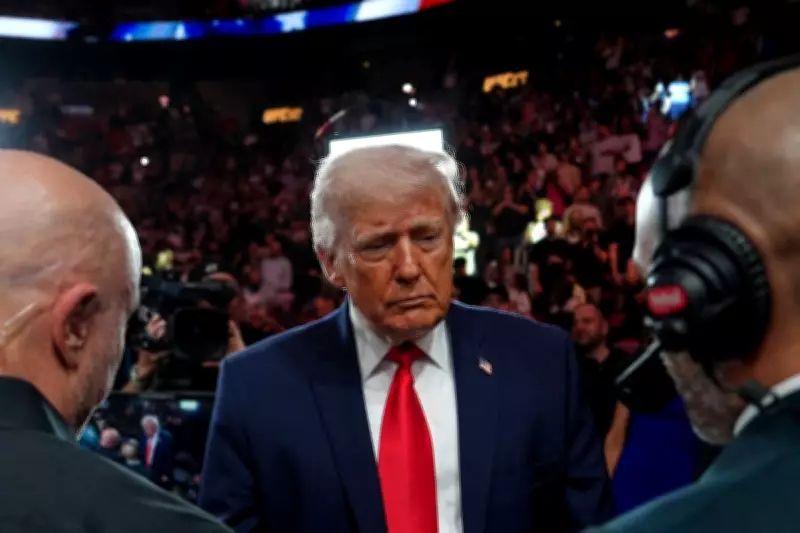
As the peace talks unravelled in Islamabad, President Trump was photographed enjoying a night at UFC 327 in Miami alongside Secretary of State Marco Rubio. This stark contrast between high-stakes diplomacy and leisure activities drew sharp criticism. UK Health Secretary Wes Streeting lambasted the president's "incendiary, provocative, outrageous" language, although he noted that ministers have learned to judge Trump "through what he does, not just what he says".
Streeting also criticised Trump's personal attacks on Sir Keir Starmer, including comparisons to Neville Chamberlain and assertions that "he is no Winston Churchill".

Economic Ramifications and Global Protests
The closure of the Strait of Hormuz has already triggered significant economic turmoil, sending global energy prices soaring over the past six weeks. Despite the diplomatic impasse, shipping data indicated that three fully laden supertankers managed to pass through the strait on Saturday, marking the first vessels to exit the Gulf since the ceasefire was agreed.
Nevertheless, consumer anger continues to ripple worldwide as high fuel prices impact households. In Ireland, police were forced to clear trucks that had blockaded central Dublin for five days in protest against surging fuel costs. Demonstrators, angered by a more than 20 percent rise in diesel prices since the conflict began, used tractors and trucks to blockade an oil refinery, two ports, a fuel terminal, and numerous roads across the country.
The situation remains highly volatile, with the spectre of renewed military confrontation looming large over one of the world's most crucial maritime chokepoints. The international community watches anxiously as both sides appear entrenched in their positions, with little immediate prospect of diplomatic resolution.