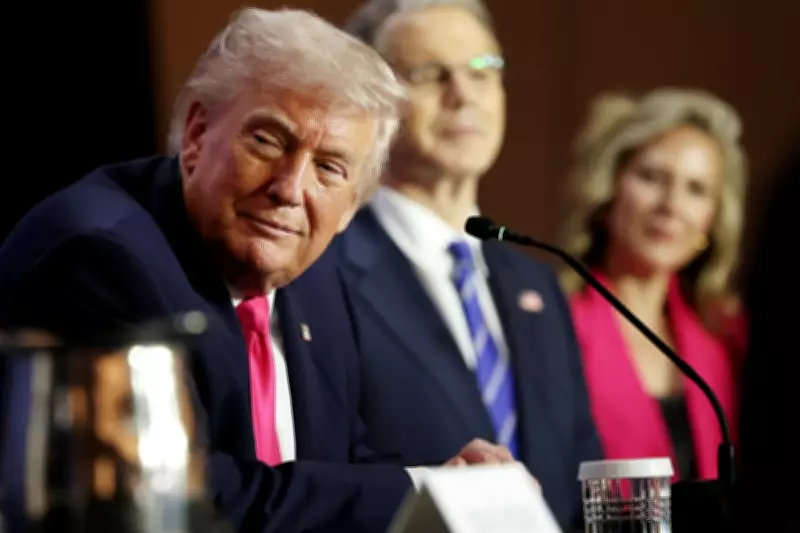
President Donald Trump has asserted that a United States naval blockade targeting Iranian ports will continue unabated, even as Iran has officially reopened the critical Strait of Hormuz for maritime traffic. In a statement issued on Friday, Trump emphasised that the blockade remains firmly in place and will only be lifted upon the finalisation of a complete transactional agreement between the two nations.
Strait Reopening Amid Ongoing Tensions
Earlier on Friday, Iranian authorities announced the reopening of the Strait of Hormuz, a vital global oil shipping chokepoint, declaring it "completely open and ready for business and full passage." Trump promptly responded, acknowledging the strait's accessibility but underscoring that the US-imposed naval blockade specifically against Iran would persist. He stated, "But the naval blockade will remain in full force and effect as it pertains to Iran, only, until such a time as our transaction with Iran is 100% complete."
Negotiations and Timeline
Trump expressed optimism about the pace of negotiations, noting, "This process should go very quickly in that most of the points are already negotiated." He previously indicated that a second round of in-person talks with Iranian representatives could potentially occur as early as this weekend, suggesting a possible acceleration in diplomatic efforts.

Regional Context and Ceasefire Developments
The announcement comes against a backdrop of regional volatility. Prior to these promising diplomatic developments, reports emerged that Israel had committed several violations of a ceasefire in Lebanon, just hours after Trump praised what he termed a "historic" truce. These incidents highlight the fragile nature of peace efforts in the Middle East, even as US-Iran relations show signs of potential progress.
Potential Presidential Visit to Pakistan
In a related development, President Trump mentioned that he might consider a visit to Pakistan if a deal with Iran is successfully signed in Islamabad. This statement hints at the strategic importance of Pakistan in facilitating or hosting such diplomatic milestones, adding another layer to the complex geopolitical dynamics at play.
The situation remains fluid, with the US maintaining its blockade as a leverage point while diplomatic channels remain active. Observers are closely monitoring whether the negotiations will indeed proceed swiftly to resolve longstanding tensions and secure a durable agreement.