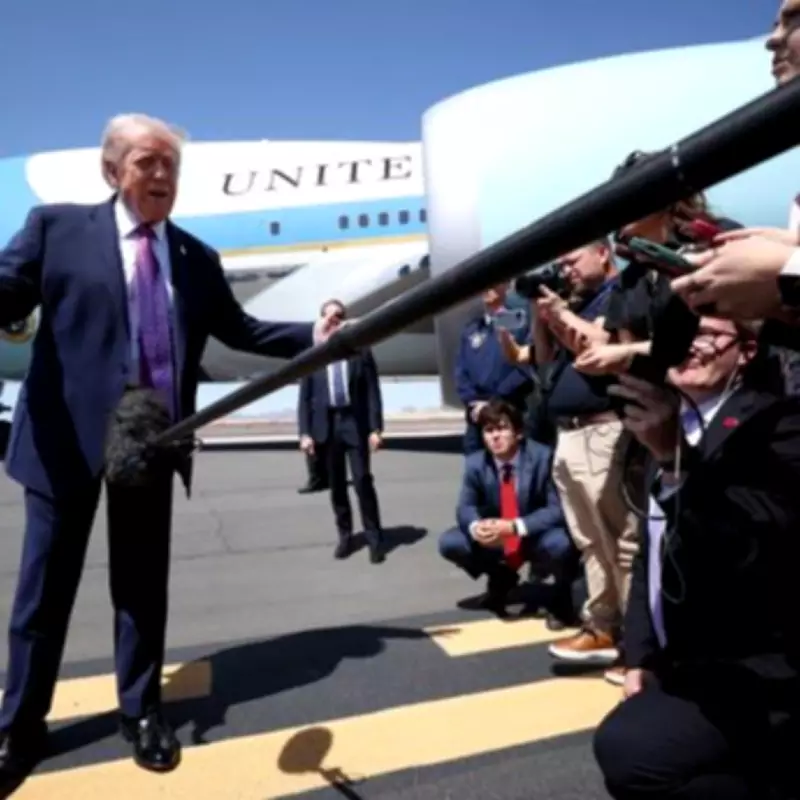
In a significant development that has raised international alarm, former President Donald Trump has delivered his most explicit hint to date about potentially invading Cuba, should he ever extricate himself from the ongoing and tumultuous war he initiated in Iran. Speaking at a Turning Point USA conference, the group once led by the late activist Charlie Kirk, Trump shifted focus from Iran to America's close neighbour, suggesting that change on the island is imminent.
Trump's 'New Dawn' Remarks Spark Invasion Speculation
During his address, Trump referenced what he termed "A New Dawn for Cuba," stating that this transformation would arrive "very soon" after discussing US military operations in Iran. He emphasised, "We're going to help them out in Cuba," and highlighted the plight of Cuban Americans, particularly in Miami, who he claimed have suffered brutal treatment and family losses under the current regime. This rhetoric marks a departure from his previous offhand comments about "stopping by" Cuba, now framing it as a deliberate policy objective linked to regional stability.
Background of US-Cuba Tensions and Economic Crisis
Cuba's economy and infrastructure are currently in a state of severe crisis, largely due to a US energy blockade imposed after its invasion of Venezuela, which was its primary oil supplier. The Trump administration has consistently criticised the Cuban government as ineffective and abusive, setting conditions for easing sanctions that include an end to political repression, the release of political prisoners, and economic liberalisation. Despite these demands, recent diplomatic efforts have seen American officials engage with Cuban counterparts, even as Trump's invasion hints create a contradictory backdrop of both dialogue and threat.

Diplomatic Moves Amidst Invasion Threats
In a notable diplomatic push, a senior State Department official met with Raúl Guillermo Rodríguez Castro, the grandson of retired Cuban leader Raúl Castro, during a visit to Havana last week. This meeting, conducted under anonymity due to its sensitive nature, did not involve Secretary of State Marco Rubio, who has previously met with the younger Castro in St. Kitts and Nevis. The US delegation urged Cuba to implement major economic and governance reforms, warning that the island must not become a national security threat in the region. This visit marked the first US government flight to land in Cuba outside Guantanamo Bay since 2016, underscoring the renewed but tense engagement.
Cuba's Defiant Response and Regional Implications
Cuban leaders have responded defiantly to Trump's hints, with the country's head stating this week that Cuba is prepared to fight back if an invasion occurs. This stance adds to the escalating tensions, as the US continues to balance diplomatic overtures with aggressive rhetoric. The situation highlights the complex dynamics of US foreign policy under Trump, where military posturing coexists with behind-the-scenes negotiations, all while Cuban Americans' grievances are leveraged to justify potential intervention.
The broader implications for regional stability are profound, as Trump's focus on Cuba after Iran suggests a strategic pivot that could reshape geopolitics in the Western Hemisphere. Observers note that the combination of economic pressure, diplomatic efforts, and invasion threats creates an unpredictable environment, with the potential for significant conflict or breakthrough depending on how both nations navigate these charged waters.