Trump Rejects Claims Israel Influenced Iran War Decision Amid Ceasefire Crisis
Donald Trump has forcefully denied that Israel persuaded the United States to go to war with Iran, dismissing mounting right-wing criticism and claims that Benjamin Netanyahu influenced his decision. The president took to social media on Monday to assert his position, writing, "Israel never talked me into the war with Iran, the results of Oct. 7th, added to my lifelong opinion that IRAN CAN NEVER HAVE A NUCLEAR WEAPON, did." This statement comes as a fragile two-week ceasefire with Iran is set to expire at 1am UK time on Wednesday, casting a shadow over diplomatic efforts.
Confusion Surrounds Vice President's Travel and Peace Talks
Hopes for a diplomatic resolution have been mired in confusion following conflicting reports about Vice President JD Vance's whereabouts. Insiders told CNN that Vance, who was expected to attend critical talks in Pakistan, remained in Washington and would not travel until Tuesday. This contradicted Trump's earlier claim to the New York Post that Vance was already en route and would arrive on Monday night. The uncertainty extends to who Vance would meet, as Iran had previously ruled out attendance and vowed retaliation after the US seized an Iranian cargo ship attempting to run its blockade.
Iranian Leadership Criticises US Actions and Signals Resistance
Iranian President Masoud Pezeshkian criticised the US for being "unconstructive and contradictory" in its signalling, asserting that Iran would not "submit to force." Behind the scenes, a senior Iranian source told Reuters that Tehran was still reviewing its participation in talks but had not yet made a decision. Pezeshkian emphasised the importance of ending the war while resisting what he termed "excessive demands." Meanwhile, Iran's parliament speaker, Mohammad Bagher Ghalibaf, stated that the two sides remain far apart on nuclear issues and the Strait of Hormuz, with the US blockade causing new friction.

US Military Actions and Iranian Accusations Escalate Tensions
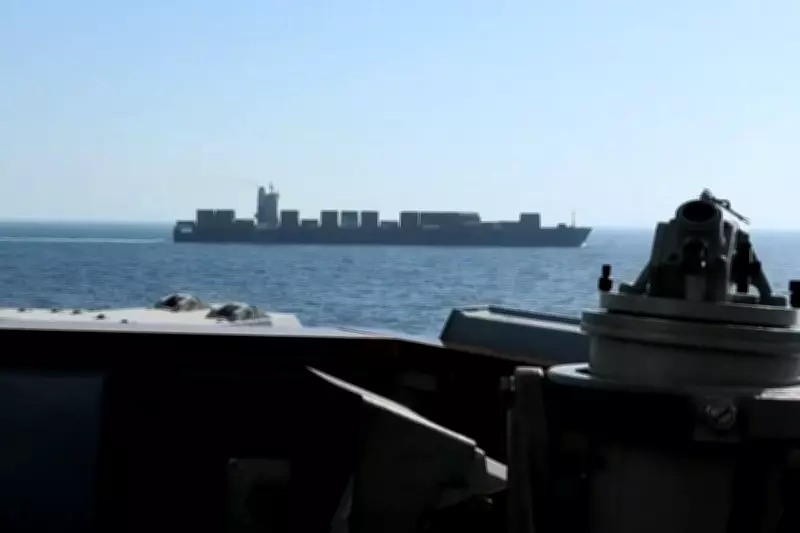
The US Central Command reported that the military has directed 27 vessels to turn around or return to an Iranian port since imposing the blockade last week. This followed an incident on Sunday where US forces fired on an Iranian-flagged cargo ship after a six-hour standoff, disabling its engines. Iran's military accused the US of "armed piracy," claiming the ship was travelling from China and stating they were ready to confront US forces but were constrained by the presence of crew members' families on board. Iranian foreign ministry spokesman Esmaeil Baghaei added that Washington had shown it was "not serious" about diplomacy and was insisting on "unreasonable and unrealistic positions."
Trump's Stance and Economic Impacts Amid Diplomatic Efforts
Trump remained obstinate, telling Bloomberg it was "highly unlikely" he would extend the ceasefire if a deal cannot be reached before it expires. In an effort to resolve the crisis, Pakistan's top mediator, Field Marshal Asim Munir, informed Trump that the blockade was hindering talks, and Trump said he would consider the advice, according to a security source. Despite this, Trump has been adamant that the blockade "is going to remain." The geopolitical uncertainty has driven oil prices up by around 5%, as traders fear a ceasefire collapse. Shipping data indicates traffic through the Strait of Hormuz was at a virtual standstill, with only three crossings in 12 hours.
Preparations in Islamabad and Regional Developments
Despite the uncertainty over whether talks will proceed, Pakistan deployed nearly 20,000 security personnel across Islamabad in preparation to host both delegations. In a related development, Israel told residents of south Lebanon to avoid a border territory and the Litani River area, reinforcing its control despite a ceasefire with Hezbollah. Sources revealed that Israeli and Lebanese representatives will hold talks in Washington on Thursday, marking the second round of ambassador-level discussions between the two countries.