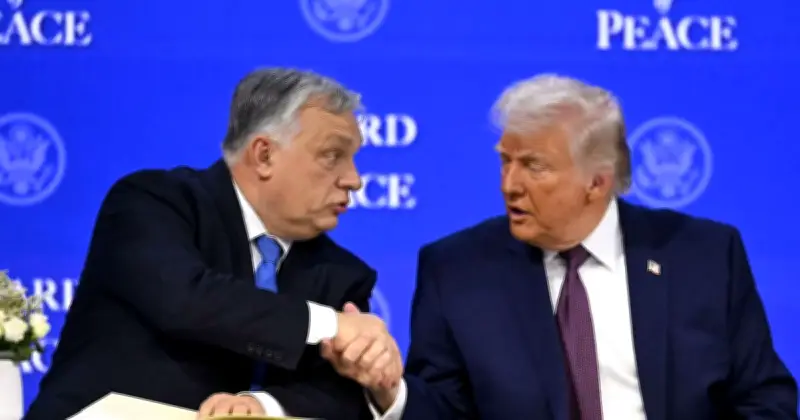
Donald Trump is reportedly pushing for former Hungarian prime minister Viktor Orbán to become the next United Nations chief, with Russia and China potentially backing the controversial choice. The US President’s administration has reportedly encouraged Orbán to enter the race to succeed António Guterres as UN secretary-general.
US, Russia and China could unite behind Orbán
The extraordinary proposal could see Washington, Moscow and Beijing unite behind the same candidate for one of the world’s most influential diplomatic positions. Sources from three countries told the newspaper that the Trump administration had raised Orbán’s name in discussions with Russian and Chinese counterparts, who were believed to be supportive of the idea.
The plan would see the 63-year-old former Hungarian leader become a joint candidate backed by all three powers, although no final decision has been taken.
A US State Department official acknowledged that the proposal might initially sound “crazy”, but suggested it could have a realistic chance of success.
“When the US, Russia and China all want the same thing at the UN Security Council, they usually get it,” officials from the US and another country told the newspaper.
Orbán’s political comeback
Orbán, who governed Hungary for 16 years before losing April’s parliamentary election, is said to have been receptive to the approach but reluctant to stand unless he believed victory was achievable. He declined to comment to the Wall Street Journal.
The proposed candidacy would be a remarkable political comeback for a leader whose nationalist policies and close relationship with Vladimir Putin repeatedly put him at odds with European Union allies.
Orbán became a prominent critic of Western support for Ukraine following Russia’s full-scale invasion in 2022 and has frequently clashed with Brussels over migration, the rule of law and Hungary’s relationship with Moscow.
His potential appointment would raise questions about whether the UN’s top official could maintain the organisation’s independence while enjoying the backing of three major powers with competing international interests.
Security Council hurdles remain
Support from Washington, Moscow and Beijing would not, however, guarantee his appointment. The UN Security Council has 15 members, including five permanent members with veto powers: the US, Russia, China, Britain and France.
A candidate needs at least nine votes in the council and must avoid a veto from any of the five permanent members before the General Assembly can approve the appointment. Britain and France could still block his appointment, however, even if the other three permanent members backed him.
The reported proposal comes as the selection process remains deadlocked, with candidates struggling to secure support from all five veto-wielding powers. The next secretary-general is due to take over when Guterres’s term ends on December 31.
Support from Trump and Vance
Orbán’s supporters in Washington see him as a political heavyweight capable of challenging the UN establishment rather than another career diplomat. One US official described him as “the dream MAGA-conservative candidate”, pointing to his opposition to mass migration and his battles with liberal organisations and institutions.
President Trump endorsed Orbán during Hungary’s election campaign in April, while Vice President JD Vance travelled to the country to campaign for him. Orbán’s Fidesz party was defeated by Péter Magyar’s Tisza party, ending his 16 years in power. Despite the defeat, the proposed UN role could offer him a return to the international stage — provided he can secure enough support to win.
According to the Wall Street Journal, Trump and Vance are expected to back him if he enters the race, although a formal announcement could be delayed until after the US midterm elections.
The idea is likely to alarm critics who regard Orbán as too close to Putin and fear that his appointment could undermine the UN’s ability to challenge authoritarian governments. Moscow and Beijing have not formally announced their support for his candidacy, and the reported plan remains uncertain.
The UN secretary-general is expected to act as the organisation’s chief diplomat, representing its interests in conflicts and international crises. The post does not give its holder the power to dictate policy to member states, but it carries considerable influence over diplomacy and the UN’s priorities.
For Trump, a successful bid would offer the prospect of a leader whose political outlook is far closer to his own than that of many traditional international diplomats. But with Britain and France retaining their vetoes, the proposed alliance between Washington, Moscow and Beijing would still face a potentially decisive obstacle.