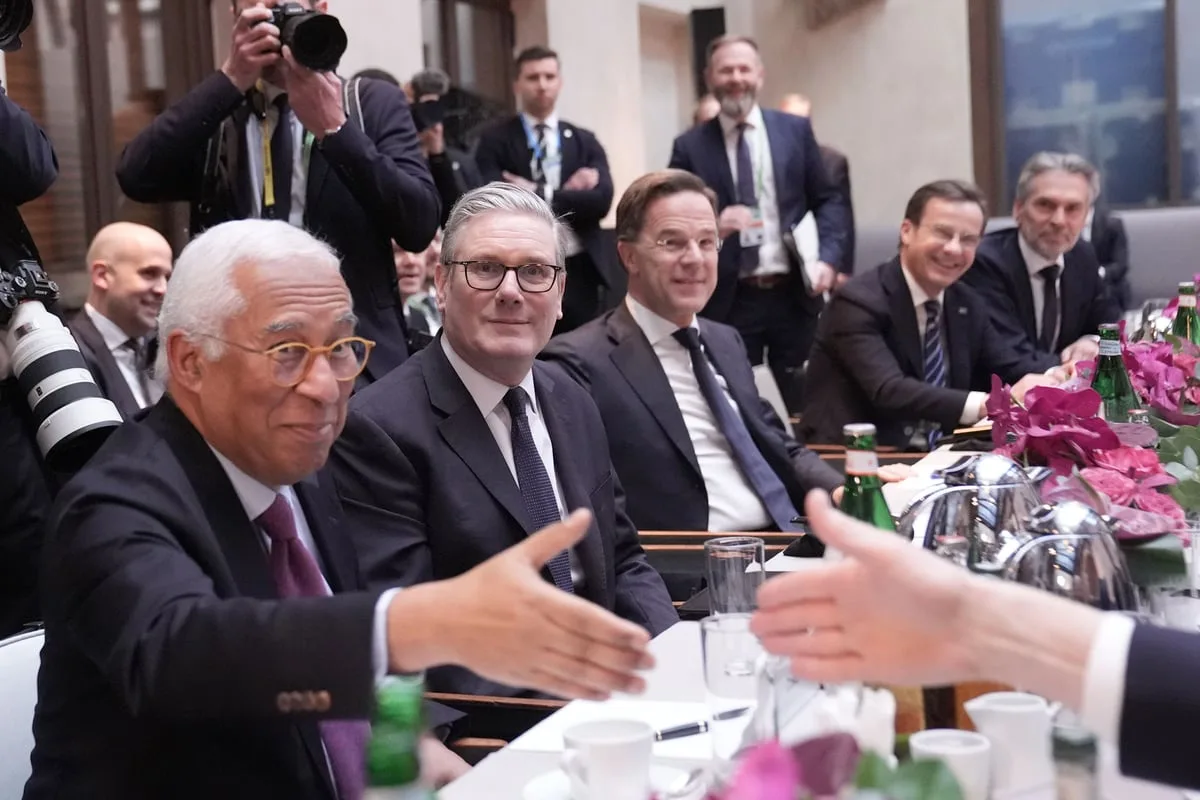
Prime Minister Sir Keir Starmer engaged in crucial talks on the Ukraine conflict alongside key international leaders at the Munich Security Conference. The high-level meeting, focused on efforts to end the war between Ukraine and Russia, brought together top officials from the United States and Europe as the four-year anniversary of Vladimir Putin's full-scale invasion approaches.
Transatlantic Tensions and Geopolitical Shifts
The future of transatlantic relations formed a significant backdrop to the discussions, with Europe confronting increasing antagonism from Donald Trump's White House. US Secretary of State Marco Rubio, leading the American delegation, highlighted what he described as a "new era in geopolitics" prior to his arrival at the summit.
High-Profile Attendance and Seating Arrangements
Sir Keir was positioned next to Secretary Rubio during the Ukraine meeting, though the US politician had not yet arrived when journalists departed the room for private deliberations to begin. German Chancellor Friedrich Merz commenced the session with a special welcome for Ukrainian President Volodymyr Zelensky, underscoring the importance of Ukraine's participation.
Leaders from France, Denmark, NATO, the European Council, the European Commission, and numerous other nations were also present at the gathering. The meeting represented an extension of discussions held in Berlin during December, when European leaders established conditions for any potential peace agreement with Russia, including security guarantees supported by the United States.
Upcoming Negotiations and Bilateral Meetings
Another round of US-brokered negotiations between Ukraine and Russia aimed at ending the conflict is scheduled to occur next week. Sir Keir is also set to meet with Chancellor Merz and French President Emmanuel Macron on Friday afternoon, before delivering an address to the summit on Saturday morning.
Questioning US Commitment to NATO
The conference unfolds during a period when America's dedication to NATO has faced serious scrutiny. Tensions escalated following Mr Trump's recent threat to acquire Greenland from NATO ally Denmark, raising concerns about alliance cohesion.
Chancellor Merz advocated for a "new trans-Atlantic partnership" and acknowledged that "a divide" had emerged between the continents as he inaugurated the conference. The tone for this dramatic deterioration in relations was set last year by US Vice-President JD Vance's criticism of European nations, including the United Kingdom, regarding free speech and immigration policies.
The Munich Security Conference serves as a critical platform for addressing these complex geopolitical challenges while coordinating international responses to the ongoing Ukraine crisis. The presence of Prime Minister Starmer alongside Secretary Rubio and President Zelensky highlights the United Kingdom's continued engagement in these vital security discussions.






