Prime Minister Keir Starmer Advocates for European Defence Autonomy at Munich Summit
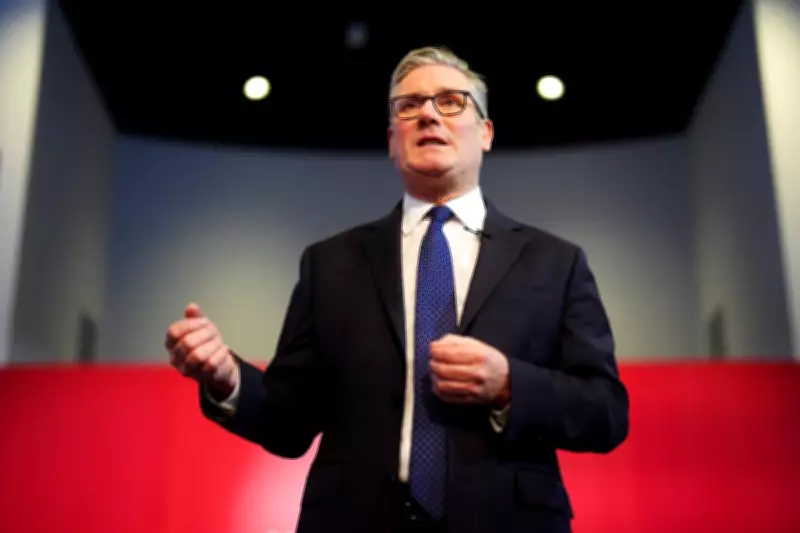
Prime Minister Sir Keir Starmer has delivered a significant address at the Munich Security Conference, urging European nations to reduce their overreliance on the United States for defence and security. Speaking to an assembly of approximately fifty world leaders, including Germany's Friedrich Merz and France's Emmanuel Macron, Starmer emphasised the necessity for Europe to assume greater responsibility for its own protection in an increasingly volatile geopolitical landscape.
A Call for Stronger UK-EU Defence Cooperation
In his speech, the Prime Minister articulated a vision for enhanced European security autonomy, which he insists should not be interpreted as a withdrawal of American support but rather as a strategic rebalancing of burden-sharing. Starmer highlighted the critical importance of deepening ties between the United Kingdom and the European Union, asserting that turning inward, as witnessed during the Brexit era, would constitute a surrender of control rather than an assertion of sovereignty.
"We are not the Britain of the Brexit years anymore," Starmer declared. "Because we know that, in dangerous times, we would not take control by turning inward – we would surrender it. And I won't let that happen. There is no British security without Europe, and no European security without Britain. That is the lesson of history – and it is today's reality too."

Addressing Transatlantic Tensions and European Capabilities
The conference agenda prominently featured discussions on European defence and the future of transatlantic relations, particularly in light of recent uncertainties surrounding America's commitment to NATO. Tensions have escalated following former President Donald Trump's provocative threats towards NATO allies, including a recent statement regarding Greenland, and his disparaging remarks about various European leaders.
Starmer acknowledged the United States' historical contributions to European security while advocating for a more self-reliant European defence alliance. He pointed to Europe's collective economic strength, which he noted dwarfs Russia's economy tenfold, yet criticised the continent's failure to fully leverage its defence capabilities due to fragmented industrial planning and inefficient procurement processes.
"Europe is a sleeping giant," Starmer stated. "Our economies dwarf Russia's, 10 times over. We have huge defence capabilities. Yet, too often, all of this has added up to less than the sum of its parts. Across Europe, fragmented industrial planning and long, drawn out procurement mechanisms have led to gaps in some areas – and massive duplication in others."
Focus on Ukraine and Criticisms of Political Extremes
The Prime Minister's attendance at the summit included a meeting with Ukrainian President Volodymyr Zelensky to discuss ongoing efforts to resolve the conflict with Russia, as the four-year anniversary of Vladimir Putin's full-scale invasion approaches. Starmer used his platform to condemn political factions on both the extreme left and right, specifically targeting Reform UK and the Green Party, whom he accused of being soft on Russia and weak on NATO.
"It's striking that the different ends of the spectrum share so much," he remarked. "Soft on Russia and weak on Nato – if not outright opposed. And determined to sacrifice the longstanding relationships that we want and need to build, on the altar of their ideology. The future they offer is one of division and then capitulation. The lamps would go out across Europe once again. But we will not let that happen."
Broader Context and Diplomatic Engagements
Starmer's advocacy for closer UK-EU defence cooperation comes amid reports that negotiations for Britain to join the EU's 150 billion euro Security Action for Europe (Safe) rearmament fund collapsed late last year due to prohibitively high entry costs. The Prime Minister emphasised the need for a shared industrial base across Europe to enhance defence production capabilities.

Diplomatic attention also centred on US Secretary of State Marco Rubio, whose stance at the conference was closely watched following Vice President JD Vance's controversial criticisms of European nations at the previous year's gathering. Rubio had referenced a "new era in geopolitics" prior to his arrival, and although he was seated next to Starmer at a Ukraine meeting, he had not arrived by the time journalists departed for private discussions.
Starmer's trip to Germany follows a period of domestic turmoil for his premiership, marked by controversy over the appointment of Lord Peter Mandelson as ambassador to the US despite his associations with convicted paedophile Jeffrey Epstein. Nonetheless, the Prime Minister's focus at Munich remained squarely on forging a more autonomous and collaborative European defence framework, underscoring his commitment to a proactive international role for the United Kingdom.