Singapore, a Southeast Asian nation renowned as a global shipping superpower, has declared it will not engage in negotiations with Iran for safe passage through the strategically vital Strait of Hormuz. The city-state asserts this stance as a matter of unwavering principle, rooted in its commitment to upholding international maritime law.
A Firm Stand on Maritime Rights
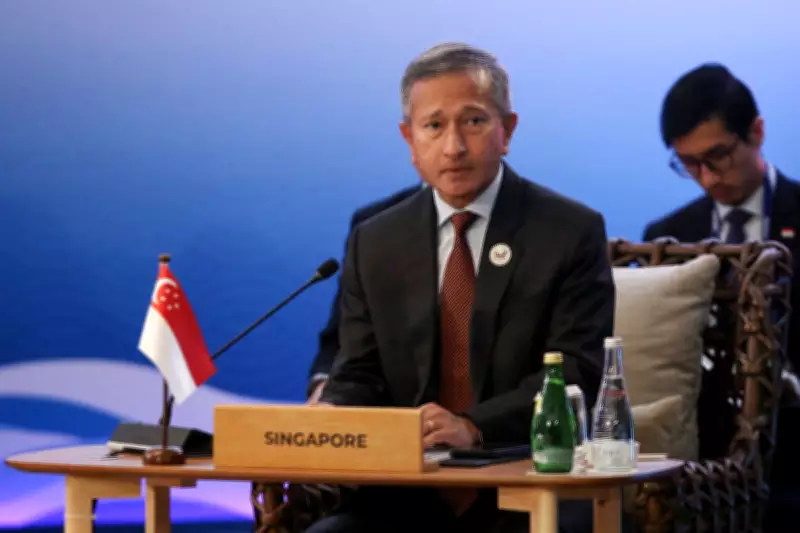
Foreign Minister Vivian Balakrishnan addressed the Singaporean parliament, making the nation's position unequivocally clear. He stated that the right of transit passage through international waterways is an inherent legal right, not a privilege to be granted by bordering states, a licence to be supplicated for, or a toll to be paid. This declaration comes in response to queries about whether Singapore would consider negotiating passage or paying fees to Iran, which had previously closed the critical waterway following attacks by the US and Israel.
Singapore's Unique Position in Asia
This principled refusal makes Singapore the only Asian country to publicly reject such negotiations with Tehran. In contrast, other nations including India, Pakistan, Thailand, and the Philippines have already entered into agreements with Iran to secure the safe transit of their shipments. Reports from maritime intelligence sources indicate that some vessels are paying fees as high as $2 million to Iran to cross the Strait of Hormuz without facing hostilities.

Minister Balakrishnan emphasized that Singapore's position is firmly grounded in customary international law. He argued that negotiating passage with Iran would implicitly undermine the legal principles enshrined in the United Nations Convention on the Law of the Sea, commonly known as the Law of the Sea Treaty. Singapore is a signatory to this treaty, along with more than 170 other nations worldwide.
Strategic Maritime Significance
Despite its relatively small geographical size, Singapore holds immense strategic importance in global shipping. The nation is situated on the Strait of Malacca, a crucial crossroads for major maritime routes connecting the Indian Ocean and the South China Sea. It hosts the world's busiest transshipment port, which recorded a staggering 3.11 billion tonnes of vessel arrivals in 2024. Additionally, Singapore is the planet's largest refuelling point for vessels, with marine fuel sales reaching a record 54.92 million metric tonnes in 2023.
Comparing Critical Chokepoints
The Strait of Malacca is arguably as critical a chokepoint for global shipping as the Strait of Hormuz. In fact, more maritime oil—both crude and refined—passes through the waterway near Singapore than through the one near Iran. The same holds true for global container trade flows. Notably, the Strait of Malacca is less than two nautical miles wide at its narrowest point, whereas the Strait of Hormuz measures 21 nautical miles across.
"Do you understand now why we have to take a categorical position that international law and UNCLOS is the constitution of the oceans?" Minister Balakrishnan remarked, referring to the UN convention. He clarified that Singapore's stance is not about taking sides in geopolitical conflicts but about steadfastly defending the rule of law on the high seas.
Ongoing Diplomatic and Operational Efforts
Minister Balakrishnan confirmed that his diplomatic channel with Iranian counterpart Abbas Araghchi remained open, both before the recent conflicts and in the present. He expressed confidence that engagement would occur in the near future. However, he reiterated that, as a matter of principle, Singapore cannot engage in negotiations for the safe passage of ships or discuss toll rates.
In practical terms, the Maritime and Port Authority of Singapore is maintaining close contact with the owners and operators of Singapore-flagged or Singapore-registered ships currently in the Persian Gulf region. These agencies are actively exploring potential opportunities and strategies to facilitate the safe transit of these vessels, ensuring they can navigate international waters in accordance with established legal frameworks.