The Futile Weapon: How Sanctions Backfire and Harm the West
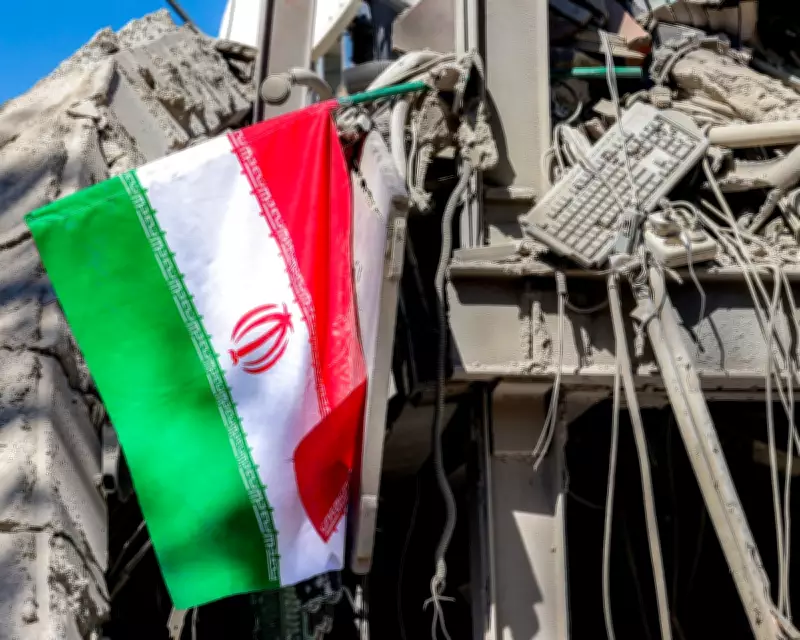
An Iranian national flag lies amidst the rubble of a collapsed building at Sharif University of Technology in Tehran, following strikes on 7 April 2026. This stark image symbolises the destructive impact of conflict, yet it is economic warfare through sanctions that is proving equally devastating and counterproductive for Western nations, particularly the United Kingdom.
Economic Collateral Damage Hits Britain Hard
The chancellor of the exchequer and the International Monetary Fund are in agreement: Britain's economy is poised to suffer its most severe blow in decades. This economic calamity stems directly from collateral damage caused by the US-led war on Iran and the subsequent closure of the Strait of Hormuz. The situation is exacerbated by sanctions targeting Gulf oil exports, which threaten to further destabilise energy markets and inflate costs.
Britain has already been significantly weakened by four years of stringent sanctions imposed against Russia over the Ukraine conflict. Now, the nation faces a crushing blow to its economic growth, a plummeting popularity for its government, and potential removal of its prime minister. Ironically, these were the very consequences sanctions were designed to inflict upon adversaries, not upon the UK itself.

The Historical Failure of Sanctions as a Political Tool
The unprecedented severity of sanctions against Russia was intended to teach Vladimir Putin a harsh lesson, compelling his allies to plead for cessation of hostilities. Yet, in the years following their implementation, Russia's economic growth rate consistently outpaced that of Britain. Similarly, sanctions levied against Iran during the 2010s aimed to halt its nuclear programme; instead, they appeared to encourage its acceleration. Current sanctions targeting Tehran seek to undermine the regime and topple the ayatollahs, but prospects for success appear minimal.
The United States currently imposes economic sanctions on approximately thirty countries worldwide, often with support from other Western governments. Beyond Iran, this list includes North Korea, Myanmar, Belarus, and Afghanistan. A common thread among many of these nations is that they remain under the same regimes that were in power when sanctions were first imposed. In short, sanctions have consistently failed to destabilise or remove authoritarian governments.
Strengthening Anti-Western Alliances and Global Divisions
Far from achieving their objectives, sanctions have actively strengthened the anti-Western Sino-Russian trade alliance. They have prompted numerous countries to embrace the BRICS partnership—comprising Brazil, Russia, India, China, and South Africa—positioning developing nations against the West's G7. This strategic miscalculation has been staggeringly counterproductive, fostering global divisions rather than fostering cooperation or change.
In his seminal work, The Economic Weapon, academic Nicholas Mulder meticulously charts the historical futility of using trade as a threat against enemies. Except in cases involving tiny states, trade invariably finds alternative pathways. Sanctions exert minimal impact on countries immune to internal democratic pressures, as evidenced by their ineffectiveness against fascist powers prior to the Second World War, which merely pushed those regimes toward self-sufficiency.
"The history of sanctions," Mulder asserts, "is a history of disappointments." Despite enthusiasts perpetually claiming that "this time it will be different," outcomes remain consistently unchanged.
The Devastating Exodus of Educated Elites
Sanctions carry a far more serious consequence that directly contradicts the purported goal of regime change. Impediments to trade and the freezing of international contacts inevitably promote the exodus of mercantile and professional classes from target nations. This brain drain surpasses any repression exerted by the regimes themselves.

The flight of academics, engineers, scientists, and commercial professionals from Iran has been particularly devastating. Since the 1979 revolution, Iran has lost millions of citizens to emigration. By 2021, over four million Iranians were living abroad, with reports indicating a disproportionate number hail from the educated middle classes. This exodus has immeasurably weakened the very forces that might have conceivably replaced the existing regime.
While this diaspora has sustained medical and other services in Europe and the United States, sanctions have hollowed out Iran's educated class, depriving the nation of the financial and intellectual resources necessary to bolster dissent and cultivate refreshed democracy. These were the individuals who responded to Iran's eight-year liberalising regime under Mohammad Khatami.
Stifling Dissent and Cultural Exchange
In Russia, similar groups emerged during the 1990s following the fall of the Iron Curtain. They welcomed outsiders to Moscow, engaging confidently in debates about their country's future—a period that was briefly exhilarating. All nations require such groups to stimulate debate and challenge seats of power. Those who did not flee Putin now endure both his rule and Western ostracism, compounded by fanatical Russophobia. The West risks mirroring McCarthyism, demanding Russian performers denounce Putin before taking the stage.
In both Russia and Iran, the soil in which dissent might take root has been rendered barren by emigration and embargo. If the West genuinely seeks to change regimes overseas without resorting to military invasion, it must adopt shrewder tactics. Soft power, rather than crude economic force, must be exerted. Political opposition requires aid and contact to prosper; academic and cultural exchange should be promoted alongside trade.
Towards a Strategy of Friendship and Engagement
Sanctions are fundamentally illiberal. They encourage victim nations to tighten borders and repress opposition, which explains why so many authoritarian regimes remain standing. Authoritarian countries typically change only when alternative elites perceive cracks widening in the armour of power.
Russia and Iran are both nations with which Britain has historically enjoyed natural affinity. Restoring that affinity through friendship and engagement offers a more viable path forward—a quality entirely absent from sanctions. The West must recognise that fostering dialogue and exchange, rather than imposing punitive measures, holds the key to nurturing the political opposition necessary for meaningful change.