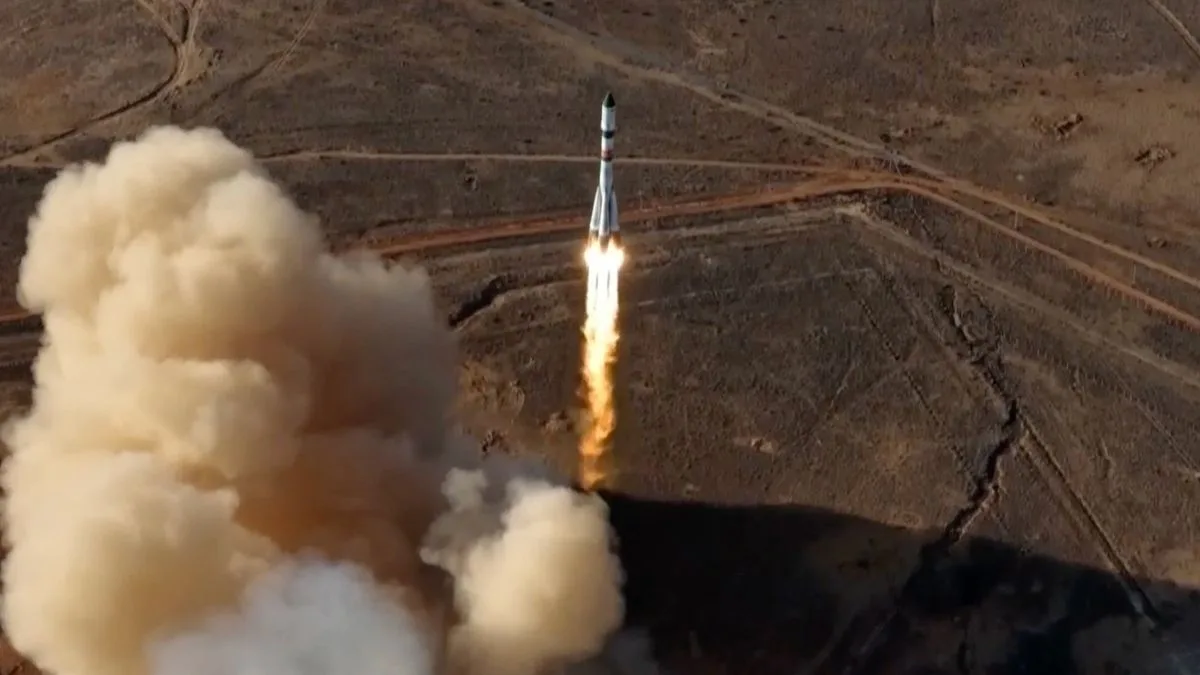
Russia has issued a stark warning to ships and aircraft, advising them to avoid extensive areas of the Barents Sea in the Arctic, which have been designated as 'impact areas for Russian missiles' in preparation for an imminent space launch. The exclusion zones are situated off the northern coast of Norway, in close proximity to NATO territory, and will remain restricted until April 30, marking an unusually prolonged safety notice for this strategically sensitive region.
Understanding the 'Missile' Terminology
Despite the alarming language used in the warning, the reference to 'missiles' is understood to be standard Russian terminology for rocket launches. In this context, discarded components of a space rocket, such as payload fairings, are formally classified as falling 'missile elements.' The alert specifically pertains to a planned Soyuz-2-1b rocket launch from the Plesetsk Cosmodrome, anticipated to occur around April 23.
Operational Details and Safety Measures
As the Soyuz rocket ascends, large metal structures known as payload fairings will be jettisoned and are expected to fall back to Earth, with two such components predicted to splash down in the designated exclusion areas. The warnings have been disseminated through both aviation and maritime safety systems, urging seafarers and aviators to steer clear of these zones during the operational window to avoid potential hazards from falling debris.
The Rassvet Satellite Mission
The launch is set to carry a batch of Rassvet broadband satellites, which are integral to Vladimir Putin's ambitious initiative to develop a low-orbit internet network. This project aims to rival established systems such as Elon Musk's Starlink, with plans to fire up the Rassvet satellite network by March 2026. The mission underscores Russia's accelerated efforts to build its own satellite constellation, a move that gains significance in light of Starlink's pivotal role in supporting Ukraine's military communications during the ongoing conflict.
Geopolitical and Environmental Implications
The Barents Sea, one of the world's most productive fishing grounds, lies partly within Norwegian waters, making these extended exclusion zones particularly notable for both international shipping and local fisheries. While debris splashdown zones are a routine aspect of rocket launches, the use of 'missile impact' terminology, combined with the size and duration of the warning, highlights the scale of this operation near NATO borders. This development occurs against a backdrop of heightened tensions, as Russia seeks to enhance its technological capabilities in space-based communications.
Context: Starlink's Role in the Ukraine Conflict
Elon Musk's Starlink system has been instrumental in Ukraine's war effort, providing critical satellite internet connectivity to military forces. However, its deployment has not been without controversy. In September 2022, according to Reuters reports citing three sources familiar with the incident, Musk issued an order that led to a communications blackout during a Ukrainian attempt to regain Kherson. This directive reportedly caused Starlink employees at SpaceX to deactivate at least 100 terminals, severely undermining Kyiv's trust in the service.
The blackout, which also affected other areas under Russian control such as parts of Donetsk, contributed to the failure of Ukraine's earlier mission, leaving troops in a state of panic due to sudden loss of communications. Although Ukraine successfully reclaimed Kherson in November 2022, Musk's intervention raised concerns about private individuals wielding influence over military outcomes, with one source describing it as allowing Musk to 'take the outcome of a war into his own hands.' This episode underscores the complex interplay between technology, corporate power, and geopolitical conflicts, as Russia now pushes forward with its own satellite network to reduce dependence on Western systems.