Rubio Declares 'Old Order Gone' Ahead of Munich Security Conference
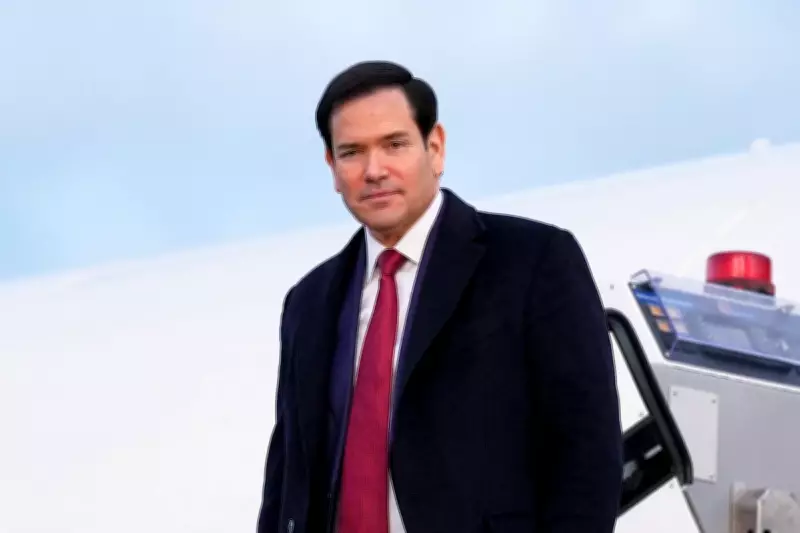
US Secretary of State Marco Rubio has issued a stark warning that the "old order is gone" as he arrived in Germany for the Munich Security Conference, where a potential meeting with Ukrainian President Volodymyr Zelensky is anticipated. Speaking before his departure from the United States, Rubio emphasised that the world is at a "defining moment," stating, "The Old World is gone, frankly, the world I grew up in." He added that we now live "in a new era in geopolitics, and it's going to require all of us to re-examine what that looks like and what our role is going to be."
World Leaders Converge on Munich for High-Stakes Summit
The Munich summit has drawn a significant gathering of global leaders, including Rubio, Zelensky, British Prime Minister Sir Keir Starmer, and French President Emmanuel Macron, among others. This assembly comes just one day after Ukraine announced it will receive $38 billion (£27.9 billion) in military aid from its allies in 2026. The aid package includes a £500 million allocation from the UK for air defence, part of a broader £3 billion support initiative. According to Ukrainian Defence Minister Mykhailo Fedorov, the funds will be directed towards drones, air defence systems, and Patriot missiles to bolster Ukraine's defensive capabilities.
Kyiv Extends Invitation to Chinese Foreign Minister
In a notable diplomatic move, Ukrainian Foreign Minister Andrii Sybiha has invited Chinese Foreign Minister Wang Yi to visit Kyiv, following discussions on the sidelines of the Munich conference. Sybiha expressed optimism that China could play a pivotal role in achieving a just peace for Ukraine, telling Ukrainian TV channel Novyny.Live, "China can play an important role in bringing about a just peace for Ukraine." He further noted appreciation for China's support of Ukraine's territorial integrity and sovereignty, describing their conversation as "very substantive and pragmatic."

Upcoming Peace Talks in Geneva Amid US Pressure
The Kremlin has confirmed that the next round of trilateral talks involving Russia, Ukraine, and the United States will be held in Geneva next week. Kremlin spokesman Dmitry Peskov stated that Russian delegation head Vladimir Medinsky will lead the discussions on Tuesday and Wednesday, signalling a potential shift towards broader negotiations beyond security issues. This development follows reports from the New York Times indicating that the Trump administration is increasing pressure on Kyiv to make concessions to Russia, aiming to end the war by early summer. Ukrainian officials have expressed frustration over being pushed harder than Russia towards peace, particularly regarding demands such as holding elections, which President Zelensky insists cannot occur until a ceasefire is in place.
Substantial Military Aid Bolsters Ukraine's Defence
Ukraine's announcement of $38 billion in military aid for 2026 underscores continued international support. The aid, coordinated through the Ukraine Defence Contact Group (Ramstein group), includes over $6 billion in specific assistance packages, with more than $2.5 billion earmarked for drones, over $500 million for the Prioritised Ukraine Requirements List (PURL) programme, and $2 billion for air defence. Additional contributions from allies such as Germany, which has allocated €11.5 billion, and countries including Norway, the Netherlands, and Canada, further enhance Ukraine's military readiness. In a related development, Denmark has committed four F-35 fighter jets to NATO's Arctic Sentry mission, reinforcing regional security efforts.

Former US Officials Defend NATO's Strategic Value
Ahead of the Munich conference, a group of former top US diplomats and military leaders issued a strong rebuke to criticisms of NATO, asserting that the alliance is not a "charity" but essential for US security. In a statement signed by nearly every living former US ambassador to NATO and former supreme allied commander, they argued, "Nato is not an act of American generosity. It is a strategic bargain that ensures the United States remains the world’s most powerful and economically secure nation at a fraction of the cost of going it alone." This declaration comes in response to repeated critiques from former President Donald Trump, highlighting ongoing debates over international alliances in this new geopolitical era.