

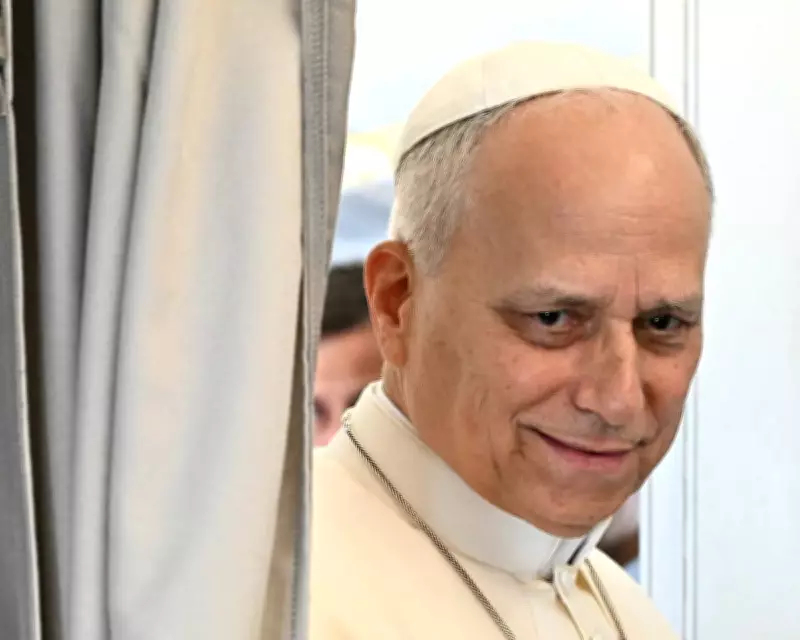
Pope Leo XIV has firmly stated that he has no intention of engaging in a debate with US President Donald Trump regarding the recent American-led attack on Iran. Speaking to journalists aboard the papal plane en route to Luanda, Angola, on 18 April 2026, the pontiff emphasized that his consistent message of peace stems from Gospel teachings and is not aimed at any single political leader.
Setting the Record Straight on Peace Preaching
The American-born pope addressed the escalating media narrative surrounding Trump's critiques, which have dominated headlines throughout his 11-day tour of Africa. "There's been a certain narrative that has not been accurate in all of its aspects," Leo explained through the official Vatican news agency. He attributed much of the controversy to political circumstances arising from Trump's initial comments about him at the beginning of the African journey.
"Much of what has been written since then has been more commentary on commentary, trying to interpret what has been said," the pontiff added, seeking to clarify the fundamental purpose behind his sermons.

Trump's Escalating Criticism and Misrepresentations
President Trump launched his criticism via social media on Sunday, interpreting Leo's peace preaching as implicit criticism of the joint US-Israeli military action against Iran. That attack resulted in civilian casualties, including children, and prompted Iranian retaliation. Trump accused the pontiff of being "weak on crime," possibly referencing previous papal criticism of the president's immigration policies.
Later in the week, Trump further justified his attacks by falsely claiming that "the pope made a statement, he says: 'Iran can have a nuclear weapon'." In reality, Pope Leo has consistently spoken against what he terms "the profound horrors wrought by nuclear weapons."
Despite Trump's attempts to frame the Iran attack as necessary to prevent nuclear proliferation, US intelligence agencies have assessed that Iran is not currently building nuclear weapons. Former intelligence director Tulsi Gabbard testified to Congress last year confirming this assessment. Iran maintains its right to enrich uranium for peaceful civilian purposes under international non-proliferation treaties.
Broader Context of Papal Peace Advocacy
Pope Leo has issued repeated calls for peace and dialogue while denouncing religious justifications for warfare. He specifically described Trump's threat to annihilate Iranian civilization as "truly unacceptable." The Vatican has stressed that when the pope preaches about peace, he refers to all global conflicts, not exclusively the Iran situation.
This broader context includes conflicts like Russia's invasion of Ukraine, which the Russian Orthodox Church has labeled a "holy war," and the separatist violence in Cameroon's Anglophone region, where Leo delivered peace remarks earlier in his tour.
Internal Divisions and Personal Reflections
Trump's attacks have created divisions among his Christian supporters, with some expressing disgust while others defend the president and criticize Catholic institutional responses to clergy abuse scandals. Prominent Trump defender Sean Hannity even announced on Fox News that he no longer considers himself Catholic, citing "institutionalized corruption" reaching "all the way to Rome."
Psychological analyses suggest Trump's antipathy toward the pope may originate from childhood experiences in Protestant churches, adding personal dimension to the political conflict.
Pre-written Sermons and Timely Coincidences
Speaking specifically about his Thursday remarks condemning "a handful of tyrants" ravaging Earth through war and exploitation, Pope Leo revealed these words were written "two weeks ago, well before the person had ever commented on me and on the message of peace that I am promoting."
"And yet as it happens, it was viewed as if I was trying to debate again with the president, which is not in my interest at all," the pontiff concluded, reinforcing his commitment to universal peace advocacy rather than political confrontation.
The papal tour continues through Africa as these transatlantic tensions underscore the complex intersection of religion, politics, and international diplomacy in contemporary global affairs.






