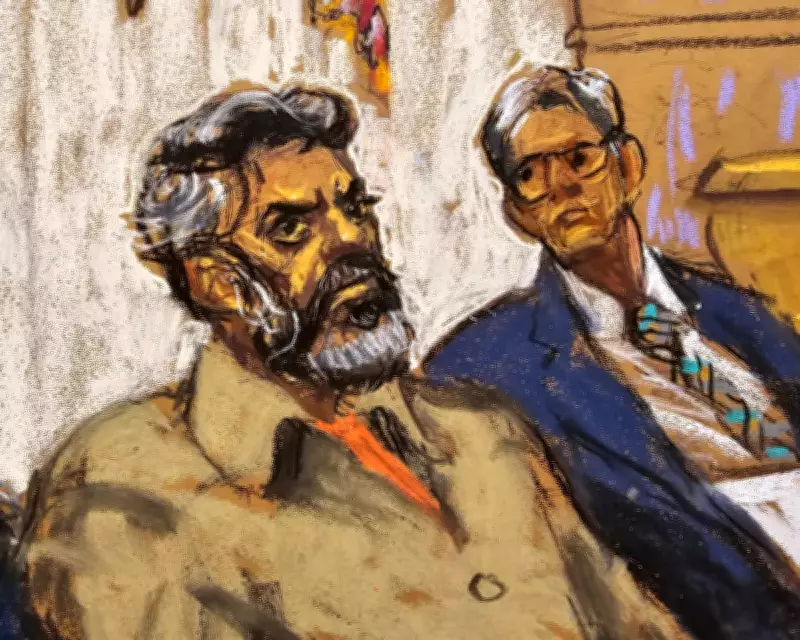
In a significant legal development, Asif Merchant, a Pakistani national with alleged connections to Iran, has been found guilty of orchestrating a murder-for-hire scheme and attempting to commit an act of terrorism that transcends national boundaries. The conviction, announced by the US Department of Justice, stems from a plot directed by Iranian authorities to target high-profile American politicians.
Details of the Terror Plot
The case revolves around a 2024 plan where Merchant was accused of trying to recruit individuals within the United States to carry out assassinations. The primary targets included former President Donald Trump, along with other prominent figures such as then-President Joe Biden and Nikki Haley, the former UN ambassador who contested the Republican presidential nomination against Trump that year. This plot was allegedly conceived as retaliation for the 2020 killing of Iranian military commander Qassem Suleimani, which occurred during Trump's first term in office.
Legal Proceedings and Conviction
The trial took place in New York City, commencing just days before Trump ordered a military assault on Iran in collaboration with Israel, an action that has since escalated into one of the region's most significant conflicts in recent years. Merchant was convicted on charges of "murder for hire and attempting to commit an act of terrorism transcending national boundaries," as stated in a DOJ release. Despite pleading not guilty upon his arrest in 2024, evidence presented during the trial led to his conviction.

During testimony, Merchant admitted to participating in the plot, which was orchestrated by Iran's elite Islamic Revolutionary Guard Corps (IRGC). However, he claimed that his involvement was coerced, driven by a desire to protect his family residing in Tehran. He clarified that while his Iranian handler mentioned three specific individuals in conversations held in the Iranian capital, he was never explicitly ordered to kill anyone.
Thwarting of the Attack and Broader Implications
Law enforcement agencies successfully prevented any attack from occurring after a person contacted by Merchant in April 2024 reported his activities, becoming a confidential informant. This intervention highlights the effectiveness of counter-terrorism efforts in the United States.
The IRGC, known for its dual military and economic influence along with an extensive intelligence network, plays a central role in Iran's operations. Tehran has consistently denied allegations of targeting Trump or other US officials. Meanwhile, recent US and Israeli attacks have resulted in significant casualties, with Iran's UN ambassador reporting at least 1,332 civilian deaths and thousands wounded, including the loss of top leaders like Supreme Leader Ayatollah Ali Khamenei. In response, the US military confirmed six service members killed in a strike on a facility in Kuwait, and at least 10 Israeli civilian fatalities have been reported.
This conviction underscores ongoing tensions between the US and Iran, reflecting broader geopolitical struggles and the persistent threat of transnational terrorism.