US Vice President JD Vance has disclosed that Iran has not accepted a proposed agreement after the initial day of historic peace negotiations in Pakistan's capital. The talks, which commenced on Saturday following a fragile truce established last Wednesday after six weeks of conflict, have involved extensive discussions but have yet to yield a consensus.
Substantive Discussions But No Agreement
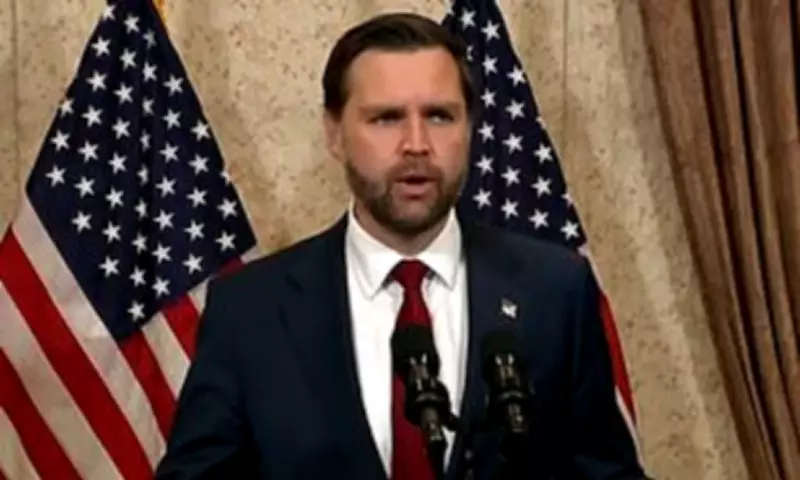
Addressing reporters at the Serena Hotel in Islamabad, Vance provided an update on the proceedings. 'We've been at it now for 21 hours. We've had a number of substantive discussions with the Iranians. That's the good news,' he stated. However, he tempered this with a sobering assessment: 'The bad news is that we have not reached agreement and I think that's bad news for Iran much more than it's bad news for the United States of America.'
Delegations and Diplomatic Context
The American delegation to these critical peace talks is being spearheaded by Vice President Vance. He is joined by Steve Witkoff, who serves as the special envoy, and Jared Kushner, former President Donald Trump's son-in-law. On the Iranian side, the delegation is led by Parliament Speaker Mohammad Bagher Qalibaf. Prior to Saturday's meeting, Vance also held discussions with Pakistani Prime Minister Shehbaz Sharif, underscoring the regional significance of the negotiations.

Trump's Confident Stance on Negotiations
While speaking to the press outside the White House on Saturday, former President Donald Trump acknowledged the depth of the ongoing discussions. 'Regardless what happens, we win. We've totally defeated that country. And so, let's see what happens. Maybe they make a deal, maybe they don't. From the standpoint of America, we win regardless,' he asserted, reflecting a posture of strategic confidence.
Trump further elaborated on his perspective, indicating a degree of detachment from the immediate diplomatic process. 'With all of that, let's see what happens, but from my standpoint, I don't care.' He then shifted focus to broader geopolitical and economic considerations, taking a pointed dig at NATO in the process.
Comments on NATO and the Strait of Hormuz
The former president outlined what he sees as a subsequent strategic move, irrespective of the talks' outcome. 'We defeated their leaders. Their leaders are all dead. Now all we do is we'll open up the strait, even though we don't use it. Because we have a lot of other countries in the world that do use it, that are either afraid or weak or cheap,' Trump remarked, referring to the vital Strait of Hormuz.
He directly criticised the North Atlantic Treaty Organization in this context, stating, 'I don't know what it is, but we were not helped by NATO that I can tell you.' These comments highlight ongoing tensions in transatlantic relations and underscore the complex international backdrop against which these peace talks are unfolding.
This remains a developing diplomatic story, with the world watching closely as negotiations continue between the United States and Iran in Islamabad.