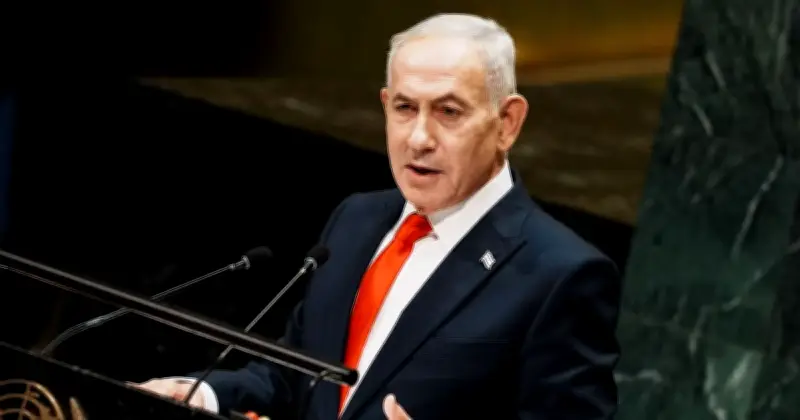
Israel has ordered its diplomats to support Argentina's position on the Falkland Islands, a move that has sparked outrage in Westminster and escalated tensions between London and Jerusalem.
Prime Minister Benjamin Netanyahu instructed envoys to align with Buenos Aires by demanding direct bilateral negotiations on the archipelago's sovereignty, while officially acknowledging Argentina's "historical connection" to the British territory, according to the Telegraph.
Background to the Diplomatic Row
The decision follows friction with the UK government, triggered last month when Foreign Secretary Ed Miliband imposed economic sanctions on West Bank settlements and accused Israel of "ethnic cleansing." That move prompted Jerusalem to downgrade Britain's consulate and expel senior British staff on October 8.
Now, the dispute has expanded into the South Atlantic. Argentina's President Javier Milei, who maintains close ties with Mr Netanyahu, has renewed Buenos Aires' diplomatic push following remarks by Donald Trump in September suggesting the US might not back the UK in any future conflict.
UN Statements and Legal Challenges
Argentina has also mounted legal challenges seeking to halt offshore oil and gas exploration north of the Falklands. Addressing a United Nations session last week, Israel's UN ambassador, Danny Danon, called for direct negotiations between London and Buenos Aires over the territory's future.
Mr Danon told delegates: "Israel recognises the importance that the Argentine public attaches to this issue as well as its ongoing efforts through diplomatic channels and in accordance with the principles of international law."
"Progress on this matter must be achieved while taking into consideration the full spectrum of relevant historical, legal and human aspects," Mr Danon added.
UK Response and Relations
While the position falls short of a formal endorsement of Argentina's claim, it has caused concern in Whitehall. Israeli sources confirmed the statement was approved at senior levels in Jerusalem and reflected growing frustration over the British Government's rhetoric and sanctions policy.
The UK responded swiftly on the UN floor, with British representative Kate Foster rejecting any talks without the consent of the islanders, who have consistently voted to remain British. "The United Kingdom has no doubt over its sovereignty over the Falkland Islands, South Georgia and the South Sandwich Islands. There can be no dialogue on sovereignty without the consent of the islanders," she said.
Relations between London and Jerusalem also took a hit when the UK recognised Palestinian statehood last year, compounded by September's sanctions. There are growing concerns that diplomatic ties could fray further if Mr Netanyahu secures another term in next week's Israeli general election.
Figures in the US and Israel have also used Britain's refusal to join strikes on Iran. Marc Zell, head of Republicans Overseas Israel, called the UK's decision a "dastardly betrayal" and urged Washington to rethink its stance on the Falklands.
Despite the political fallout, officials insist that practical intelligence and security cooperation between the two nations remains strong behind the scenes. A spokesman for the Israeli Embassy in London denied that a policy change had taken place, stating: "I categorically deny this allegation. No such directive exists."
The Express has contacted the Foreign, Commonwealth and Development Office for comment.