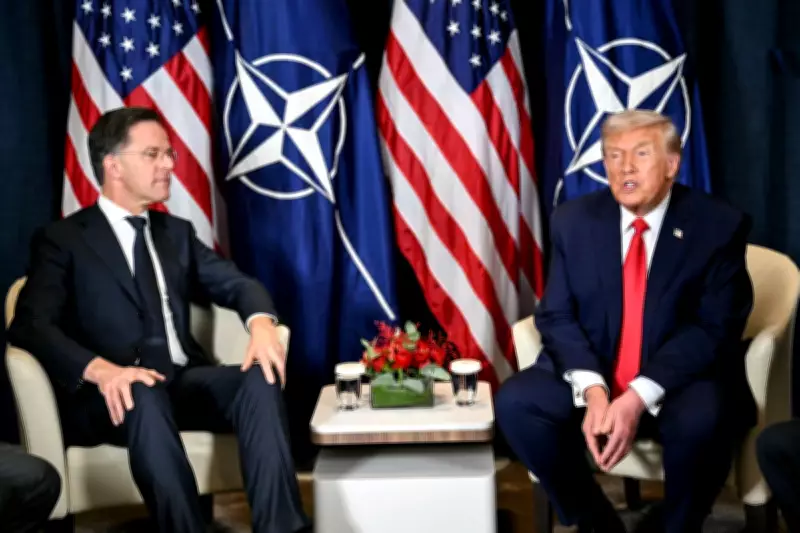
NATO Chief's Diplomatic Efforts Fall Short in Face of Trump's Wrath
NATO Secretary General Mark Rutte has engaged in what he described as a "frank and open discussion" with US President Donald Trump, attempting to address the commander-in-chief's "clear disappointment" regarding the military alliance's response to the ongoing Iran war. The high-stakes meeting in Washington, however, failed to mollify the American leader, who subsequently unleashed a torrent of criticism on his Truth Social platform.
Trump's Scathing Rebuke of NATO Allies
"NATO WASN'T THERE WHEN WE NEEDED THEM, AND THEY WON'T BE THERE IF WE NEED THEM AGAIN," Trump posted emphatically, echoing earlier White House statements that accused Britain and other NATO allies of having "turned their backs" on the United States during the conflict. The president further argued that the security organization had been "tested and they failed," resurrecting previous threats about the US potentially quitting what he has branded a "paper tiger" alliance.
Trump's frustration stems primarily from the refusal of the United Kingdom to be drawn into the offensive against Iran—codenamed Operation Epic Fury by American forces—and London's decision to restrict the use of its military bases by US personnel. This stance has placed severe strain on relations between Prime Minister Sir Keir Starmer and the American president, compounding existing tensions over financial contributions to the alliance that Trump claims disproportionately burden American taxpayers.

Rutte's Defense of European Contributions
Speaking to CNN following the White House talks, Rutte acknowledged Trump's disappointment while mounting a defense of European nations' efforts. "Let me be absolutely clear, he is clearly disappointed with many NATO allies, and I can see his point," the NATO chief conceded. "But at the same time, I was also able to point him to the fact that the large majority of European nations have been helpful with basing, with logistics, with overflights, with making sure that they lived up to their commitments."
Rutte emphasized that "Europe as a platform of power projection for the United States was in full play over the last six weeks," though he admitted that "not all European nations lived up to those commitments." The diplomatic leader stressed that his conversation with Trump remained constructive between "two good friends," noting that the president "was also listening carefully to my arguments of what's happening."
UK's Strategic Focus on Strait of Hormuz
During their discussion, Rutte highlighted what he termed "positive" actions taken by Prime Minister Starmer aimed at securing the vital Strait of Hormuz shipping lane, which had been effectively closed off by Tehran during the conflict, causing significant disruption to global trade. Ahead of the US-Iran ceasefire announcement, the United Kingdom had chaired a virtual conference of military planners from over thirty nations, examining long-term measures to ensure the strategic waterway's safety and accessibility once hostilities concluded.
Following the truce, a joint statement by world leaders including Starmer committed to "contribute to ensuring freedom of navigation in the Strait of Hormuz." However, White House press secretary Karoline Leavitt remained dismissive of these efforts when questioned at a news conference, reiterating Trump's position that "they were tested and they failed" and lamenting that "NATO turned their backs on the American people over the course of the last six weeks."
Broader Alliance Tensions and Burden-Shifting Discussions
The Iran conflict has exposed deeper fissures within the transatlantic alliance, with Rutte having earlier met with US Secretary of State Marco Rubio to discuss "burden shifting" arrangements. Following those talks, US State Department principal deputy spokesman Tommy Pigott confirmed that the leaders had addressed "Operation Epic Fury, ongoing US-led efforts to bring a negotiated end to the Russia-Ukraine war, and increasing coordination and burden shifting with NATO allies."

As the diplomatic fallout continues, the fundamental disagreement over collective defense obligations versus national sovereignty in military engagements appears unresolved, setting the stage for further tension between the United States and its European partners in NATO's future strategic deliberations.