Munich Security Conference Opens with Scathing Critique of Trump's Global Approach
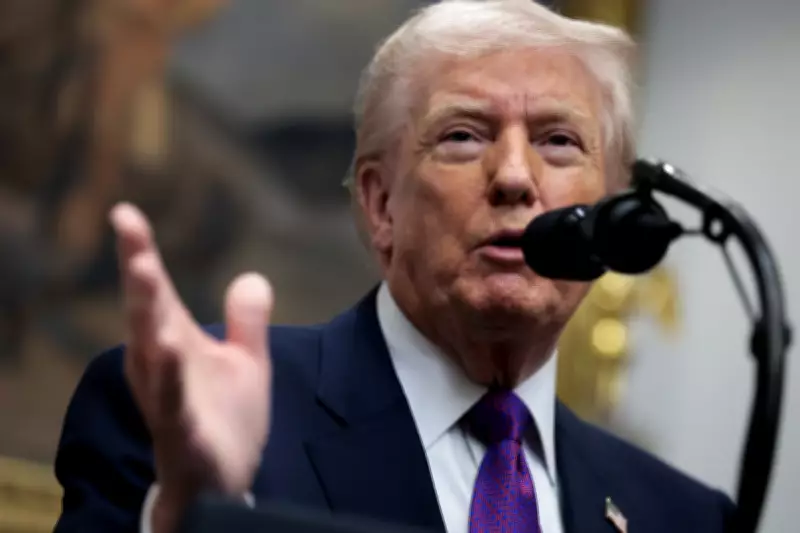
As world leaders gather in Munich for the annual security conference, they are confronted by a stark report from their hosts that delivers a brutal assessment of Donald Trump's policies. The Munich Security Report 2026, titled "Under Destruction," warns that global security structures risk being reduced to rubble under what it describes as "wrecking-ball politics."
'Sweeping Destruction' Replaces Careful Diplomacy
The comprehensive 123-page document states unequivocally: "The world has entered a period of 'wrecking-ball politics.' Sweeping destruction – rather than careful reforms and policy corrections – is the order of the day." The report identifies the Trump administration as the most prominent force promising to free their country from existing international constraints while rebuilding what they claim will be a stronger, more prosperous nation.
"More than 80 years after construction began, the US-led post-1945 international order is now under destruction," the report declares, capturing the gravity of the situation facing global leaders.

Widespread International Concern
This alarming perspective finds resonance across Europe and among America's traditional allies in Canada, Japan, and particularly in Ukraine, where concerns about becoming collateral damage in this geopolitical shift are mounting. The report sets a discordant tone for weekend discussions between world powers, including the United States, by directly criticizing the current US administration's approach to international relations.
Compounding these concerns, surveys conducted across G7 nations reveal a profound lack of public confidence in governments generally. "Only a tiny proportion of respondents say that their current government's policies will make future generations better off," the report notes, highlighting a broader crisis of faith in political leadership.
Questioning the Aftermath of Destruction
The Munich Security Report acknowledges that Trump's confrontational approach might appeal to his domestic supporters, but raises fundamental questions about its ultimate consequences. "It is unclear whether destruction is really clearing the ground for policies that will increase the security, prosperity, and freedom of the people," the document cautions.
Instead, the report warns of a potential future shaped by transactional deals rather than principled cooperation, private rather than public interests, and regions dominated by regional hegemons rather than universal norms. "Ironically, this would be a world that privileges the rich and powerful, not those who have placed their hopes in wrecking-ball politics," the analysis concludes.
Breaking Down International Architecture
The report documents how the security architecture once known as Pax Americana is deteriorating across Europe and the Indo-Pacific region. Simultaneously, humanitarian efforts and climate change initiatives are collapsing under the strain of this geopolitical shift. "Ironically, the president of the country that did more than any other to shape, sustain, and defend the post-1945 international order is now at the forefront of dismantling it," the report observes with notable concern.
Flouting International Norms
The document provides a detailed accounting of Trump's approach to international law, noting that "in just one year in office, Trump has used force against targets in Iraq, Iran, Nigeria, Somalia, Syria, Venezuela, and Yemen." Additionally, the report highlights how the administration has openly contemplated military action against Colombia, Cuba, and Mexico, threatened to reclaim the Panama Canal, speculated about Canada becoming the 51st state, and recently reinforced designs on Greenland.
In a survey spanning Canada, France, Germany, Italy, Japan, the United Kingdom, the United States, Brazil, China, India, and South Africa, not a single country agreed that "Donald Trump's policies are good for the world." This unanimous international disapproval underscores the depth of global concern.

Ukraine as Potential First Victim
The report identifies Ukraine as particularly vulnerable, warning that European leaders are being "forced into a posture of accommodation – not towards Russia but toward Washington" as Ukraine faces becoming a "first victim" of Trump's foreign policy approach.
Rather than being treated as a matter of sovereignty and international law, the conflict in Ukraine risks being reframed as a negotiable dispute between powerful leaders. In this scenario, territory, security guarantees, and natural resources become mere bargaining chips, potentially leading to what the report describes as a "victor's peace" that disregards established international principles.
European Defence Dilemmas
Europe faces compounding challenges as it contends with hybrid warfare from Moscow while simultaneously navigating an administration in Washington that has backed Putin against Ukraine. The region struggles to present a united front against Russian threats, with the United Kingdom, Spain, Greece, and Italy identified as "fiscally strained low spenders" on defence where politicians have failed to make compelling cases for increased military investment.
Even where defence spending has increased, the report notes inefficiencies stemming from European nations' inability to collaborate effectively. "Rising defence budgets are instead fuelling a new wave of industrial nationalism that risks deepening fragmentation, inflating costs, and eroding fragile public support," the analysis reveals.
Broader Humanitarian and Trade Consequences
The report further warns that cuts to multilateral humanitarian work, led by the Trump administration but reinforced by other nations including the United Kingdom, pose immediate risks to millions of lives worldwide while fragmenting organizations like the United Nations. Simultaneously, rules-based trade systems face erosion, with the report questioning "whether the system will collapse into the law of the strongest."
As the Munich Security Conference continues, this comprehensive report provides a sobering foundation for discussions about the future of global security in an era of unprecedented geopolitical transformation.