The path to ending the US-Iran conflict is inextricably linked to a fragile ceasefire in Lebanon that exists in name only and operates under rules distinct from most truces. Within hours of its announcement, this so-called ceasefire appears as unstable as possible.
Ceasefire Demands and Rejections
The plan pressures Lebanon to enforce Hezbollah-free zones and eventually dismantle the militant group, possibly with external assistance. Hezbollah has rejected the agreement and will resist US efforts to persuade Lebanon to enforce the ceasefire against it. The Lebanese military remains weaker than Hezbollah, despite the militant group having been severely weakened by Israeli operations.
Iran is steering the situation to avoid the elimination of its most powerful proxy, which it desperately needs to maintain as an extension of its influence. Tehran insists that any lasting peace deal regarding the US-Israeli war in Iran must include Lebanon, thereby encompassing Hezbollah, its most formidable foreign military unit.

The Stakes for Lasting Peace
Any enduring peace in the Middle East requires a complete cessation of attacks between Hezbollah and Israel; otherwise, war will resume. Even if a peace settlement on Iran is reached and the Strait of Hormuz reopens to the relief of global trade, it could be closed again.
This situation carries dire implications for what has been described as the most chaotic and incoherent war and peace negotiations in America’s 250-year history. Tehran understands that it can justify closing the Strait again by encouraging Hezbollah to open fire, reigniting both conflicts.
The Role of Yemen’s Houthis
Meanwhile, the Yemeni Houthis, another Iranian proxy, have largely remained on the sidelines. They could exert immense pressure on the Bab al-Mandab Strait, a highly strategic narrow waterway connecting the Red Sea to the Gulf of Aden. Located between Yemen and Eritrea, it is a vital gateway between the Mediterranean Sea and the Indian Ocean.
Tehran is holding the US hostage long-term, knowing that Hezbollah holds the key as the biggest threat to Israel’s security across its northern border. Alternatively, if Israel detects Hezbollah arms movements or potential attack plans, it will open fire as usual, demolishing any ceasefire and chance for lasting peace.
Hezbollah's Position
Hezbollah has officially informed Lebanese President Joseph Aoun of its rejection of the agreement, insisting that any acceptable deal must begin with a full Israeli withdrawal from all Lebanese territory. Although Hezbollah was not involved in the talks, it holds weight as the most powerful military in Lebanon—apart from Israel—and a significant political presence.
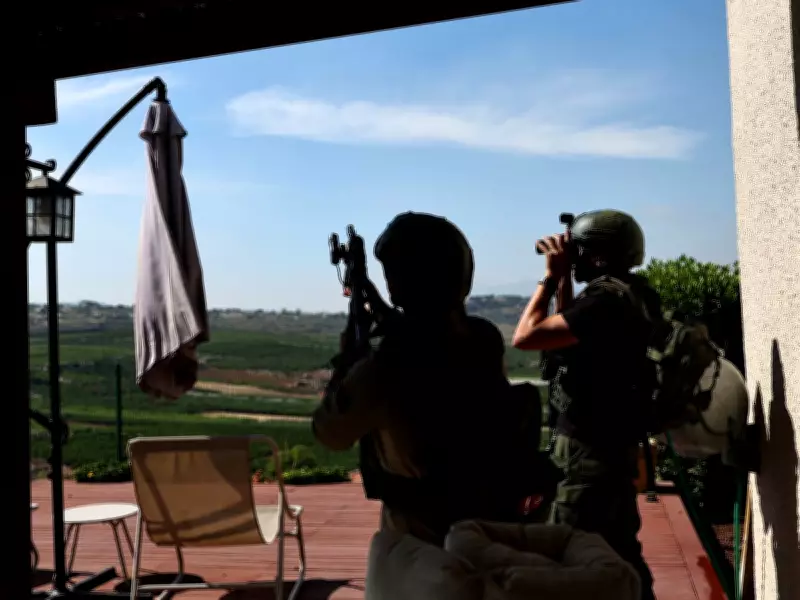
The entire purpose of the military incursion deep into Lebanon was to create a buffer zone, pushing Hezbollah’s missile teams further away from northern Israel.
Trump's Dilemma
US President Donald Trump finds himself in an impossible position, needing to restrain Israel’s hard-right government while possibly placating Tehran. He talks tough, but the Strait of Hormuz will not open itself, nor will Iran’s enriched uranium be handed over without Tehran demanding something in return.
Tehran is desperate for the lifting of sanctions and the freeing of frozen billions of dollars, yet Trump has already stated he will not lift sanctions. Each time he speaks, Trump narrows his options by declaring what he will not do and what Iran cannot do, until something must give. Eventually, he will have to do something he has already ruled out, such as releasing sanctions or frozen assets, which he has been warned will go straight to Hezbollah.
Dire Situation in Lebanon
All the while, the situation in Lebanon appears dire, with no solid ceasefire in sight. The US faces two stark choices: return to war with Iran and attempt to force the nuclear issue—a task proven impossible without an almost unimaginably costly ground war—or take drastic measures to rein in both Israel and Hezbollah. This could involve threatening to reduce funding to Israel, but how would it rein in Hezbollah without resorting to more threats against Iran?

Threats clearly do not work on Iran, so the only other offer would be money, the release of sanctions, and the unfreezing of assets. The latter is the least violent option for Trump, but he would lose in a huge way, humiliated into making the Iran question far worse than under the Obama administration, and he will find it impossible to spin into a victory.