London's Iranian Diaspora Divided Over War: Fear Amidst Celebrations
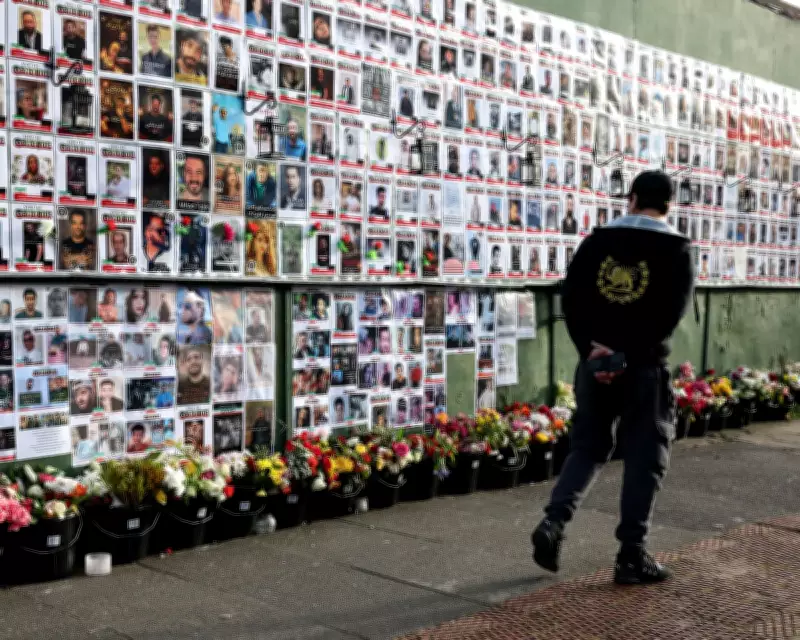
In the heart of north London, a man walks past a wall in Golders Green adorned with pictures of protesters killed during anti-government demonstrations in Iran. This poignant scene sets the tone for the complex emotions swirling within the UK's largest Iranian community, based in areas like Finchley, often called Little Tehran.
A Community Torn Between Elation and Apprehension
Sara, a resident of north Finchley, prepared watermelon and mint tea as celebrations erupted outside her window following recent US and Israeli attacks on Iran. "When the bombing happened, the streets here went crazy," she said, describing how people waved flags and chanted for the return of the monarchy. However, her family chose to stay indoors, unable to join in the jubilation.
"Even though Khamenei was a terrible man, it felt barbaric to celebrate his death," Sara explained, her voice firm. "I couldn't dance." She expressed a deep sense of doom about the future, questioning America's role. "America has a repertoire of starting fires that it doesn't put out," she added, highlighting fears that the conflict might escalate without clear resolution.

Voices of Conflict and Hope
Geff, Sara's 72-year-old father, who worked under both the Shah and the Islamic Republic before fleeing in 1987, shared his conflicted feelings. "No one likes their country to be attacked by another nation," he said, "but the Iranian people have no choice: how else can we get rid of a regime that kills 40,000 of its own young people when they're protesting peacefully?"
He acknowledged that the US's motivations are self-serving but saw it as a necessary alliance. "We know the USA isn't coming to help us; they're coming to help themselves," Geff noted. "But we have the same interests, and whatever they take in payment for giving us our freedom, there will still be something left – which is more than the nothing we have now."
Shifting Allegiances and International Criticism
Kimia Movahedi, a 28-year-old student born in Iran, viewed the war as a rescue mission despite its violent nature. "I never previously thought of Trump as a good character, but now he has my love because he is the only leader who has stood up to the regime," she said. She criticized the international community, including the UK, for appeasing Iran through diplomacy and economic ties.
Navid Tafagodi, who came to the UK as a teenager in 1977, was blunt in his assessment. "I am having second thoughts about leaving the UK, even though it has been so good to me," he stated. "The appeasement of the British government towards Iran has been unbelievable." He echoed the sentiment that aligning with the US and Israel is a pragmatic choice, given the shared enemy.
The Weight of Consequences
Back in Finchley, Sara reflected on the celebrations with a heavy heart. "They can dance if they want," she said quietly, "but they're not the people who will live with the consequences of this." Her words underscore the deep divisions within the diaspora, where joy over potential regime change is tempered by anxiety about the future.
This story reveals how London's Iranian community navigates a complex web of emotions, from hope for freedom to fear of unintended fallout, as global powers intervene in their homeland.