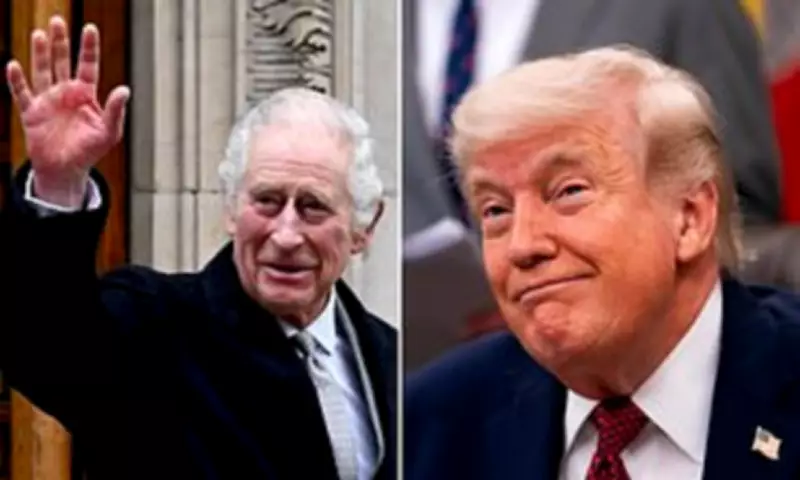
King Charles and Queen Camilla are preparing to undertake what is arguably the most diplomatically sensitive royal visit to a key ally in nearly seven decades. Originally scheduled under more stable circumstances, the tour now unfolds against a backdrop of unexpected geopolitical turmoil and bilateral friction that few could have anticipated during its planning stages.
Unforeseen Challenges and Diplomatic Strains
When this royal engagement was first arranged, it was impossible to predict that the United States would be actively engaged in warfare, or that Britain would have initially denied the US Air Force permission to utilise its British bases for launching attacks. Similarly, no one foresaw US War Secretary Pete Hegseth publicly mocking the Royal Navy, nor President Trump's controversial claim—later retracted—that the British Army had not seen front-line combat in Iraq and Afghanistan.
It will require all of King Charles's considerable diplomatic acumen to navigate the regularly harsh language employed by President Trump, including his dismissal of Prime Minister Keir Starmer as 'no Churchill'. While technically accurate—few prime ministers reach such iconic status—the comparison overlooks that Trump himself is no President Roosevelt. The visit's complexity is further heightened by the US House Committee on Oversight and Government Reform demanding Prince Andrew's testimony regarding the Epstein scandal, alongside lingering questions about Peter Mandelson's tenure as the last ambassador to Washington.

Domestic Doubts and Historical Precedents
Even domestically, support is not unanimous. A recent poll by The Mail on Sunday indicates that over forty percent of Britons believe the King and Queen should not proceed with this four-day tour, while one in four remain undecided. Fortunately, King Charles stands as the nation's foremost diplomatic asset. Though sometimes unfairly criticised as indecisive, he consistently demonstrates humour, assurance, and tenacity in dealing with international leaders—qualities that make him a veritable 'Trump card' in these negotiations.
Moreover, the King has a powerful historical precedent to guide him: his mother's visit to the United States shortly after the Suez Crisis of 1956. That period also saw a profound rift in the Special Relationship, with allies condemning each other's military actions in a strategic Middle Eastern waterway. The crisis precipitated Prime Minister Sir Anthony Eden's early retirement, prompting his successor, Harold Macmillan, to rely on Queen Elizabeth II—then only five years into her reign—to mend bilateral ties.
The 1957 Blueprint and Modern Parallels
During a whirlwind fifteen-hour visit to New York in October 1957, the late Queen addressed the United Nations, attended a mayoral lunch for 1,500, an English-Speaking Union dinner for 4,500, and a Commonwealth Ball for another 4,500. One million people greeted her in Washington, where she conversed with President Eisenhower, who notably unburdened his political concerns to her. By the tour's conclusion, Macmillan declared she had 'buried George III for good and all', effectively sidelining the Suez Crisis in American public consciousness.
This underscores the unique advantage of constitutional monarchs: as apolitical heads of state, they can engage foreign leaders in ways elected officials cannot, proving invaluable in delicate diplomatic situations like those in 1957 and today. Despite his unpopularity in Britain, President Trump revered Queen Elizabeth II, respects King Charles, admires the monarchy, and has British maternal heritage. Trump has effusively praised the King to biographer Robert Hardman, calling him 'fantastic', 'a fighter', and emphasising their 'really good relationship'.

Trump's Admiration and Strategic Considerations
Trump's admiration for King Charles's battle against cancer is a positive indicator for the visit's success, with the President already posting on Truth Social about looking forward to 'TERRIFIC' meetings. While Trump might confront the Pope, he is unlikely to sabotage this first royal state visit since May 2007 by revisiting threats like annexing Canada. When Trump made such remarks in March 2025, the King responded with subtle signals—inviting Justin Trudeau to Sandringham, planting a maple tree at Buckingham Palace, and wearing Canadian honours—demonstrating quiet diplomatic finesse.
The King and Queen's itinerary, though less gruelling than Elizabeth II's 1957 schedule due to their ages, includes Washington, New York, and Virginia, featuring a garden party, tea party, military review, and a private meeting between King Charles and President Trump. This is where Britain's soft power, uniquely channeled through an anointed monarch rather than an elected president, will be tactfully deployed. Trump's past discourtesies toward leaders like President Zelensky and Japanese premier Sanae Takaichi are unlikely to be repeated with King Charles.
Symbolic Gestures and Broader Implications
Meanwhile, Queen Camilla's meeting with anti-domestic abuse campaigners sends a clear message about the couple's stance on issues related to Prince Andrew, without directly engaging with Epstein's victims—an inappropriate move given the ongoing criminal investigation. The visit will also feature a White House state banquet and King Charles addressing a joint session of Congress, the first British monarch to do so since his mother thirty-five years ago.
Throughout these events, including a stop at the September 11 Memorial in New York, the royal couple will undoubtedly embody the decorum and dignity that contrasts sharply with their host's occasional volatility. The anticipated outcome is a reinforced Special Relationship, crucial for intelligence sharing, nuclear cooperation, trade, military procurement, and more. As Trump distances from NATO, Britain must forge new strategic alliances while maintaining ties with an ally that still stations 85,000 troops in Europe, despite its president's transactional approach.
A Testament to Monarchy's Enduring Value
King Charles, often underestimated, possesses a resilient core that will likely ensure this diplomatically fraught visit succeeds. He and Queen Camilla will not only triumph in America but also remind sceptics that Britain remains a significant global partner. Ultimately, this tour will reaffirm the monarchy's enduring value, with King Charles and Queen Camilla exemplifying its stabilizing role in turbulent times.