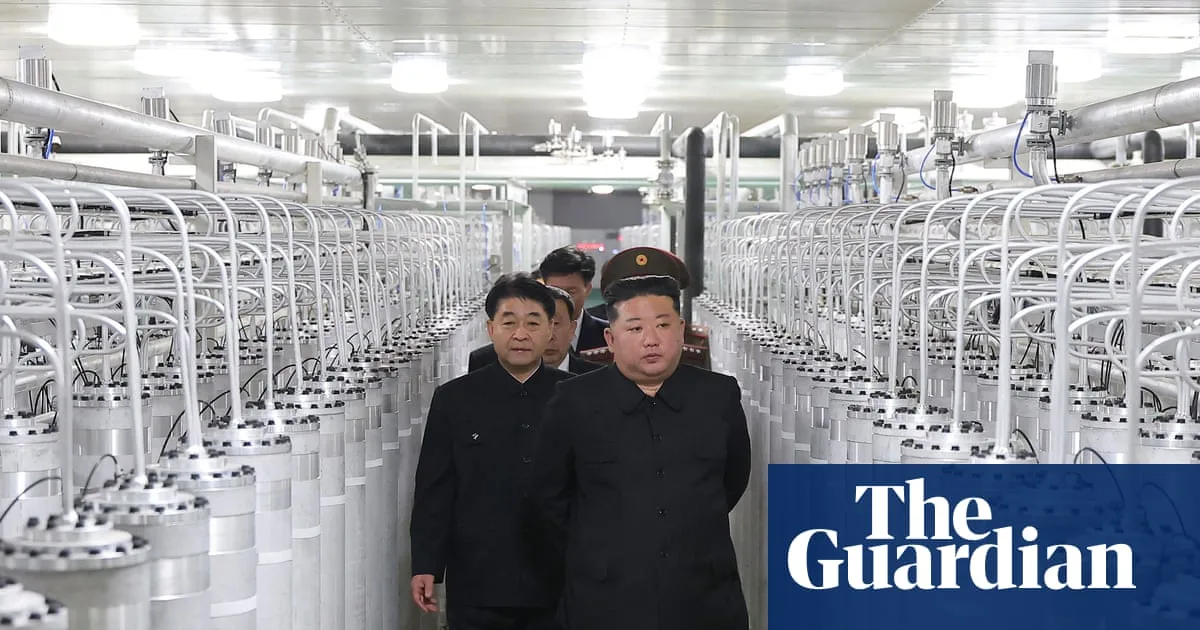
North Korean leader Kim Jong Un has inspected a missile factory expansion, state media reported, as the country continues to ramp up its weapons production. The visit comes amid heightened rhetoric from Pyongyang about expanding its nuclear arsenal at an 'exponential rate'.
Analysts say North Korea's push for a larger and more dispersed arsenal is designed to ensure its nuclear forces can survive a first strike. The country now has rail- and road-mobile launchers, hardened underground facilities, and an expanding submarine fleet.
Kim has also pledged to equip warships with nuclear missiles and double production of weapons-grade material. This year, North Korea began test-firing nuclear-capable cruise missiles from a new 5,000-tonne destroyer.
The recent US-led strikes on Iran reinforced a lesson North Korea has long absorbed: states that stop short of a fully operational nuclear arsenal invite attack rather than deterrence, according to Peter Ward, a research fellow at the Sejong Institute in Seoul.
Nuclear weapons are now embedded in North Korea's constitution, with Kim given command over nuclear forces and the power to delegate launch authority. Analysts interpret this as a safeguard against a decapitation strike.
Despite official denuclearisation goals from Seoul and Washington, experts believe the focus is shifting towards arms control – limiting and gradually reducing the arsenal rather than eliminating it entirely.