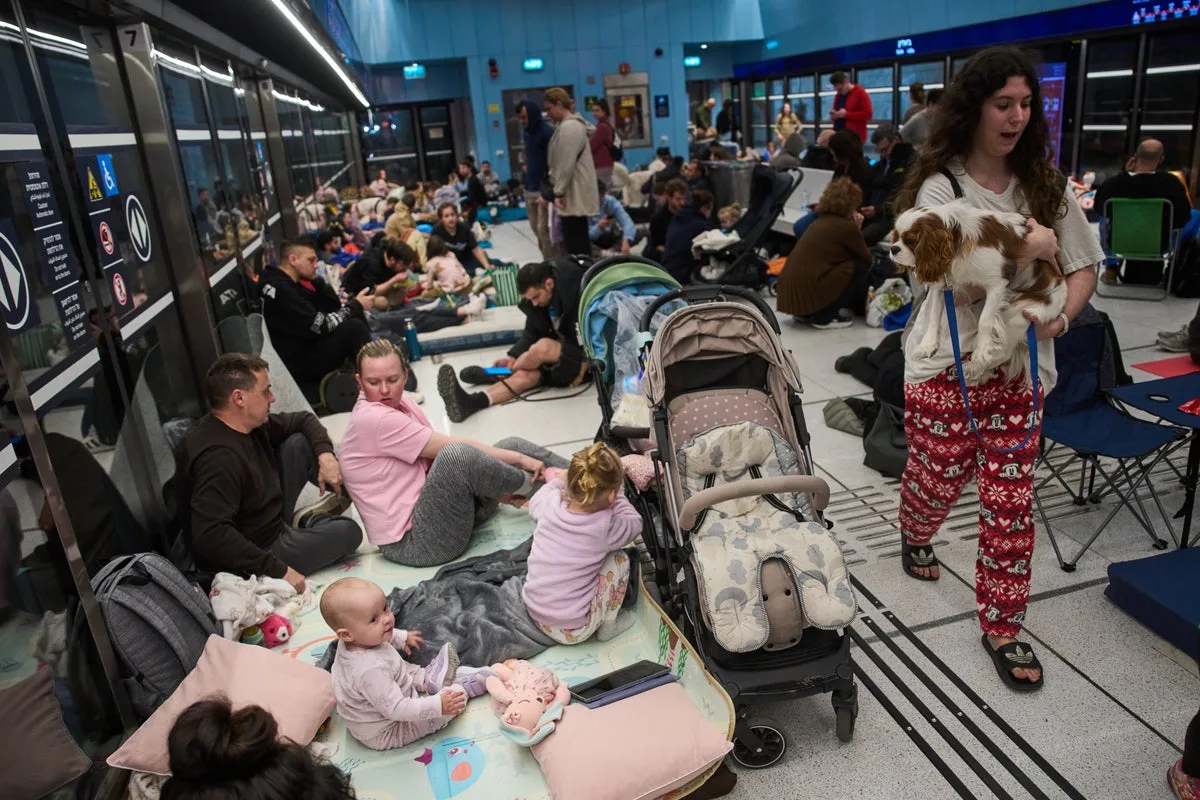
Israeli Civilians Endure Day-Long Shelter Ritual Amid Iranian Missile Barrage
Israelis Race to Shelters as Iranian Missiles Strike Throughout Day

Israeli Civilians Endure Day-Long Shelter Ritual Amid Iranian Missile Barrage

In a grimly familiar routine, residents across central Israel spent Saturday racing repeatedly between their homes and bomb shelters as Iran unleashed continuous missile salvos throughout the day. This intense bombardment followed a major joint military attack by the United States and Israel against Iranian targets earlier that morning.

By nightfall, Israeli military authorities confirmed dozens of missiles had been launched toward Israeli territory. While defense systems intercepted many projectiles, emergency services reported several people sustained light injuries from strikes that penetrated defenses. The government issued nationwide warnings, placed the country on maximum alert, and canceled schools along with most public gatherings.

Community Resilience in Crowded Public Shelters

In Jaffa, a historically mixed Arab-Jewish neighborhood within Tel Aviv, more than one hundred people sought refuge together in a public shelter located beneath a local park. The diverse group included Muslim families with young children, religious Jewish students from a nearby seminary, and at least a dozen dogs, all crammed into the confined space.

Inside the shelter, residents adapted to their circumstances with remarkable resilience. Some groups spread out on mattresses they had brought with them and played cards to pass the time. Others shared snacks while observant Muslims maintained their Ramadan fast despite the disruption. As sirens wailed repeatedly outside, many stared anxiously at their phones, scrolling through constant updates about the unfolding situation.

When sunset arrived, Muslim residents were forced to break their daily fast with their iftar meals inside the bomb shelter rather than in their homes. "Of course we expected this, even though we didn't want it to happen," explained Idit Cohen, who lives near the park shelter. "But it's one of those moments when you see the community truly come together."

Cohen described how her son received an emergency summons for reserve military duty during the bombardment. A stranger in the shelter—a religious Jew who typically refrains from driving on the Sabbath—volunteered to transport him to the military base regardless of religious restrictions.

Systemic Shelter Deficiencies Exposed

While newer Israeli buildings are legally required to contain reinforced safe rooms designed to withstand rocket attacks, Iran's current assault involves far more powerful ballistic missiles that test these protections. More critically, shelter access remains severely inadequate in poorer neighborhoods and towns, particularly in Arab communities and rural regions.

According to data from the Negev Coexistence Forum, a local advocacy organization, more than two-thirds of Israel's Bedouin minority lack any access to proper shelters. During last summer's conflict with Iran, many Bedouin families resorted to constructing makeshift DIY shelters using available materials such as buried steel containers, repurposed trucks, and construction debris.

This pattern of improvisation extends to urban areas as well. During last year's war with Iran, numerous residents without adequate home shelters slept in Tel Aviv's underground light rail stations and subterranean mall parking lots for protection.

Weariness and Determination Amid Ongoing Conflict

For many Israelis, this latest bombardment represents a continuation of nearly two and a half years of intermittent conflict involving Hamas in Gaza, Hezbollah in Lebanon, Houthi rebels in Yemen, and the twelve-day war against Iran in June of last year.

"I want this to end as soon as possible—it's a nightmare," said Cohen, expressing a sentiment shared by many. "People are increasingly frustrated and exhausted. We see families with babies and young children here, but there are elderly people who simply cannot keep running to shelters all day long."

Igor Libenson, a construction worker and father of two young sons aged four and seven, described his family's fatigue from the constant back-and-forth movement. "The children aren't scared because we experienced this same situation back in June," he noted, highlighting how routine such emergencies have become.

Despite the weariness, moments of solidarity and determination emerged throughout the day. In some shelters, religious Jews sang psalms with their arms draped around each other's shoulders. Maya Tutian, a Tel Aviv resident sheltering in the city's northern sector, articulated a broader perspective: "We view this through a long-term lens. We suffer today but maintain hope that it will resolve tomorrow's problems. The Iranian regime threatens not just us here in Tel Aviv, but the entire world."

The day-long shelter ritual underscored both the resilience of Israeli civilians and the persistent vulnerabilities in the nation's civil defense infrastructure, particularly for marginalized communities. As missile alerts continued into the night, residents prepared for what many feared might be an extended period of uncertainty and danger.




