Israel Targets Iran's Railways and Bridges After Warning Civilians
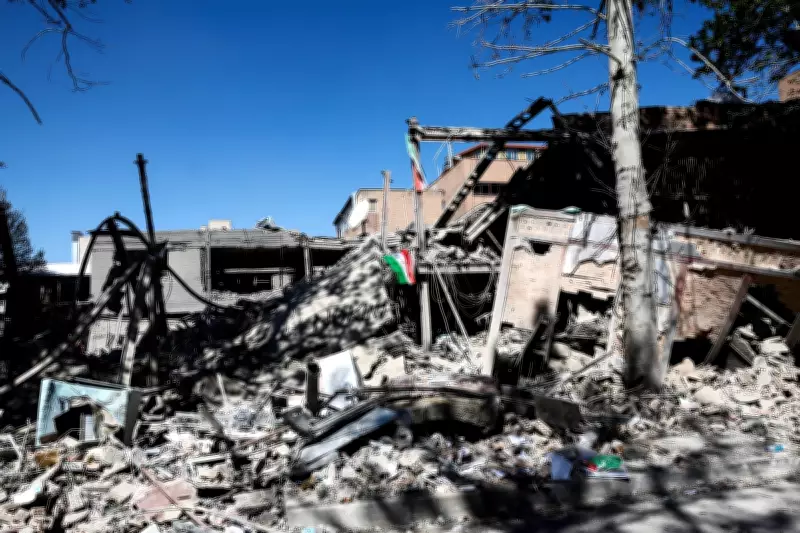
The Israeli military has carried out targeted strikes on Iran's railways and bridges, following a public warning advising Iranian citizens to avoid train travel due to safety concerns. This latest escalation in the ongoing Middle Eastern conflict saw railways in the cities of Karaj and Qazvin bombed, while bridges in Kashan and Tabriz-Zanjan were destroyed in coordinated attacks.
Public Warning Goes Unheeded Amid Internet Blackout
Prior to the strikes, the Israeli Defense Forces issued a warning through their Farsi social media account, telling Iranians "for the sake of your security" to "refrain from using and travelling by train" throughout the country until 21.00 Iran time. The message explicitly stated that "presence on trains and near railway lines endangers your life." However, this crucial warning reached very few people within Iran due to a weeks-long internet blackout that has severely restricted communication channels.
Netanyahu Justifies Strikes as Targeting Revolutionary Guards
Israeli Prime Minister Benjamin Netanyahu defended the military actions, stating: "We are targeting the railways and bridges used by the Revolutionary Guards. They use them to transport raw materials for weapons, and the operatives who attack us, the US, and also the countries of the region. We are crushing the terror regime in Iran... with even greater vigour and with increasing force." Netanyahu further detailed that Israeli pilots had previously destroyed transport aircraft and dozens of helicopters at an Iranian Air Force base before focusing on railway infrastructure.

Conflict Shows No Signs of Abating
The war, which began on 28 February with US-Israeli airstrikes on Tehran, has resulted in thousands of casualties across the Middle East. According to US-based rights group HRANA, Iran has suffered the highest death toll with more than 3,500 people killed, including 1,616 civilians and at least 244 children. Fresh strikes continued on Tuesday from both Israel and Iran across the region, with no indication of de-escalation.
Recent Attacks and Casualties
In the latest developments:
- Thirteen people were killed by a US-Israeli strike overnight on a residential area in Tehran province, with six of those killed being children according to IRGC-affiliated Fars news agency
- The Sharif University of Technology in central Tehran sustained damage from a strike on Monday
- Israeli forces struck three different petrochemical complexes in separate attacks on Monday, targeting facilities in Shiraz, Asaluyeh, and Fars province
- In Israel, four people died when an Iranian ballistic missile hit their home in a northern city
- Israeli military completed deployment of ground troops along a "defence line" in southern Lebanon following mass evacuation orders affecting 41 towns
- At least eight people were killed in Israeli air and drone strikes overnight in southern and eastern Lebanon
International Context and Ceasefire Efforts
The strikes come as US President Donald Trump's deadline for a ceasefire deal approaches, with Trump threatening to strike civilian energy facilities such as power plants if Tehran does not agree to a deal and reopen the Strait of Hormuz. Iranian state media reported on Monday that the regime had rejected the US administration's 45-day ceasefire proposal, insisting on a permanent end to hostilities instead. Politicians, legal experts, and UN officials have warned that threats against civilian infrastructure could constitute war crimes if carried out.
The conflict has expanded beyond the initial parties, with significant military activity reported in Lebanon where Israeli forces have established defensive positions and conducted strikes. The killing of Islamic Revolutionary Guard Corps intelligence chief Majid Khademi earlier in the week further intensified tensions between the opposing forces.