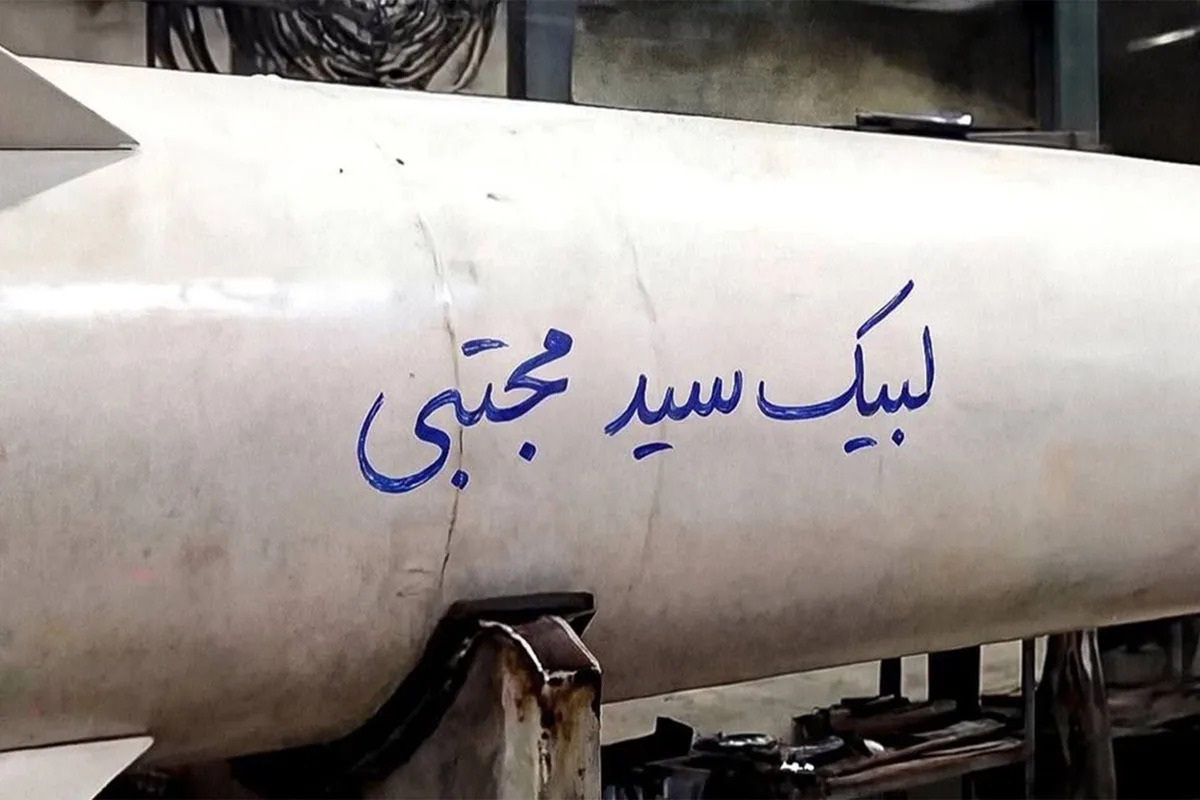
Mojtaba Khamenei, the newly appointed supreme leader of Iran, has had his name inscribed on a missile aimed at Israel, marking a provocative start to his tenure. The projectile, bearing the words “At your service, Sayyid Mojtaba”, was displayed on the state broadcaster IRIB’s Telegram channel shortly after his appointment on Sunday.
Khamenei, 56, succeeded his father Ali Khamenei, who was killed in an Israeli airstrike on 28 February. The Islamic Revolutionary Guard Corps and the Assembly of Experts have since pledged allegiance to the new leader, a move that defies US President Donald Trump, who had insisted on being consulted over the succession. Trump previously described Mojtaba as an “unacceptable” candidate and warned he “is not going to last long” if he does not approve.
Israel has also threatened to target the new leader, as it escalates assaults on Iran’s oil and energy infrastructure. Recent US-Israeli airstrikes have blanketed Tehran in thick black smoke, with reports of “acid rain” falling over parts of the country. Iran’s Red Crescent Society warned that oil-contaminated rainfall could be “highly dangerous and acidic”, causing headaches and breathing difficulties.
The conflict has claimed at least 1,332 Iranian civilian lives, according to Iran’s UN ambassador, while the US military confirmed a seventh American death from wounds sustained in Iran’s initial counterattack. Oil and gas prices have surged above $100 a barrel as the war escalates.
Under Iran’s theocratic system, the supreme leader holds ultimate authority over foreign policy, the nuclear programme, and the elected government. Mojtaba has faced criticism from protesters over the death of Mahsa Amini in 2022 and is seen as having leverage over the security apparatus that has repressed dissent.