Iranian Attacks Target Gulf States as US Warns Bombing Will Intensify
Intense Iranian fire targeted Gulf Arab states early Saturday as Israel and the United States maintained their relentless airstrikes against the Islamic Republic. The conflict shows no signs of abating, with US officials warning of an impending bombing campaign described as the most intense yet in this weeklong confrontation.
Escalating Regional Conflict
Associated Press video footage captured explosions flashing and smoke rising over western Tehran as Israel announced it had initiated a broad wave of strikes. Simultaneously, loud booms echoed through Jerusalem, with incoming missiles from Iran sending residents scrambling to bomb shelters across Israel. Israeli emergency services reported no immediate casualties from these attacks.
The conflict's widening scope became evident when sirens sounded early Saturday in Bahrain as Iranian attacks targeted the island kingdom. Saudi Arabia confirmed it had destroyed drones heading toward its vast Shaybah oil field and successfully intercepted a ballistic missile launched toward Prince Sultan Air Base, which hosts American military forces.

US Military Support and Diplomatic Stance
The Trump administration has approved a substantial new $151 million arms sale to Israel following President Donald Trump's declaration that he would not negotiate with Iran without its "unconditional surrender." In a social media post on Friday, Trump emphasized, "There will be no deal with Iran except UNCONDITIONAL SURRENDER!" He further stated that after surrender and the selection of "GREAT & ACCEPTABLE Leader(s)," the United States and its allies would assist in rebuilding Iran to become "economically bigger, better, and stronger than ever before."
These comments have raised significant questions about the conflict's ultimate objectives, particularly as the United States has previously suggested goals ranging from toppling Iran's government to installing new leadership from within.
Humanitarian and Economic Consequences
The fighting has resulted in devastating human losses, with at least 1,230 people killed in Iran, more than 200 in Lebanon, and approximately a dozen in Israel, according to officials from those nations. Six American troops have also lost their lives in the conflict.
Qatar's energy minister, Saad al-Kaabi, issued a stark warning in an interview with the Financial Times, suggesting the war could "bring down the economies of the world." He predicted widespread shutdowns of Gulf energy exports that could drive oil prices to $150 per barrel. This concern materialized as benchmark US crude prices surged above $90 per barrel on Friday, reaching their highest level in over two years.
International Dimensions and Intelligence Concerns
Russia has reportedly provided Iran with information that could assist Tehran in targeting American warships, aircraft, and other regional assets, according to two officials familiar with US intelligence. While these sources cautioned that intelligence has not confirmed Russia is directing Iran on how to utilize this information, this development marks the first indication of Moscow's involvement in the conflict.
US Treasury Secretary Scott Bessent reinforced the severity of the situation during a television interview on Friday, declaring that the "biggest bombing campaign" of the war was still forthcoming. Israel has confirmed extensive bombing of a substantial underground bunker that Iranian leaders had intended to use during hostilities.
Regional Spillover and Humanitarian Crisis
The Iranian-backed militant group Hezbollah reported clashes with Israeli forces that landed late Friday in eastern Lebanon's mountains. Lebanon's Health Ministry confirmed at least three fatalities from this engagement, though Israel has not acknowledged the fighting.
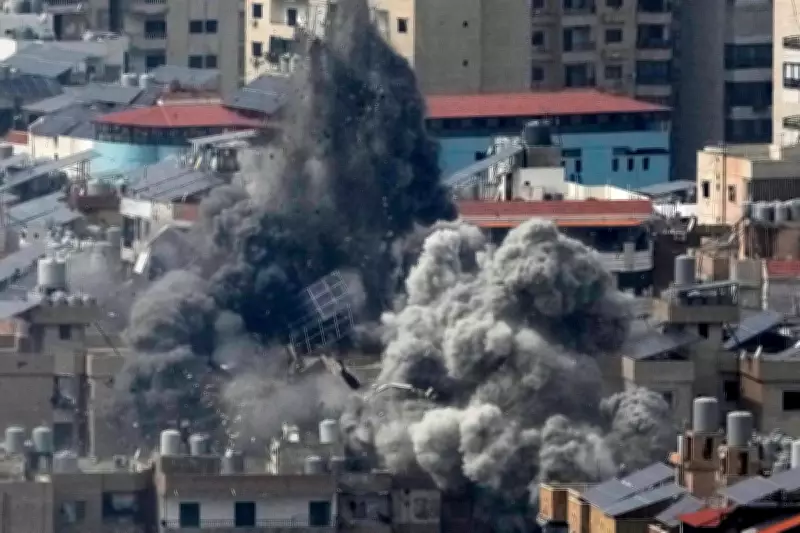
Lebanon has suffered significantly, with at least 217 people killed and 798 wounded by Israeli strikes since Monday. Roads in Beirut became choked with evacuation traffic as smoke billowed over the city's southern districts, forcing two hospitals to evacuate patients and staff.
Jihan Shehadeh, one of tens of thousands displaced, described the dire situation: "What can we do? We prayed here under the tree. During the night, we slept in the car because there is no place to stay."

Controversial School Explosion
New information has emerged suggesting that a deadly February 28 explosion at a school in Minab, approximately 1,100 kilometers southeast of Tehran, was likely caused by US airstrikes. This assessment is based on satellite imagery, expert analysis, statements from a US official, and public information released by American and Israeli military forces.
Iranian state media reported that more than 165 people, predominantly children, perished in the blast. While Iran has blamed Israel and the United States for the tragedy, neither nation has accepted responsibility, though Defense Secretary Pete Hegseth confirmed the US is investigating the incident.
Political Developments and Mediation Efforts
Iranian President Masoud Pezeshkian noted on social media that "some countries" had initiated mediation efforts, though he provided no specific details. Meanwhile, Iranian state television reported that a leadership council had begun discussions about convening the country's Assembly of Experts, which holds the responsibility of selecting a new supreme leader.
Iran's UN ambassador declared the country would "take all necessary measures" to defend itself, underscoring the determination of both sides as this dangerous regional conflict continues to escalate with no resolution in sight.