Trump's Iran War Timeline Under Scrutiny as Experts Predict Prolonged Conflict
President Donald Trump's assertion that the war with Iran will conclude within four to six weeks is being challenged by experts, who forecast a significantly longer and more costly engagement. The conflict, now in its second week, has escalated regional tensions and begun to impact global shipping lanes, raising questions about its ultimate duration and consequences.
Conflicting Timelines from US Officials
American officials have provided varied estimates for the war's end. During initial comments, Trump suggested a timeframe of four to five weeks, while emphasising the United States' capacity to sustain operations beyond that period. Israeli Prime Minister Netanyahu, aligning with Trump, stated the conflict would persist as long as necessary without specifying a deadline.
Defence Secretary Pete Hegseth later extended the projection to up to eight weeks, and press secretary Karoline Leavitt cited six weeks. However, a notification obtained by POLITICO indicates that US Central Command has requested additional military intelligence support for Iran-related operations lasting at least 100 days, potentially extending through September, which would total six months.

Expert Analysis: Underestimation of Iran's Capabilities
Arshin Adib-Moghaddam, a professor in Global Thought and Comparative Philosophies at SOAS, University of London, and chair of the Centre for Iranian Studies, argues that the Trump administration has miscalculated on multiple fronts. He told the Daily Mirror, "The Trump administration clearly underestimated both Iran’s capability and the country’s willingness to escalate the conflict in the Persian Gulf and beyond."
Professor Adib-Moghaddam predicts the war will "last much longer than expected" and could expand globally without diplomatic intervention. He added, "Therefore - and in the absence of a concerted diplomatic effort to bring about peace - the war is likely to last much longer than expected. It may also expand even further spiralling into a conflict with global manifestations."
Ad Hoc Nature of the Conflict
Gerald Feierstein, a former senior US diplomat with Middle East experience, criticised the operation's planning, suggesting it appeared impulsive. He told POLITICO, "What we’ve seen is a completely ad hoc operation where it appeared that nobody actually understood or believed that military action was imminent. It seems like they woke up on Saturday morning and decided that they were going to start a war."
Escalating Financial Burden
The war's mounting costs could influence its duration. According to the Center for Strategic and International Studies, daily expenditures are estimated at $891.4 million (£666 million). With the US conducting high-tempo operations, including frequent airstrikes reported by residents, these costs are likely to increase, adding pressure to the conflict's sustainability.
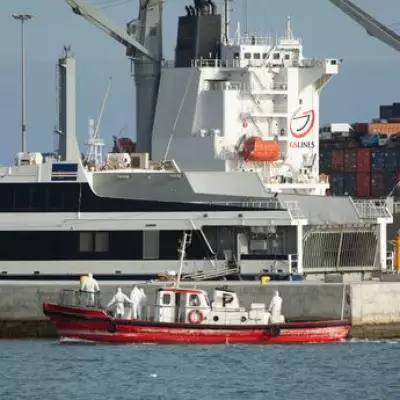
As massive raids on Tehran continue, the broader implications of the war are becoming evident. The blockade of critical shipping lanes and the potential for global spillover underscore the complexity of the situation, making a swift resolution increasingly unlikely despite initial optimistic projections from the White House.